
John Hope, 1st Marquess of Linlithgow
Scottish peer and imperial administrator; first Governor‑General of Australia, earlier Governor of Victoria, remembered for the constitutional episode called the 'Hopetoun Blunder' and his role in early federation.
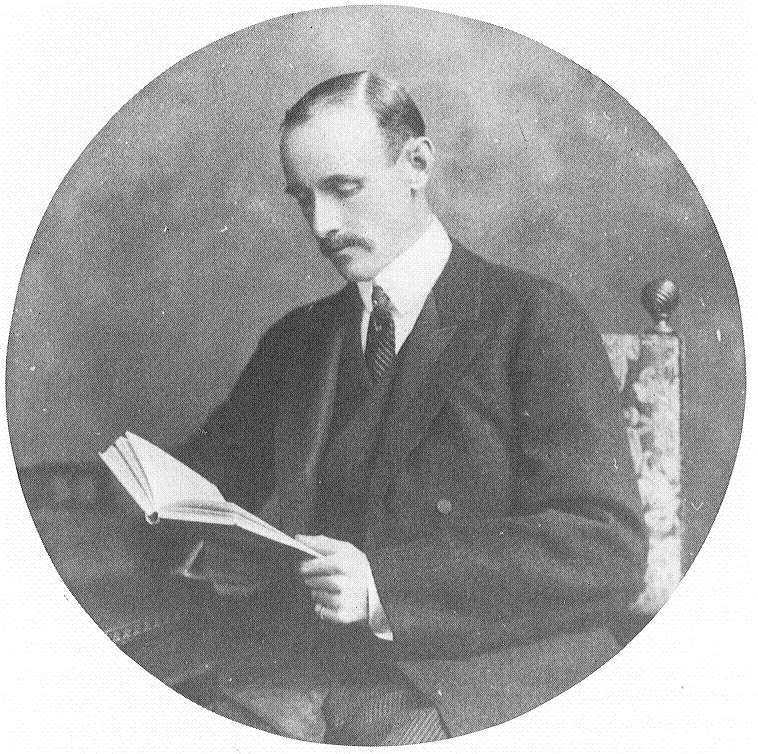
John Adrian Louis Hope (25 September 1860 – 29 February 1908) was a Scottish aristocrat and imperial administrator who served as the first Governor‑General of the Commonwealth of Australia. Born into the Hopetoun family at South Queensferry in West Lothian, he combined the responsibilities of landed aristocracy and public service, holding a number of ceremonial, viceregal and court appointments during the late Victorian and Edwardian periods.
Image gallery
7 Images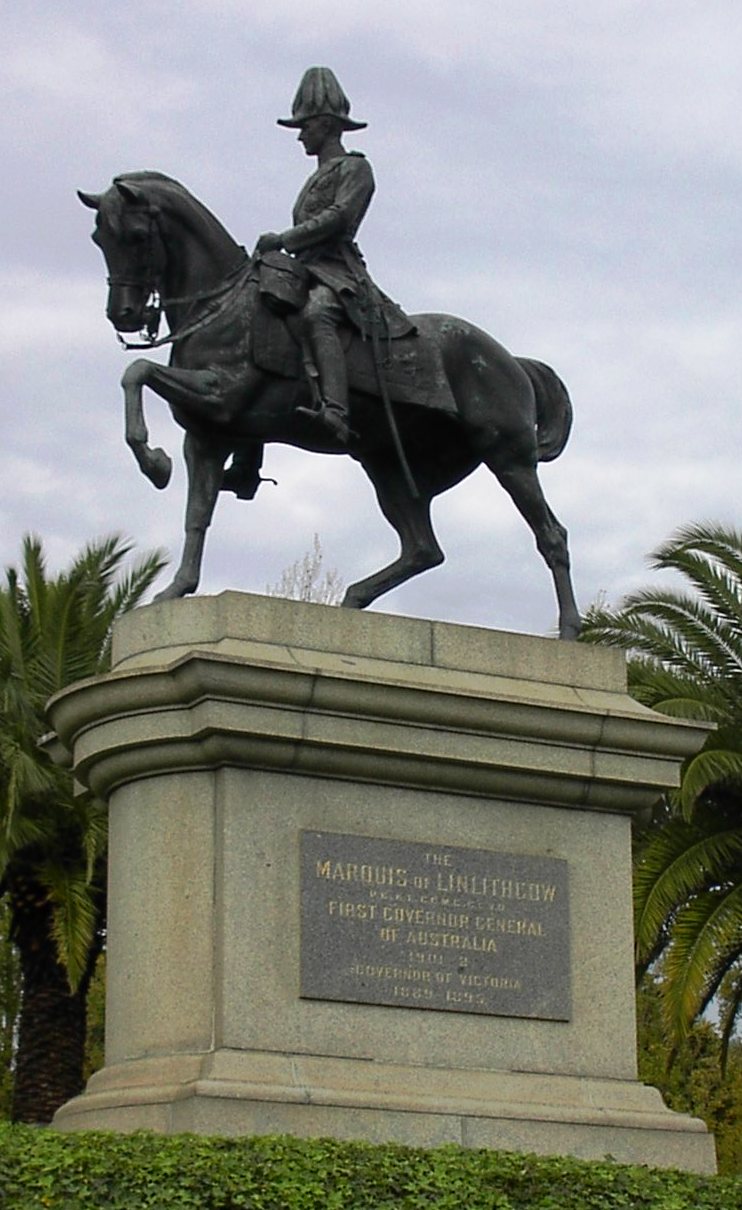



Early life and public career
Hope succeeded to family titles as a young man and received an education typical of the British ruling class, attending Eton College and the Royal Military Academy at Sandhurst. Although he trained at Sandhurst, he did not pursue an active military commission, instead managing family estates and becoming active in public life. He took his seat in the House of Lords in the 1880s and served in court and government positions, including as a Lord in Waiting, where he acted as a government attendant at court and in the upper chamber.
Governor of Victoria and colonial service
Hope's experience in colonial administration began with his appointment as Governor of Victoria, a role in which he carried out the customary duties of a vice‑regal representative: opening and dissolving parliaments, receiving ministers, representing the Crown at public ceremonies, and promoting charitable and cultural institutions. His tenure in Victoria brought him direct experience of Australian political life and the conventions that governed relations between governors and elected ministers in the colonies.
Appointment as the first Governor‑General
When the Australian colonies federated to form the Commonwealth in 1901, Hope was appointed the first Governor‑General, the Crown's representative for the new federal polity. The office was new in practice as well as in name, and Hope's commission required him to navigate uncertain constitutional ground. The early months of federation revealed tensions over procedure and precedent as the new institutions and political customs of responsible government at federal level were established.
The Hopetoun Blunder
The most widely recounted episode of Hope's Australian service is the event commonly called the "Hopetoun Blunder." Faced with the task of inviting a leader to form the first federal ministry, Hope followed advice and convention familiar from British practice and initially commissioned a state premier who was prominent in colonial politics but who lacked the evident support of other leading federalists. That choice failed to secure ministers and was quickly withdrawn; Edmund Barton, a leading federation advocate with broad parliamentary backing, was then invited and formed the first Commonwealth government. The incident illustrated the difficulty of applying metropolitan norms to a federated dominion and prompted reflection in Britain and Australia on vice‑regal discretion and constitutional convention.
Role, honours and later life
Beyond the early controversy, Hope carried out the ceremonial, social and constitutional functions expected of his office, presiding at public events and helping to define the public profile of the Governor‑General. He received several high honours and appointments in recognition of his service, and he continued to be associated with public duties in Britain after returning from Australia. Contemporary commentators and later historians have regarded Hope as representative of the aristocratic tradition in imperial governance: personally courteous and conscientious, but sometimes at odds with the informal political networks and popular expectations of settler societies.
Legacy and assessment
Hope's significance lies less in long‑lasting policy achievements than in his role at a pivotal constitutional moment. The practical lessons drawn from his appointment and the early work of the Governor‑General contributed to evolving understandings of the office, the limits of vice‑regal initiative, and the development of Australian parliamentary convention. His name remains associated with the founding years of the Commonwealth and with debates about how imperial institutions adapted to self‑governing dominions.
See also and links
Questions and answers
Q: Who was John Hope, 1st Marquess of Linlithgow?
A: John Hope, 1st Marquess of Linlithgow, was the first Governor-General of Australia and the eldest son of the 6th Earl of Hopetoun.
Q: When and where was John Hope, 1st Marquess of Linlithgow born?
A: John Hope, 1st Marquess of Linlithgow was born on 25 September 1860 in South Queensferry, West Lothian in Scotland.
Q: What was John Hope's education?
A: John Hope was educated at Eton College and the Royal Military Academy Sandhurst, where he passed in 1879 but did not join the Army.
Q: What did John Hope do after his education?
A: After his education, John Hope looked after the family houses and lands and became active in the House of Lords in 1883.
Q: What was John Hope's role in the House of Lords?
A: John Hope served as a Lord in Waiting from June 1885 to January 1886 and August 1886 to August 1889 in the House of Lords.
Q: What titles did John Hope hold before becoming the Governor-General of Australia?
A: Before becoming the Governor-General of Australia, John Hope was known as Viscount Aithrie (before 1873) and The 7th Earl of Hopetoun (between 1873 and 1902).
Q: When did John Hope pass away?
A: John Hope passed away on 29 February 1908.
Related articles
Author
AlegsaOnline.com John Hope, 1st Marquess of Linlithgow Leandro Alegsa
URL: https://en.alegsaonline.com/art/50675
Sources
- books.google.com : Dictionary of National Biography
- books.google.com : Australia's Governors General: From Hopetoun to Jeffery