
Royal Military Academy Sandhurst
The British Army's principal officer training centre near Sandhurst, Berkshire. Covers role, organisation, selection and commissioning, courses, history, traditions and international links.
Overview
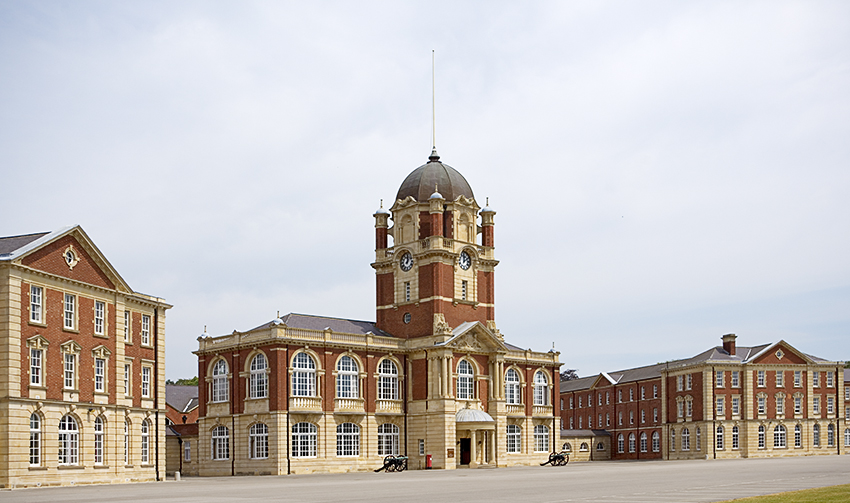
The Royal Military Academy Sandhurst (commonly called Sandhurst) is the principal centre for the training and commissioning of officers for the British Army. Located near the town of Sandhurst in Berkshire, about 55 kilometres south‑west of London, it offers core leadership and military education that prepares cadets for the responsibilities of commissioned service. The Academy trains both regular and reserve officer cadets and receives students from many allied and partner nations.
Image gallery
10 Images




Mission and role
Sandhurst's principal purpose is to develop the qualities expected of an army officer: leadership, judgement, military skill, physical robustness and ethical conduct. Successful completion of the principal course results in commissioning into the officer ranks. The Academy also runs shorter and specialist courses to maintain professional currency for officers and prepares personnel who transfer into commissioned roles from other backgrounds.
Organisation and training
Training at the Academy combines classroom instruction, field exercises, command and staff tasks, physical training and leadership assessment. Cadets are assessed continuously on practical command tasks and on wider professional knowledge. The syllabus is designed to be realistic and to reflect contemporary operational demands, while retaining core elements of drill, map reading, tactics and staff skills. Units within the Academy are organised to recreate command and subunit structures so that cadets practise leading small teams as well as larger formations.
Selection and commissioning
Prospective officers undergo a selection process that evaluates their potential for leadership, motivation, academic aptitude and physical fitness. Those who pass selection attend the main commissioning course; on successful completion they are commissioned as officers in the Army. The commissioning process emphasises ethical responsibility, legal awareness and the professional standards expected of those who command troops.
Courses and specialisations
While Sandhurst is best known for its core commissioning course, it also provides specialist training and professional development in areas linked to military support services. These include pathways for medical personnel, veterinary services and nursing staff, and for religious ministry and pastoral care. The Academy coordinates with professional regulatory bodies so that some specialists receive both military and civilian accreditation for their roles. Examples of specialist preparation can be found in military medicine and medical and nursing provision, as well as in chaplaincy training.
Relationship to other service colleges
Sandhurst is part of a wider system of officer education in the United Kingdom. Comparable institutions prepare officers for the other services, such as the Royal Navy at Dartmouth (naval), the Royal Air Force College at Cranwell (air force) and the Commando Training Centre Royal Marines for the marines. Cooperation among these establishments supports joint doctrine, exchange postings and interoperability during combined operations.
History and development
The present institution traces its origins to earlier schools that trained officers in different arms of the service. In the mid‑20th century the separate Royal Military Academy and Royal Military College were brought together to form a unified centre for officer training. Since then the Academy has adapted its syllabus and facilities to reflect changes in warfare, technology and international engagement while preserving long‑standing traditions of service and ceremony.
Traditions, public role and visiting
Sandhurst is known for its ceremonial parades and public events, which are part of the Academy's role in maintaining military tradition and public understanding of the armed forces. Graduation parades are occasions when cadets receive their commissions in front of families and invited guests. The Academy also hosts exchange officers and visiting delegations from allied countries and works with defence organisations and universities to support continuing professional education.
- Location: near Sandhurst, Berkshire, south‑west of London.
- Primary role: training and commissioning officers for the British Army.
- Entry and commissioning: selection, a main commissioning course and commissioning into officer ranks (officer).
- Specialist links: medical, veterinary, nursing and pastoral pathways collaborate with professional bodies (medical, chaplaincy).
- Service counterparts: counterparts include naval, naval, air force and marines colleges.
For up‑to‑date details on admissions, course length and entry standards consult official publications and the Ministry of Defence. Sandhurst remains a central institution in the professional development of British and international army officers, combining practical command training with the values and responsibilities of commissioned service.
Related articles
Author
AlegsaOnline.com Royal Military Academy Sandhurst Leandro Alegsa
URL: https://en.alegsaonline.com/art/84476