
John Howland (Mayflower passenger and early Plymouth colonist)
John Howland (c.1591–1672/3) was a Mayflower passenger, an indentured servant to John Carver, a signer of the Mayflower Compact, a long-lived Plymouth colonist and ancestor of many Americans.
Overview
John Howland (circa 1591 – February 23, 1672/3) was among the group of English settlers who crossed the Atlantic on the Mayflower and helped establish Plymouth Colony. Originally bound as an indentured servant, he became notable for surviving a near-fatal accident during the voyage and for his long life and active role in the young settlement. He is widely remembered as one of the passengers who signed the Mayflower Compact and for his later work as a freeman and civic participant in Plymouth.
Image gallery
5 Images



Origins and the Mayflower voyage
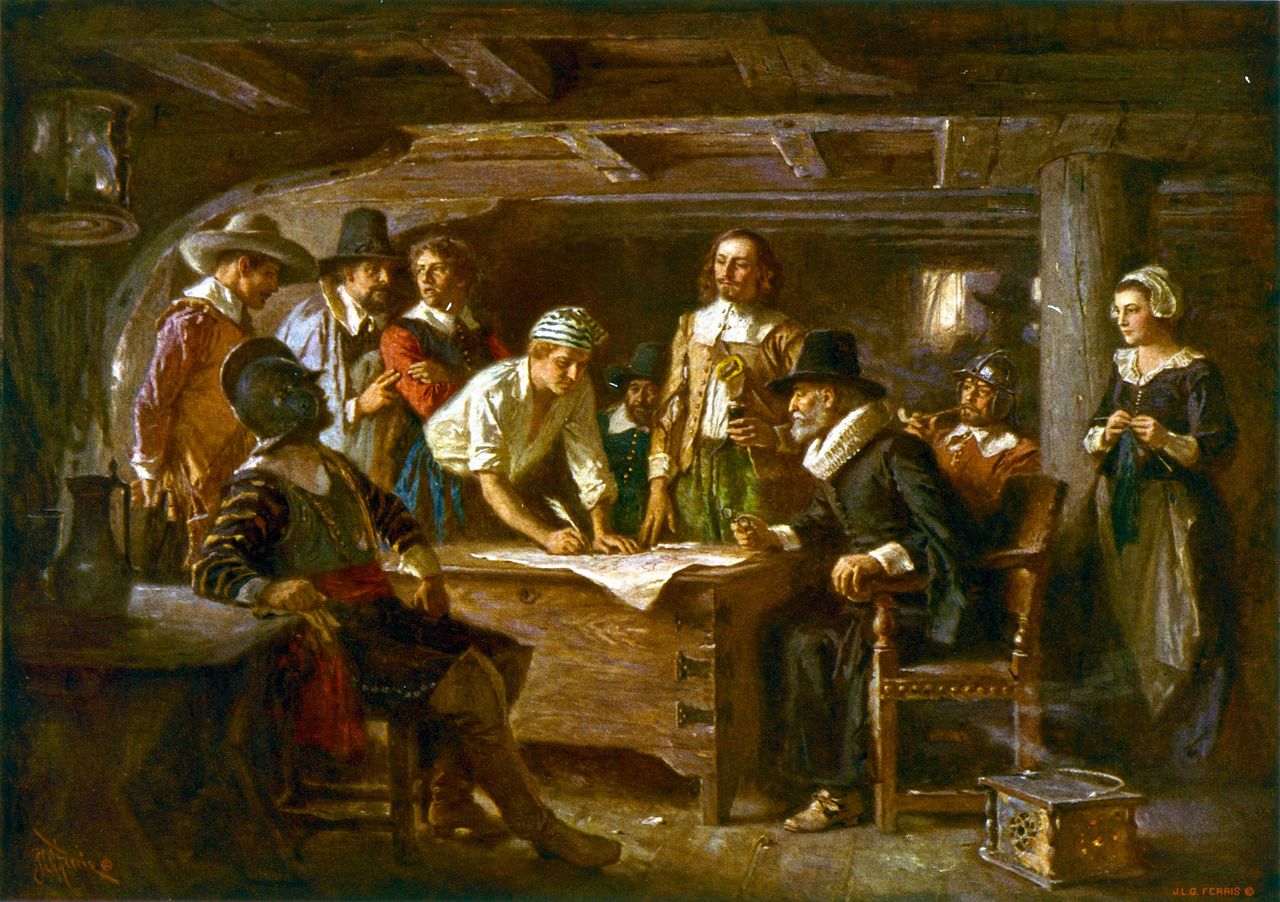
Howland is thought to have come from England and to have travelled with the party that left England to settle in the New World. He had entered into service with John Carver, a leader among the Pilgrim group, and accompanied Carver when they departed from England on the voyage. During the crossing he suffered a dramatic mishap: he was swept overboard in heavy seas but managed to grasp a topsail halyard and was hauled back aboard, a rescue that became part of the colony's early lore. The journey and settlement efforts are part of the broader movement of English colonists to the Americas in the early 17th century.
Life in Plymouth Colony
After arrival, Howland took part in establishing the new settlement. He joined other colonists in building homes, planting crops, and negotiating relations with Indigenous peoples. As a signer of the compact, he endorsed the framework the settlers used to govern themselves during the critical first winter and beyond. Following the death of his original master, Howland transitioned from servitude to a more independent life: he married fellow Mayflower passenger Elizabeth Tilley, raised a large family, and acquired property and responsibilities in the colony.
Roles, family, and later years
Over time Howland served in various civic capacities and was active in local business, land claims, and community defense. Records show him participating in town affairs and acting as a reliable member of the small colonial leadership. His marriage produced many children who in turn extended the Howland family through subsequent New England generations, making him the ancestor of numerous Americans. He continued to live in Plymouth until his death in the early 1670s and was buried among other early settlers.
Notable facts
- Indenture and service: He came as an indentured servant to John Carver, who was influential among the Pilgrims.
- Overboard rescue: Howland fell from the ship during the voyage but was rescued, a story frequently cited in accounts of the crossing.
- Mayflower Compact: He was one of the signers of the document that set an early example of self-government in the English colonies (Mayflower Compact).
- Settlement work: He helped to build and sustain Plymouth Colony, taking on land and civic duties.
Legacy and context
John Howland's life illustrates the transition from indenture to proprietorship experienced by some early settlers and highlights the hazards and resilience of the Mayflower voyage. His survival, marriage, and descendants contributed to the social fabric of New England. For readers wishing to explore primary documents or general histories about the voyage, the colony, and related biographies, see resources linked to accounts of the departure from England and the early New World settlement (departure records, New World settlement). Howland remains a frequently cited example of ordinary colonists whose lives shaped colonial society in the 17th century.
Questions and answers
Q: Who was John Howland?
A: John Howland was a passenger on the Mayflower who travelled to settle in the New World as an indentured servant for John Carver.
Q: What is the Mayflower Compact?
A: The Mayflower Compact is a document that the passengers of the Mayflower signed, establishing a self-governing colony in Plymouth.
Q: What role did John Howland play in the building of Plymouth Colony?
A: John Howland helped to build Plymouth Colony as a passenger on the Mayflower.
Q: When was John Howland born and when did he pass away?
A: John Howland was born around 1591 and passed away on February 23, 1672/3.
Q: What was John Howland's occupation?
A: John Howland was an indentured servant to John Carver.
Q: What is meant by the term "indentured servant"?
A: An indentured servant is a person who is bound by a contract to work for a specific period of time in exchange for their passage to a new location or other benefits.
Q: How did John Howland contribute to the establishment of Plymouth Colony?
A: John Howland contributed to the establishment of Plymouth Colony by signing the Mayflower Compact and helping to build the colony.
Related articles
Author
AlegsaOnline.com John Howland (Mayflower passenger and early Plymouth colonist) Leandro Alegsa
URL: https://en.alegsaonline.com/art/50679
Sources
- pilgrimhall.org : "John Howland of the Mayflower"
- pilgrimjohnhowlandsociety.org : "The Jabez Howland house"
- plimoth.org : plimoth.org/media/pdf/howland_john.pdf
- americanancestors.org : americanancestors.org/pilgrim-families-john-howland/
- findagrave.com : findagrave.com/cgi-bin/fg.cgi?page=gr&GRid=6613808