
Jerusalem City Hall (Municipal Complex at Safra Square)
Municipal complex in Safra Square that houses Jerusalem's city government. Built beside the old city hall on Jaffa Street and inaugurated in 1993, it contains administrative offices, the council chamber and public plaza.
Jerusalem City Hall is the principal municipal complex that accommodates the city's administrative institutions, including the mayor's office and the city council chamber. Located in Safra Square, the complex serves both as a working government center and as a civic plaza used for ceremonies and public gatherings. It forms a prominent element of Jerusalem's modern civic landscape while standing adjacent to older municipal buildings.
Image gallery
8 Images


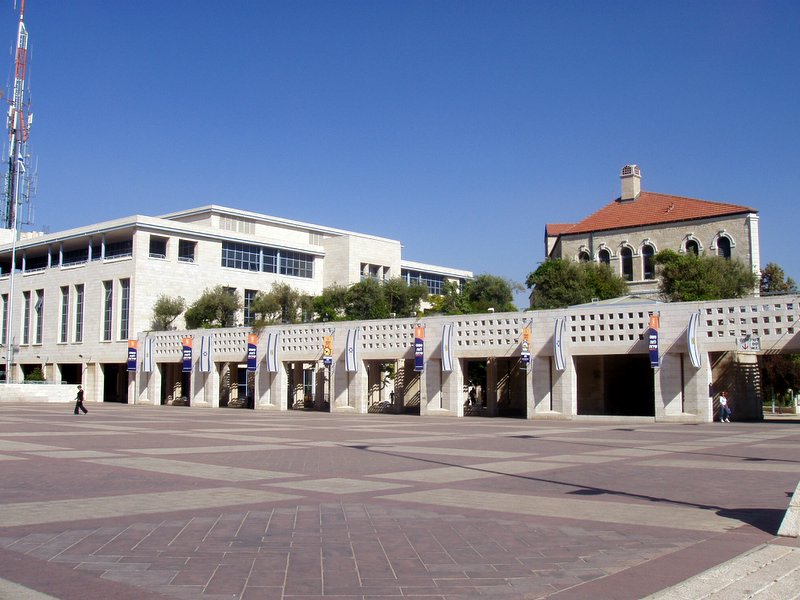

Location and urban context
The complex sits on a corner of Jaffa Street between the Old City and the Russian Compound, a central position in the historic and contemporary urban fabric. The site is often referenced by its geographic marker or map coordinates (Coordinates) and is easily reachable from major thoroughfares and public transport links. The older municipal building remains nearby and the two structures together define a civic quarter that blends administrative functions with public space.
Design, materials and layout
Jerusalem City Hall is a composed complex of linked volumes arranged around paved courtyards and an open plaza. Exterior treatments generally adhere to the city's long-standing practice of using pale, locally sourced stone for facades, giving the complex a visual continuity with surrounding historic fabric. Internally the complex groups offices for municipal departments, meeting rooms, archival and public service counters, and the council chamber where elected representatives meet.
History and development
The decision to replace or expand municipal facilities dates back to the mid-20th century, when post-1948 municipal administration in Jerusalem sought a suitable modern headquarters. After several design competitions and proposals, a final plan was approved in the mid-1980s and construction began in 1988. The new municipal complex was formally opened in 1993 in a ceremony led by Mayor Teddy Kollek, marking the transfer of many civic functions from the older building. The adjacent historic city hall building continues to stand as part of the municipal ensemble and is sometimes used for official events.
Functions, public role and events
Today the complex performs a wide range of municipal duties: it houses administrative departments responsible for planning, public works, social services, cultural affairs and urban management; it hosts city council sessions, official receptions and civic ceremonies; and its plaza and courtyards offer a venue for public demonstrations, festivals and commemorations. The site is an important point of contact between residents and municipal services.
Notable facts and distinctions
- The complex occupies a symbolic location between Jerusalem's Old City and more modern districts, reinforcing its civic visibility.
- Its development followed decades of planning and multiple proposals before a final scheme was chosen in the 1980s.
- The municipal presence on Jaffa Street links administrative functions with one of the city's main historic arteries.
- Further information about the municipality and buildings can be consulted through municipal resources and local guides: Jerusalem Municipality, the old city hall entry here, and archival or tourist references associated with the Russian Compound.
For historical maps, planning documents and official announcements about the complex and its public programs, consult municipal archives and civic information services which maintain records of the site's development and ongoing use. Additional online and printed sources provide guided descriptions, photographs and schedules of events held at the plaza and council chamber.
Related articles
Author
AlegsaOnline.com Jerusalem City Hall (Municipal Complex at Safra Square) Leandro Alegsa
URL: https://en.alegsaonline.com/art/50027