
Jind State: history and legacy of a Sidhu Jat princely state
Jind State was a Sidhu Jat-ruled princely state in northwestern India, founded in 1763 by Gajpat Singh. This article summarizes its origins, administration, territory and legacy after integration into India.
Overview
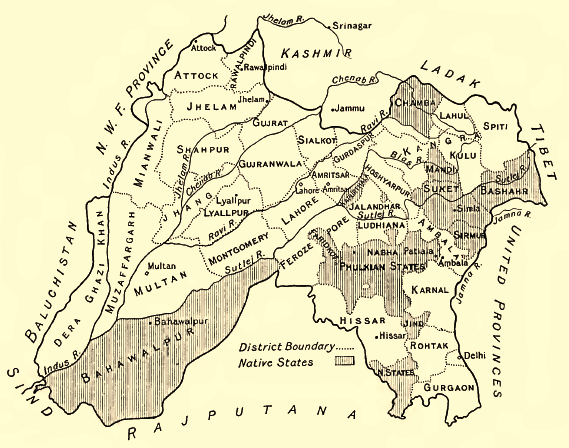
Jind State was a small princely state in the northwestern Indian subcontinent centered on the town of Jind. Founded in 1763 by Gajpat Singh (1738–1789), a leader of the Sidhu Jat family, the state formed part of the cluster of Phulkian principalities in the Punjab region. Its rulers were members of a Sikh Jat lineage and exercised local authority while navigating relations with larger powers in the eighteenth and nineteenth centuries.
Image gallery
10 Images


History and development
The principality emerged during the period of political fragmentation that followed the decline of Mughal authority. Gajpat Singh established control over territory around Jind and his descendants consolidated the state over succeeding decades. During the nineteenth century, Jind—like many regional principalities—entered into subsidiary arrangements with the British, retaining internal autonomy while accepting external suzerainty.
Under colonial rule the state maintained its own court, revenue system and armed force on a modest scale. The rulers collected land revenue from an agrarian population and oversaw local justice, public works and religious endowments. The state’s institutions reflected regional Punjabi patterns of governance with adaptations made under British supervision.
Territory, society and economy
Jind’s territory lay in what is today mainly the state of Haryana, with cultural ties to surrounding Punjabi areas. The economy was predominantly agricultural, dependent on wheat, millet and other staples, and shaped by rural landed families. The population included Sikhs, Hindus and Muslims, and the ruling family belonged to the Sidhu Jat community.
Administration and notable features
- Founded by Gajpat Singh in 1763 and ruled by his Sidhu Jat descendants.
- Operated as a princely state under British paramountcy during the 19th and early 20th centuries.
- Maintained local courts, revenue collection and limited civil services.
Integration and legacy
Following the end of British rule in 1947, Jind’s ruler acceded to the newly independent Union of India. The state was merged with neighboring princely territories during post‑independence reorganization and its territory was incorporated into modern Indian states. Today the former capital, Jind town, is a district center; the history of the state is remembered in regional institutions, local architecture and family records of the erstwhile ruling house.
For more details about the region and its princely states see further reference.
Related articles
Author
AlegsaOnline.com Jind State: history and legacy of a Sidhu Jat princely state Leandro Alegsa
URL: https://en.alegsaonline.com/art/50295