
Jaywalking: pedestrian street crossing, laws, safety, and history
Crossing a roadway outside marked crossings or against signals. Covers definitions, legal approaches, safety implications, history of the term, enforcement variations, and urban design responses.
Overview
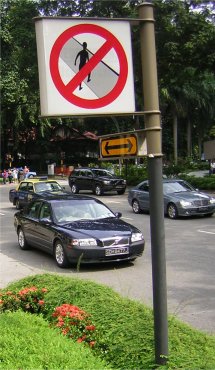
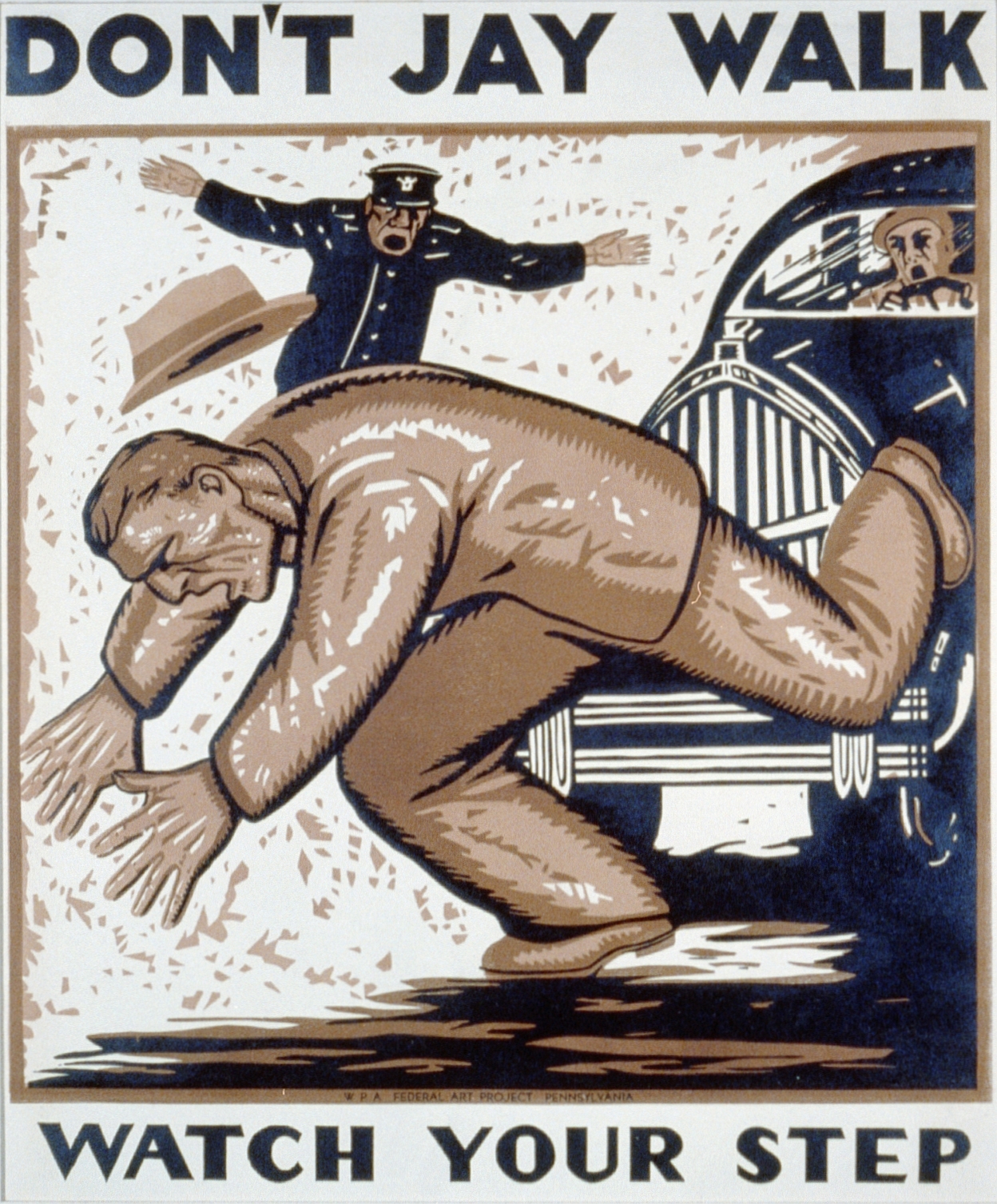
Jaywalking describes a pedestrian crossing of a roadway that does not conform to traffic controls: stepping outside a marked crosswalk, ignoring a walk signal, or crossing mid-block where rules require otherwise. The act is commonly discussed where vehicle speed and traffic flow create elevated risks for those on foot. Definitions and penalties vary widely by jurisdiction.
Image gallery
10 Images


Definition and common examples
What counts as jaywalking depends on local statutes and traffic codes. Typical examples include:
- Crossing between intersections where a marked crosswalk exists at the nearest intersection.
- Stepping into the roadway against a pedestrian signal or red light.
- Crossing in poor visibility without yielding to vehicles.
Legal treatment and enforcement
Many countries and cities treat jaywalking as an infraction enforceable by a fine; some places rarely ticket pedestrians while others prioritize enforcement for safety. In the United States, for example, local rules differ and police might cite local laws to issue warnings or fines. The people who cross streets are generally referred to as pedestrians, and their responsibilities and rights are set alongside drivers' obligations.
History, rationale and controversy
The term emerged in the early 20th century amid efforts to prioritize automobiles and regulate street use. Supporters of enforcement point to reduced collisions and clearer traffic flow; critics argue that strict enforcement can criminalize ordinary behavior, disproportionately affect vulnerable groups, and distract from dangerous driving by motorists.
Safety and urban design responses
Rather than relying solely on penalties, many cities use engineering and policy to reduce risky crossings: better lighting, pedestrian countdown signals, raised crosswalks, curb extensions, and traffic calming. Education campaigns and redesigns aim to make streets safer for everyone without turning routine pedestrian movement into a frequent legal issue.
Notable distinctions
Whether an act is labeled jaywalking depends on law, culture and context. In some countries, pedestrian priority is higher and informal crossings are commonplace; in others, enforcement is strict. When in doubt, following signals, using marked crossings, and making eye contact with drivers reduces risk.
Related articles
Author
AlegsaOnline.com Jaywalking: pedestrian street crossing, laws, safety, and history Leandro Alegsa
URL: https://en.alegsaonline.com/art/49680