
Japanese dialects: groups, features, history and sociolinguistic role
Overview of the regional varieties of Japanese, their major groupings, linguistic features, history of standardization, and distinction from the Ryukyuan languages.
Japanese dialects (日本の方言, Nihon no hōgen) are the regional varieties of the Japanese language. They differ in pronunciation, grammar, vocabulary and accent patterns while remaining part of a broader Japonic speech community. For a general introduction to classification and linguistic background see overview resources. Mainland dialects form a continuum rather than strictly separated islands of speech, so regional grouping is a practical descriptive tool rather than an absolute division.
Image gallery
10 Images




Major groups and examples
- Hachijō: island varieties south of Tokyo that are highly divergent and sometimes treated separately from other mainland dialects.
- Eastern Japanese: includes the Tokyo area and surrounding prefectures; modern standard Japanese is closest to prestige Tokyo varieties (Tokyo).
- Western Japanese: covers Kansai and parts of western Honshu; Kyoto and Osaka varieties (Kyoto) have distinct intonation, grammar and polite forms.
- Kyushu: a cluster of dialects on the southwestern main island, internally diverse and often conservative in some phonological features.
These mainland groups should be distinguished from the Ryukyuan languages, spoken in Okinawa Prefecture and parts of Kagoshima Prefecture. Ryukyuan varieties are separate branches of the Japonic family and are not mutually intelligible with Japanese; they are therefore classified as distinct languages rather than dialects of Japanese.
Linguistic characteristics
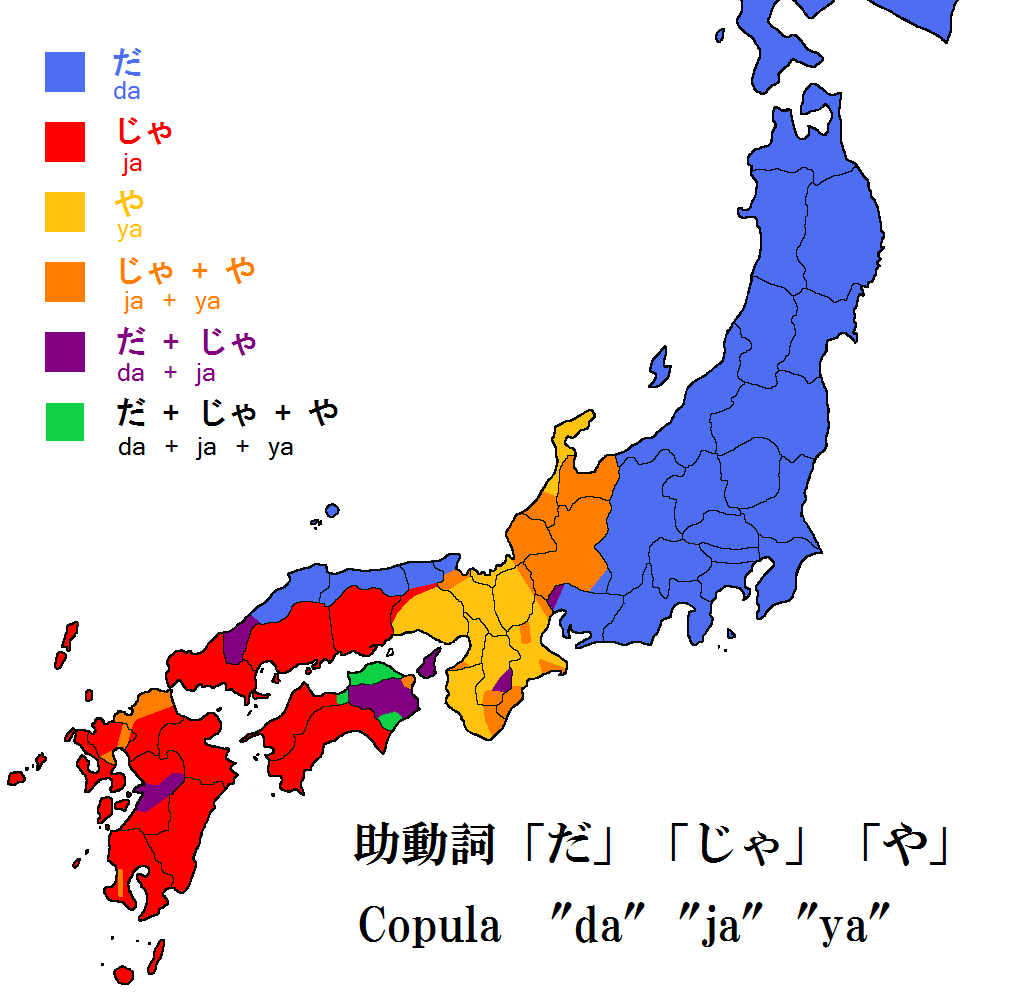
Dialectal differences occur on several linguistic levels. Phonology: vowel quality, consonant realization, and the presence or absence of certain consonant clusters vary regionally; pitch-accent systems differ and some areas have no pitch accent comparable to the Tokyo pattern. Morphology and syntax: verb endings, auxiliary forms, sentence-final particles and use of copulas show regional patterns—for example, negative or presumptive endings and polite forms may take local shapes. Lexicon: region-specific vocabulary preserves older words or develops local innovations, including agricultural, culinary and seasonal terms. Together these elements produce recognizable local speech styles and can signal social and regional identity.
Classification and mutual intelligibility
Scholars group dialects by shared innovations and geographic proximity, but transitional zones and internal diversity are common. Mutual intelligibility ranges from near-complete (minor accent and lexical differences) to difficult (some rural or isolated varieties), and varieties such as Hachijō can be especially divergent. The label "dialect" in Japanese contexts covers a spectrum from accent variation to varieties approaching separate-language status in communicative distance.
History, standardization and contemporary trends
Regional varieties evolved from Old and Middle Japanese under conditions of geographic separation, shifting political centers, and local contact. The modern standard was promoted from the Meiji period onward through education, administration and national media, favoring Tokyo-based norms and reducing some local variation. Postwar internal migration, urbanization and mass media have further influenced usage, particularly among younger speakers, but many dialects remain robust in family and community contexts.
Sociolinguistic role and preservation
Dialects function as markers of regional identity and carry social meanings; some varieties are viewed as prestigious, others stigmatized. Language attitudes affect transmission: schooling and national media encourage standard forms, while local pride, cultural festivals, dialect literature and academic documentation support maintenance. Island, rural and minority varieties are most vulnerable and have been the focus of descriptive research and revitalization efforts.
Further reading and resources
For comparative studies and region-focused descriptions consult general surveys and regional studies, including resources linked above (general overview, regional grouping). For concrete examples of local speech, see dedicated work on Tokyo and Kyoto dialects, and on the separate status of Ryukyuan varieties in Okinawa and Kagoshima. Scholarly surveys, grammars and dialect atlases provide further detail for readers and researchers wishing to explore variation, history and language policy.
Related articles
Author
AlegsaOnline.com Japanese dialects: groups, features, history and sociolinguistic role Leandro Alegsa
URL: https://en.alegsaonline.com/art/49519