
Ryukyuan languages: languages of the Ryūkyū Islands
A group of Japonic languages spoken in the Ryūkyū Islands (Amami, Okinawan, Miyako, Yaeyama, Yonaguni). Distinct from mainland Japanese and regarded as endangered with ongoing revitalization efforts.
The Ryukyuan languages are a cluster of related languages traditionally spoken across the Ryūkyū Islands in the southwestern chain of Japan. They form one branch of the wider Japonic family, with mainland Japanese forming the other branch. Commonly cited members are Amami, Kunigami, Okinawan, Miyako, Yaeyama and Yonaguni. Although governments in some contexts have labeled them "dialects," most linguists treat them as separate languages because they are not mutually intelligible with each other or with standard Japanese.
Image gallery
10 Images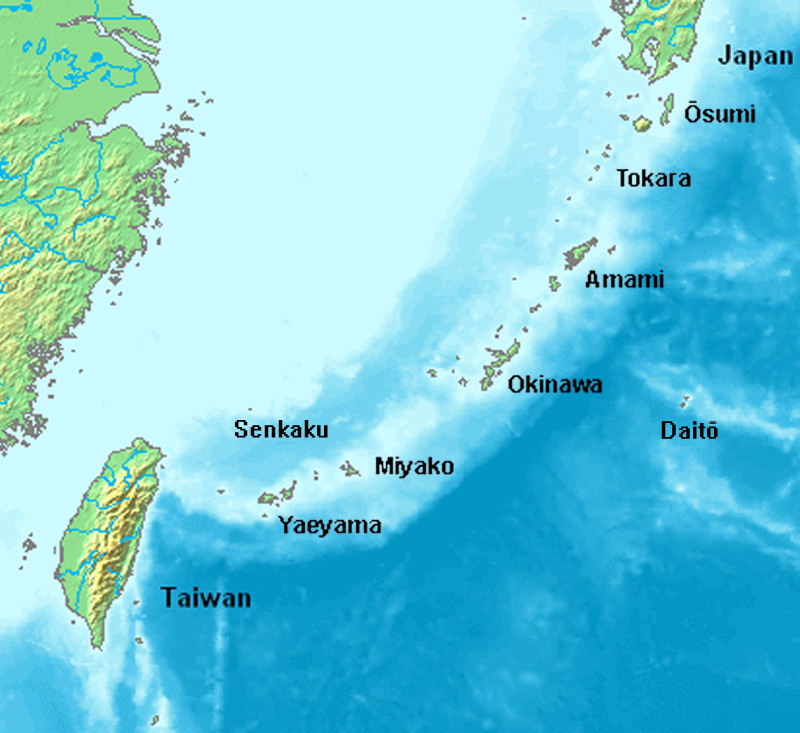


Overview and linguistic features
Ryukyuan languages share grammatical features with Japanese such as subject–object–verb (SOV) word order and agglutinative morphology, but they also exhibit distinctive sound systems, vocabulary and accent patterns. Phonological differences include vowel inventories and consonant contrasts that vary by island group; some varieties preserve older Japonic sounds that have changed on the mainland. They use a mixture of historical kana/kanji literacy and modern Latin- or kana-based orthographies in documentation and education.
Varieties and geographic distribution
- Amami — spoken in the northern Ryūkyū chain (Amami Islands).
- Kunigami — found in the northern part of Okinawa Island and nearby islets.
- Okinawan — the central variety, historically influential in the old Ryukyu Kingdom.
- Miyako — several distinct varieties across the Miyako Islands.
- Yaeyama — spoken in the southern island group of the same name.
- Yonaguni — the westernmost and most divergent, spoken on Yonaguni Island.
History, status and decline
These languages developed in relative isolation over centuries, shaped by the independent Ryukyu Kingdom's maritime culture and contacts with neighboring regions. Following annexation by the modern Japanese state in the late 19th century and intensified nation-building, local languages were devalued in schools and public life. Postwar mobilization, migration and the dominance of standard Japanese accelerated language shift. Today speakers are often older adults, and many Ryukyuan varieties are classified as endangered on international language lists.
Revitalization and notable facts
Community groups, scholars and local governments have launched documentation projects, language classes, media programming and festivals to encourage intergenerational transmission. Scholarly work continues to clarify internal relationships and historical change within the Ryukyuan branch and its place in the broader Japonic family. Visitors to the Ryūkyū Islands encounter linguistic diversity that reflects a distinct cultural heritage; discussions about legal recognition and education policy remain active in Japan.
Because many speakers use both a Ryukyuan language and standard Japanese, bilingual programs and sensitive policy measures are often suggested as ways to support preservation while respecting local identities.
Related articles
Author
AlegsaOnline.com Ryukyuan languages: languages of the Ryūkyū Islands Leandro Alegsa
URL: https://en.alegsaonline.com/art/85000