
Jami (Nur ad‑Din Abd ar‑Rahman Jami): Persian Sufi Poet and Scholar
Persian Sufi poet and polymath (1414–1492). Renowned for his masnavis, Divan of poems and prose works in Persian and Arabic; a leading literary and spiritual figure of the Timurid era.
Nur ad‑Din Abd ar‑Rahman Jami (1414–1492), commonly known simply as Jami, is one of the best‑known Persian poets and Sufi writers of the late Timurid period. Born in the town of Jam in the historical region of Khorasan, he combined traditional education in Islamic sciences, philosophy and literature with a lifelong engagement in Sufi practice and teaching. Jami wrote in both Persian and Arabic and produced a large corpus of poetry and prose that was widely read, copied and illustrated in the centuries after his death.
Image gallery
5 Images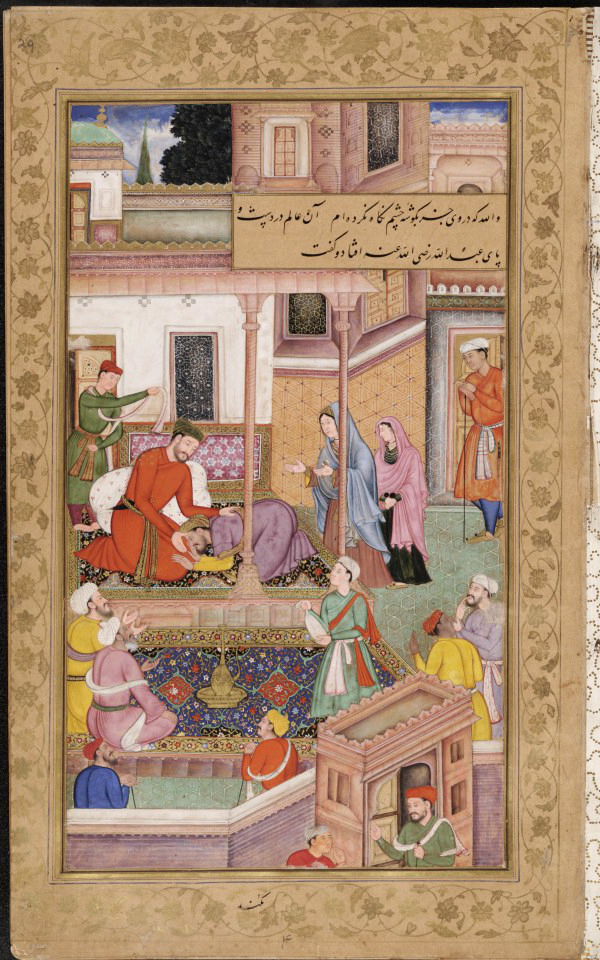


Life and intellectual formation
Jami received training in languages, theology and the classical literary canon in major cultural centers of his time, including Herat and Samarqand, where scholars, patrons and book arts flourished. His learning encompassed Arabic literature, Qur'anic studies, logic and philosophy alongside commentaries on earlier Sufi masters. He occupied a prominent position among the learned circles of the Timurid courts and later Sufi communities, and he left a sizable body of instructional and devotional works in both prose and verse.
Major works and themes
Jami's output included lyric ghazals, long narrative masnavis and learned prose. His poetry was gathered in a Divan, while his best‑known masnavis—including a celebrated poetic treatment of the Yusuf and Zulaikha story—became models of moral, mystical and aesthetic reflection. A multi‑volume work often cited in manuscript traditions is the Haft Awrang ("Seven Thrones"), a cycle of masnavis. In prose he composed treatises on Sufi doctrine, hagiographical sketches and philosophical reflections that sought to harmonize exoteric law and esoteric insight.
Style, influence and manuscript culture
Jami's voice is marked by careful classical diction, dense allusion and an emphasis on inner transformation. His verse mixes erotic and mystical imagery, ethical advice and metaphysical argument, drawing on earlier Persian and Arabic models while shaping later Ottoman, Safavid and Mughal poetic tastes. Many of his works survive in richly illuminated manuscripts, attesting to their popularity among patrons of book arts. European Orientalists and translators began to study and render parts of his oeuvre in the 19th century, helping to introduce Jami to a global readership.
Legacy and significance
Regarded as a major representative of Persian Sufi literature, Jami is frequently cited for bridging scholastic learning and mystical practice. His writings influenced devotional life, literary style and commentary traditions across Persianate lands. Modern readers encounter Jami through translations, critical editions and surviving manuscripts that continue to be studied in literary and religious history.
Further reading and resources
- Overview and biographical summary
- Manuscript collections and catalogues
- Selected translations and editions
- Studies of Haft Awrang and masnavi form
- Analyses of Jami's Sufi thought
- Contexts: Timurid intellectual life
- Literary style and poetic themes
- Jami in manuscript painting traditions
- Bibliography of primary works
- Comparative studies with contemporary poets
- English introductions and notes
- Catalogues of translations and critical editions
Related articles
Author
AlegsaOnline.com Jami (Nur ad‑Din Abd ar‑Rahman Jami): Persian Sufi Poet and Scholar Leandro Alegsa
URL: https://en.alegsaonline.com/art/49313