
Apollo 15 — First Use of the Lunar Rover and an Extended Scientific Mission
Apollo 15 (July 1971) was NASA's fourth Moon landing and the first J‑type mission. It used the Lunar Roving Vehicle at Hadley–Apennine, performed extended field geology and returned deep core samples.
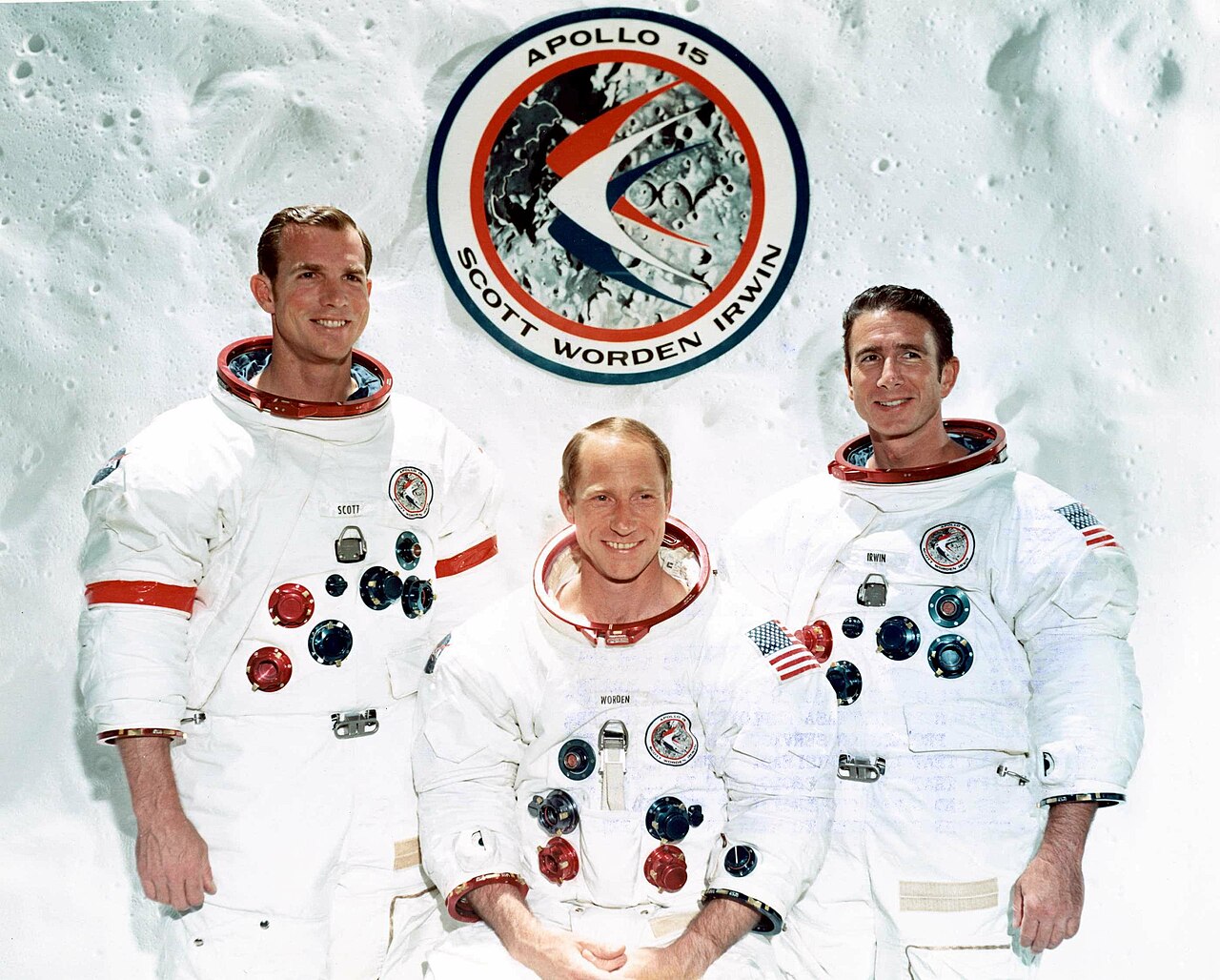
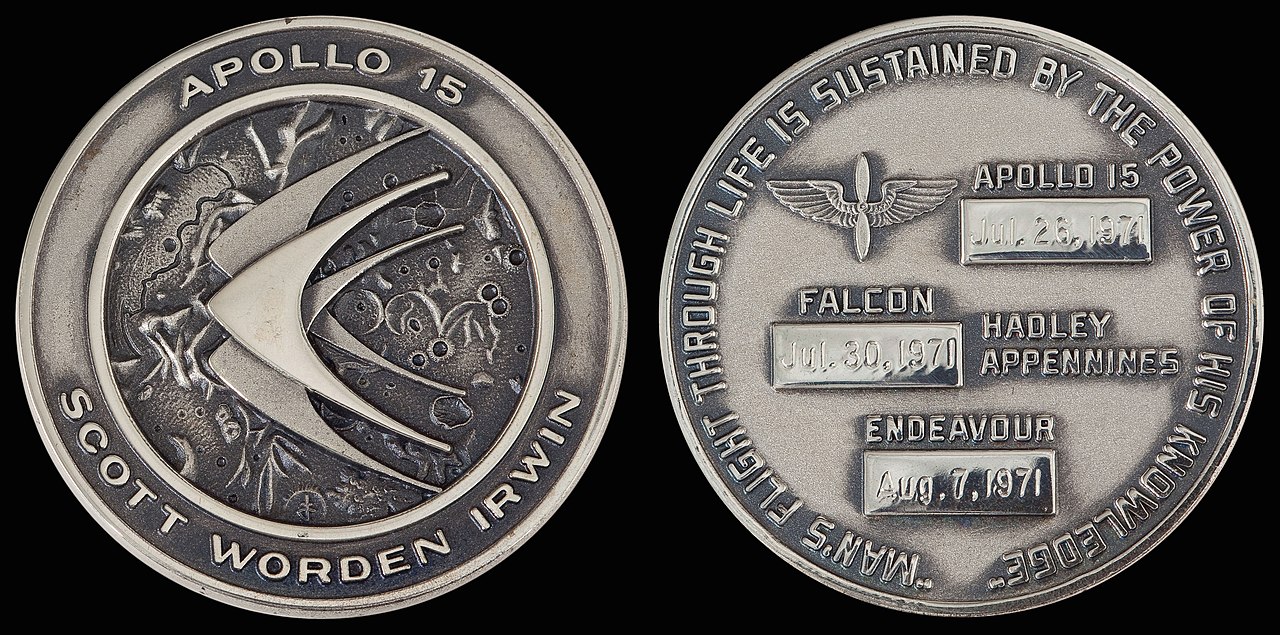
Apollo 15 was the ninth crewed flight in the NASA Apollo program and the fourth mission to land humans on the Moon. Launched on 26 July 1971, its three-person crew consisted of commander David Scott, lunar module pilot James Irwin and command module pilot Alfred Worden. Scott and Irwin descended in the Lunar Module Falcon to establish Hadley Base, while Worden remained in the Command Module Endeavour in lunar orbit. The mission combined piloting, extensive surface exploration and spacecraft operations in cislunar space.
Apollo 15 was the first of the so-called J-type missions, a later series of Apollo flights designed to emphasize longer stays and more ambitious science on the surface. The crew deployed and drove the first practical crewed electric vehicle for the Moon, the Lunar Roving Vehicle, which had to operate reliably in a hard vacuum and across large temperature swings in rough terrain (vacuum). Using the rover, the astronauts covered about 17.5 mi on the surface, a distance often given also as 28 km. Their surface stay lasted roughly three days (reported as 66 hours, 55 minutes), during which time they collected a substantial set of geological samples including a deep core from at least 10 ft (3 m) depth.
Image gallery
10 Images





Mission aims and equipment
The primary goals of Apollo 15 were to perform detailed geological fieldwork, deploy surface experiments, and test hardware for extended exploration. The mission carried an enhanced scientific complement: the Lunar Module carried tools for sampling and trenching, and the Command Module housed a scientific instrument bay used while in lunar orbit. On the surface the crew deployed an experiment package and used the rover to reach multiple sampling stations at greater range than was possible on earlier missions.
Key activities and achievements
- First operational use of the Lunar Roving Vehicle, allowing larger traverses and more diverse sampling sites.
- Extended surface geological exploration at the Hadley–Apennine region, chosen for varied terrain and volcanic features.
- Collection of numerous rock and soil samples, including a core sample that reached meters into the regolith, improving understanding of lunar stratigraphy.
- Deployment of surface science instruments that gathered seismic, heat-flow and other long‑term data.
- A Command Module EVA in deep space by Alfred Worden to retrieve film and data from the scientific instrument bay—a notable spacecraft operation beyond the lunar surface.
These accomplishments marked a shift from short sorties to true field science on the Moon. The samples and experiment data returned by Apollo 15 have been analyzed by many laboratories and remain valuable for studies of lunar origins, crustal composition and the history of volcanic and impact processes on the Moon.
Legacy
Apollo 15 is often cited for its combination of mobility and focused science: the rover demonstrated that astronauts could explore wider areas, while the J‑type payloads showed the value of enhanced instruments for orbital and surface research. Findings from Apollo 15 influenced the planning of later lunar activities and continue to inform planetary geology. For further reading about the people, hardware and scientific results associated with this mission, see missions and collections held by institutional archives and technical reports linked from official resources such as NASA and program histories Apollo.
References within mission documentation and public summaries commonly reference the crew (David Scott, James Irwin, Alfred Worden), the landing site and the principal pieces of equipment described above. For archival images and mission transcripts consult curated repositories and historical collections noted by major space agencies and research libraries (Moon mission records and instrument reports are typical entry points).
Related articles
Author
AlegsaOnline.com Apollo 15 — First Use of the Lunar Rover and an Extended Scientific Mission Leandro Alegsa
URL: https://en.alegsaonline.com/art/4907
Sources
- history.nasa.gov : Apollo by the Numbers: A Statistical Reference · web.archive.org
- history.nasa.gov : history.nasa.gov/SP-4029/Apollo_00g_Table_of_Contents.htm
- nssdc.gsfc.nasa.gov : "Apollo 15 Lunar Module /ALSEP"
- airandspace.si.edu : "Apollo 15 Command Module"
- airandspace.si.edu : "Lunar Module LM-2"
- history.nasa.gov : "Apollo 15 timeline"
- history.nasa.gov : "Apollo 15 The Ninth Mission: The Fourth Lunar Landing 26 July-7 August 1971"
- nssdc.gsfc.nasa.gov : "NASA NSSDC Master Catalog – Apollo 15 LM descent stage" · web.archive.org
- nasa.gov : "NASA - Apollo 15"