
Apollo 12: NASA's Second Crewed Lunar Landing Mission
Apollo 12, launched November 14, 1969, achieved a precision lunar landing in Oceanus Procellarum. Crew Conrad, Bean and Gordon performed EVAs, deployed experiments and returned hardware and samples including parts of Surveyor III.
Overview
Apollo 12 was the sixth crewed flight of the United States Apollo program and the second mission to land people on the Moon. Launched on November 14, 1969, it followed the historic Apollo 11 landing and aimed to demonstrate more precise landing, longer surface activities and expanded scientific work. The mission underscored the transition from proving that humans could reach the Moon to carrying out systematic exploration and sample collection.
Image gallery
10 Images


Crew, spacecraft and objectives
The three-person crew consisted of commander Charles "Pete" Conrad, lunar module pilot Alan Bean and command module pilot Richard F. Gordon. The command module, which remained in lunar orbit, and the lunar module, which descended to the surface, worked together to accomplish the mission goals. Primary objectives included a precision landing in the Ocean of Storms (Oceanus Procellarum), geological sampling, deployment of surface experiments, and the retrieval of parts from an earlier unmanned lander.
Mission timeline and surface activities
Apollo 12 launched aboard a Saturn V rocket. During ascent the launch vehicle suffered a brief electrical disturbance caused by lightning strikes, which temporarily disrupted telemetry and guidance systems; quick actions by the flight controllers and crew restored normal operation and allowed the mission to proceed. The lunar module, Intrepid, landed within walking distance of the Surveyor III probe, making Apollo 12 the first mission to perform a targeted precision landing near a known surface object.
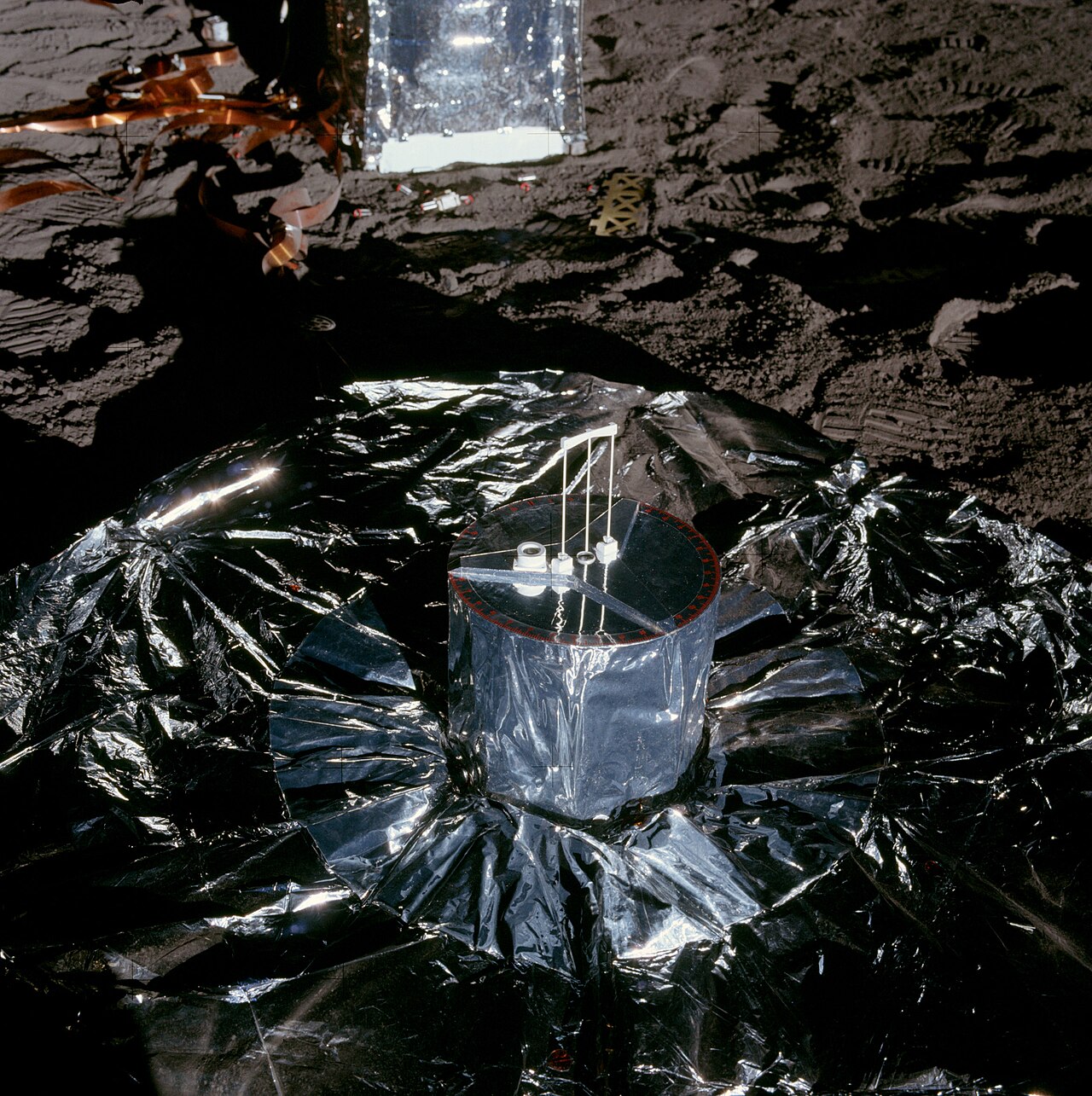
Conrad and Bean conducted two moonwalks (extravehicular activities or EVAs) totaling several hours on the surface. Their tasks included collecting rock and soil samples, photographing geologic features, setting up the Apollo Lunar Surface Experiments Package (ALSEP) and retrieving parts of the Surveyor III spacecraft that had landed in April 1967. The samples and hardware brought back to Earth provided valuable ground truth for interpreting remote observations and for understanding lunar geology and space-weathering effects on materials left on the surface.
Scientific experiments and results
On the surface the crew deployed experiments designed to operate after departure, including seismometers and other instruments to monitor the lunar environment. Deliberately crashing the lunar ascent stage into the Moon later provided a controlled seismic event that was recorded by the surface seismometers, helping scientists study the lunar interior. Data collected by ALSEP and returned samples contributed to knowledge about the Moon's composition, structure and the effects of long-term exposure to the space environment.
Legacy and notable facts
Apollo 12 demonstrated that NASA could land astronauts precisely at a chosen site, greatly expanding the scope of lunar exploration. It was the first mission to visit and sample an earlier spacecraft on the lunar surface, offering practical lessons about in-situ contamination and the durability of equipment. The mission also highlighted the importance of rapid problem solving in flight operations; the response to the launch electrical anomaly is often cited as a case study in mission control decision-making. The command module, named Yankee Clipper, carried the orbiting crew while Intrepid returned the surface crew to lunar orbit for rendezvous and return to Earth.
- Program context: part of the broader Apollo program to land humans on the Moon and return them safely.
- Precision target: landing in Oceanus Procellarum, near the Surveyor III probe.
- Hardware retrieval: brought back components of Surveyor III for study.
- Crew roles: Conrad and Bean on the surface, Gordon in orbit.
Apollo 12 remains an important step in lunar exploration, bridging the demonstration achievements of the first landing with more ambitious science-driven missions that followed.
Related articles
Author
AlegsaOnline.com Apollo 12: NASA's Second Crewed Lunar Landing Mission Leandro Alegsa
URL: https://en.alegsaonline.com/art/4903
Sources
- nasa.gov : "NASA - Apollo 12"