
Anemone coronaria — the poppy anemone of the Mediterranean
Anemone coronaria is a tuberous perennial from the Mediterranean, prized for brightly coloured cup-shaped flowers. Widely cultivated, it has many garden cultivars and is the national flower of Palestine.
Anemone coronaria is a herbaceous, tuberous flowering plant valued for its bold, cup-shaped blossoms and early spring display. Belonging to the genus Anemone, it is native to the Mediterranean basin and adjacent regions, where it grows in open fields and scrubby slopes. Plants are commonly called poppy anemone, Spanish marigold or Palestine anemone in horticulture and popular usage.
Image gallery
10 Images




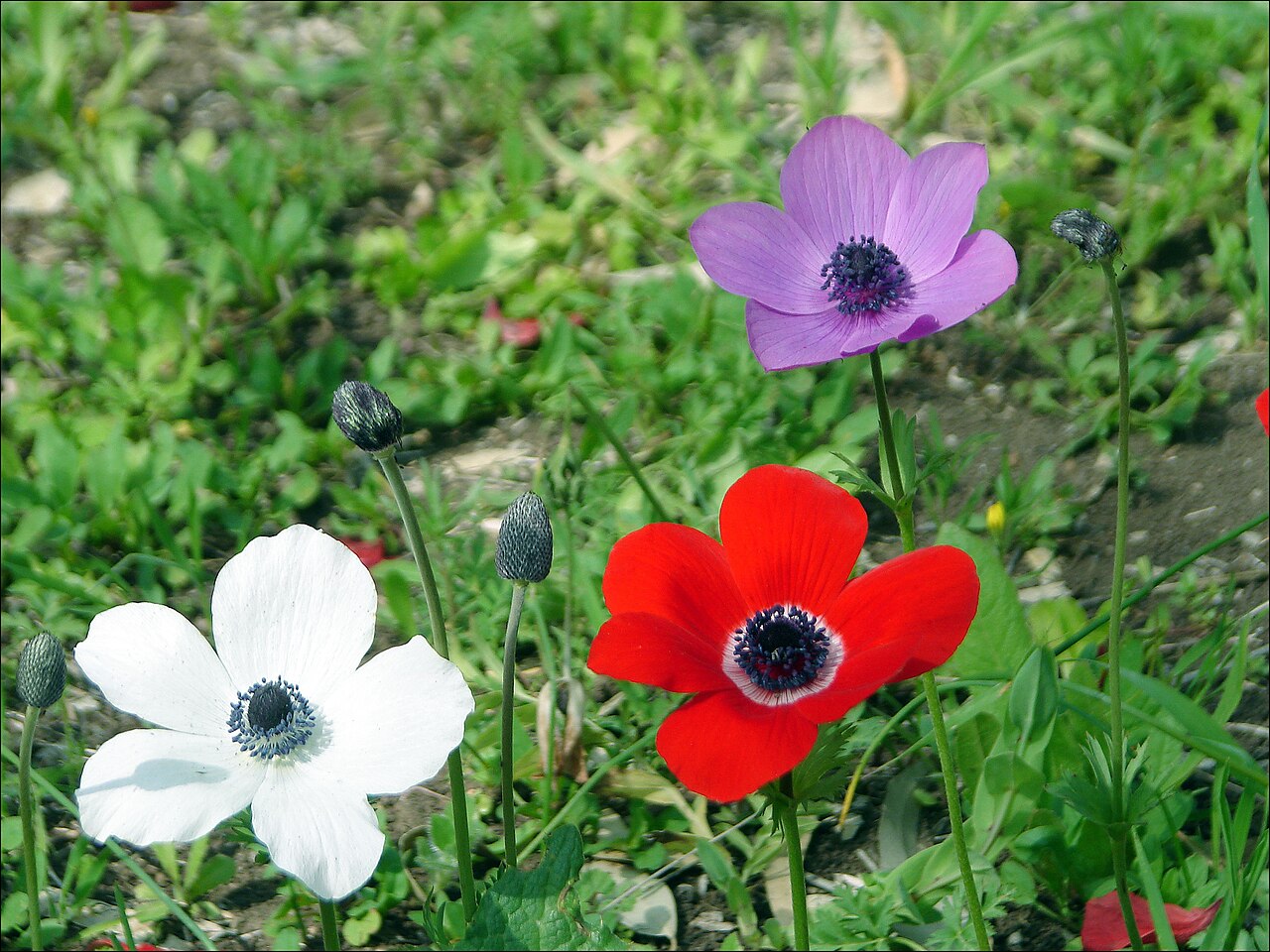
Characteristics and structure
This species produces a cluster of divided basal leaves and one or more erect flower stems arising from an underground tuberous rootstock. The single flowers are borne at stem tips and typically have a central disk of dark stamens surrounded by a ring of colored petals (technically tepals). Flower colours include red, white, pink, blue and violet, often with a contrasting dark center. Plants are low-growing and usually cultivated for spring flowering.
Cultivation and horticulture
Anemone coronaria is widely grown in temperate gardens and as a cut flower. It is usually propagated from dormant tubers or by seed and prefers well-drained soil with full sun to light shade. In regions with mild winters tubers are planted in autumn for spring bloom; in colder areas they may be lifted and stored. Common garden practices include staking taller forms and removing spent flowers to encourage tidy growth and prevent self-seeding.
Cultivar groups and selections
Over centuries of cultivation breeders have selected numerous named forms for flower shape and fullness. Garden types are often grouped by floral form and origin; two familiar groups are:
- De Caen group — typically single, bowl-shaped blooms favored for mass plantings and borders.
- St. Brigid group — usually double or semi-double, used where fuller, rose-like flowers are desired.
Uses and importance
The species is prized for bedding, rock gardens, containers and floral arrangements. Its vivid colours and relatively early season make it useful for seasonal displays and for adding contrast in mixed plantings. Commercial growers produce both cut flowers and potted plants for markets that demand strong, showy blooms.
History and cultural significance
Anemone coronaria has been known and cultivated around the Mediterranean since antiquity and features in regional folklore and horticulture. It is the national flower of Palestine, where it appears in cultural references and local art. For botanical and conservation information see general resources on the genus Anemone and the plant's native region Mediterranean, and for cultural notes see material relating to the species' role as a national symbol Palestine.
Notable facts: the species' tuberous habit distinguishes it from many other anemones that grow from rhizomes or are purely herbaceous, and its cultivated diversity—from single bowls to double rosettes—makes it a versatile garden subject.
Tags
Related articles
Author
AlegsaOnline.com Anemone coronaria — the poppy anemone of the Mediterranean Leandro Alegsa
URL: https://en.alegsaonline.com/art/4090