
Intellivision: Mattel's 1980 Home Video Game Console and Legacy
Home video game console introduced by Mattel Electronics in 1980, known for numeric-keypad controllers, a voice synthesis module, and a catalogue of sports and strategy titles; now owned by Intellivision Entertainment.
Overview
The Intellivision was a home video game system developed by Mattel Electronics and released commercially in 1980 to compete with rivals such as the Atari 2600. It remained on the market through the 1980s and was officially discontinued in the early 1990s. Over the decades the platform changed hands and its intellectual property is now held by Intellivision Entertainment, which announced a modern, family-focused console under the Intellivision Amico brand targeted for release in regions including North America, the United Kingdom and the rest of Europe and MENA.
Image gallery
10 Images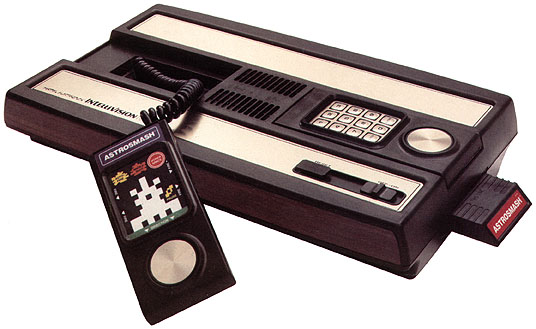


Key characteristics
Intellivision was noted for hardware and design choices that set it apart from contemporaries: controllers combined a direction pad or disc with a numeric keypad, often used with plastic overlays to label game functions. Games were supplied on ROM cartridges and the system supported optional expansions such as a computer-style keyboard module and a voice synthesis attachment that added spoken audio to some titles.
Software and genres
The library emphasized sports simulations, strategy and action titles, with many releases developed in-house by Mattel. Its games tended to aim for greater realism and complexity than many cartridge-era competitors, giving rise to distinctive play experiences in sports, tactical and puzzle genres. While a mix of first-party and later third-party efforts filled the catalogue, the system remained best known for titles that showcased its sound and graphical strengths.
History and market context
Introduced during the golden age of early home consoles, Intellivision arrived as part of a crowded market. The video game crash of the early 1980s and shifting retail conditions affected many manufacturers. Mattel eventually reduced support for the line and the original production run ceased; however the platform maintained a dedicated fan base. Over time the brand and rights were acquired by new owners intent on reviving the name for modern audiences.
Legacy and revival efforts
Collectors and retro gaming communities continue to preserve Intellivision hardware and software, and the system is frequently referenced in histories of early videogame design because of its controller concept and optional voice module. In the 21st century the brand has reemerged through remasters, emulation projects and the announced Amico device, which its backers described as focusing on approachable, family-friendly games for markets including North America, the United Kingdom and Europe and MENA.
Notable distinctions
- Controller design: keypad plus directional control encouraged different control schemes than paddle or simple joystick systems.
- Expandable platform: optional modules (keyboard, voice) broadened capabilities beyond a basic cartridge console.
- Focus on realism: many games aimed for more detailed simulations, especially in sports titles.
- Cultural footprint: remembered by enthusiasts and preserved through emulation and community archives.
Related articles
Author
AlegsaOnline.com Intellivision: Mattel's 1980 Home Video Game Console and Legacy Leandro Alegsa
URL: https://en.alegsaonline.com/art/47557