
Independence Day (Israel)
Israel's national day marking the 1948 declaration of statehood, observed on 5 Iyar (Hebrew calendar) with public ceremonies, memorial rites, cultural events and national symbols.
Overview
Independence Day of Israel, known in Hebrew as Yom Ha'atzmaut, is the state's principal national holiday. It commemorates the Declaration of the Establishment of the State of Israel in 1948. The day is a national celebration that follows a period of formal remembrance and is marked by state ceremonies, public festivals and private gatherings.
Image gallery
10 Images


Date and observance
The holiday is set on the fifth day of Iyar in the Hebrew calendar, a date that usually falls between April and May. The modern observance follows a fixed ritual rhythm: mourning and tribute on the day before, and celebration beginning at sundown and extending for 24 hours. When the Hebrew date would create conflict with the Sabbath or other public considerations, the official timing of ceremonies may be adjusted by law.
Ceremonies and public customs
The formal state ceremony typically takes place in Jerusalem and includes speeches by national leaders, official songs and symbolic acts. A central element is the transition from the national day of remembrance to celebration: Yom HaZikaron, dedicated to fallen soldiers and victims of terrorism, immediately precedes Independence Day and is formally closed as the new-day ceremonies open. One long-standing feature is the torch-lighting ceremony; each torch often represents different segments of society.
- Official ceremony on Mount Herzl and other civic events (Mount Herzl).
- Public concerts, air shows and community festivals led by municipal and national organizers.
- Private barbecues, family gatherings and the display of the national flag.
- Remembrance-to-celebration ritual: a memorial minute and then ceremonial lighting or a symbolic fire.
Historical background
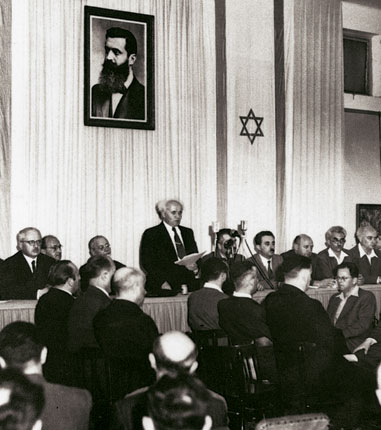
The declaration that established the state was read in 1948 amid the end of the British Mandate for Palestine and the departure of British authorities. That announcement, and the events that followed, are the basis for the modern holiday. The original public proclamation is a defining moment in Israel’s founding narrative and is commemorated each year in educational programs and official recollections.
Significance and public life
Independence Day combines civic pride, cultural expression and reflection on national continuity. It is an occasion for official honors to veterans and civic leaders as well as for festive community life. The day also highlights social and political debates about identity, the meaning of statehood and the balance between secular and religious sensibilities in public observance.
Related institutions and sources
Details about the holiday’s ceremonies, its legal scheduling and related public programming are provided by official state and municipal institutions. For more formal descriptions of the declaration and historical context see resources on the Declaration, the end of the British Mandate, and contemporary accounts of the ceremony.
Further reading and official schedules are available through government and cultural outlets: Hebrew name and local materials, national commemorative pages and municipal event listings provide annual programs and participation details.
Related articles
Author
AlegsaOnline.com Independence Day (Israel) Leandro Alegsa
URL: https://en.alegsaonline.com/art/47044