
Jack-o'-lantern
A carved lantern tradition using pumpkins or root vegetables, with origins in Irish folklore and wide modern cultural use during autumn and Halloween.
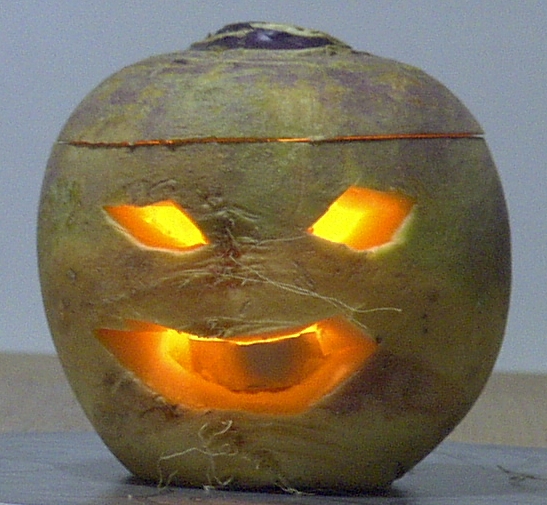
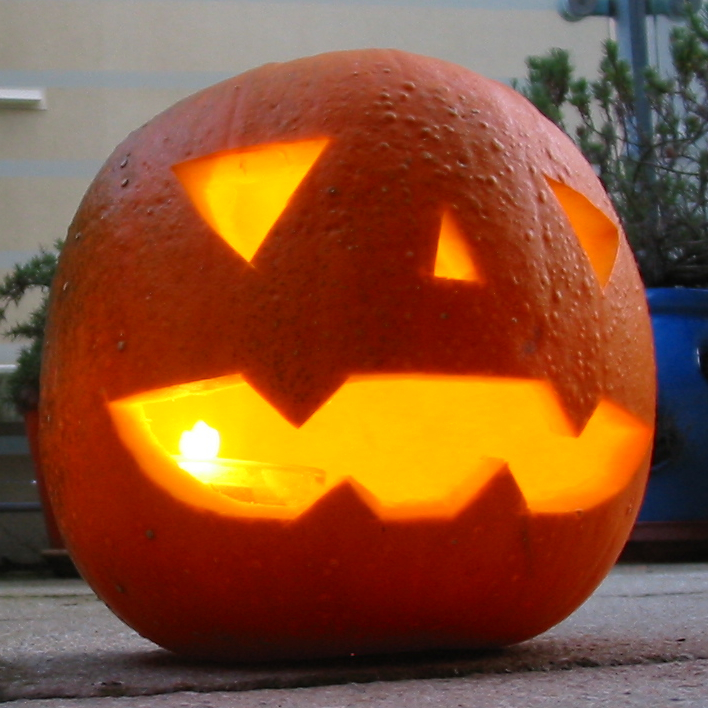
A jack-o'-lantern is a hollowed, carved vegetable lantern traditionally associated with autumn festivals and especially with Halloween in parts of the world. In contemporary practice the term most often denotes a carved pumpkin, but earlier and regional variants were made from other root crops such as the turnip, beet and potato. The basic idea is to remove interior pulp, create a face or design on the shell, and illuminate the cavity to produce a glowing effect visible at night.
Image gallery
9 Images



Construction and common styles
Making a jack-o'-lantern typically involves cutting an opening at the top or side to serve as a lid, scooping out seeds and fibrous material, and carving a face or pattern into the outer wall. Eyes, a nose and a mouth are common motifs; styles range from simple triangular features to detailed sculptural portraits. Illumination may come from a small candle, a battery-powered light or a handheld light source such as a flashlight. Many people roast the removed seeds as a snack after cleaning the interior. While large American pumpkins are easy to carve and have become the usual choice in places where they are available, smaller or harder root vegetables were used in colder climates or where pumpkins were not grown.
Origins and folklore
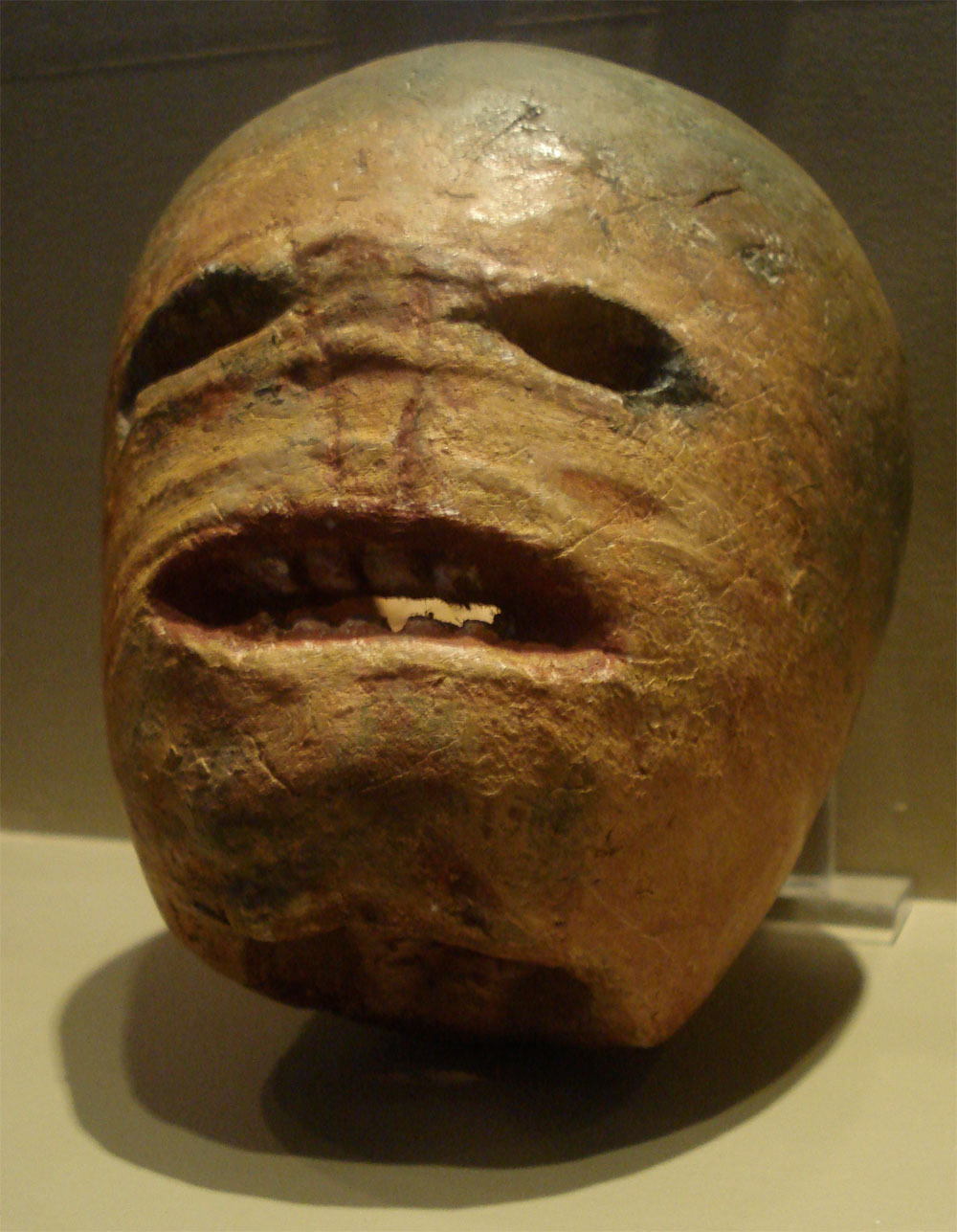
The jack-o'-lantern tradition has roots in the British Isles and in Irish folklore in particular. A well-known legend speaks of a man nicknamed "Stingy Jack" who tricked the devil and, denied entry into heaven and unable to rest in hell, wandered the world carrying a coal inside a hollowed vegetable to light his way. That ember, enclosed in a turnip or similar vegetable, became a wandering light sometimes called "Jack of the Lantern" or "jack-o'-lantern." The custom of carving lanterns from large turnips was common in parts of Scotland and Ireland in the 19th century and persisted into the 20th century before North American pumpkins became widespread replacements.
Historical spread and cultural role
When immigrants from Ireland and Scotland came to North America they adapted their lantern-making practices to local crops, discovering that large orange pumpkins carved more easily and held light well. Over time the carved pumpkin became linked with harvest displays and, increasingly, with Halloween festivities. By the late 19th and early 20th centuries references to lit carved pumpkins appear in seasonal entertaining guides and newspapers in the United States. Today, carved pumpkins serve decorative, symbolic and communal functions: they mark thresholds, welcome trick-or-treaters, participate in contests and often act as ephemeral street or porch decorations during October and early November.
Practices, preservation and variations
Design approaches vary from quick, stylized faces to elaborate scenes cut through the rind. Builders choose lids, ventilation holes and supports to keep an internal flame trimmed and to prolong the carved form. Carved pumpkins are perishable and typically last only a few days to a couple of weeks before softening and decaying; refrigeration, sealing cuts with petroleum jelly and using artificial lights can extend display life. In some communities creative alternatives—such as painting or decorating whole uncarved pumpkins—offer longer-lasting displays that avoid waste or vandalism. Mischief involving removal or destruction of jack-o'-lanterns has been reported historically where they are used as outdoor decorations.
Notable facts and related topics
- The name "jack-o'-lantern" originally referred to a night watchman or an evening phenomenon such as a will-o'-the-wisp before becoming attached to carved lanterns.
- Regional produce choices reflect climate and agriculture: large orange pumpkins in North America, and turnips, beets or potatoes in parts of Europe.
- Folklore elements often mention fire or coals cast by infernal forces, linking the motif to ideas about the underworld and to seasonal rituals connected with All Hallows' Eve and All Saints' Day, commonly grouped with modern Halloween observances.
For those who want to explore further, local histories and folklore collections typically contain regional variations of the jack-o'-lantern story and its evolution. Practical how-to guides and community event pages give step-by-step carving instructions, safety tips and ideas for sustainable or decorative alternatives. See related entries and resources: pumpkin, turnip, beet, potato, 19th century customs, 20th century accounts, Scotland, Ireland, the devil in folklore, ideas of hell, Halloween, lighting methods.
Questions and answers
Q: What is a Jack-o'-lantern?
A: A Jack-o'-lantern is a carved pumpkin, turnip, beet, or potato that is traditionally associated with Halloween.
Q: Where did the tradition of carving Jack-o'-lanterns originate?
A: The tradition of carving Jack-o'-lanterns originated in Scotland and Ireland in the 19th and 20th centuries. People would carve lanterns from large yellow turnips.
Q: What is the origin story behind the Jack-o'-lantern?
A: The origin story behind the Jack-o'-lantern comes from Irish lore. It tells of a man named Stingy Jack who cheated the devil several times. When he was leaving hell, the devil threw him a glowing coal which he placed in a hollowed out turnip to make his first "Jack-o'-lantern".
Q: How are pumpkins used to make Jack-o'-lanterns?
A: To make a Jack-o'-lantern, the top of the pumpkin surrounding the stump of its vine is cut off and used as a "lid" when it's completed. The seeds and pulp inside are scooped out using either a spoon or one's hands before being roasted and salted for snacking. Finally, a face is carved into one side of it before placing either a candle or flashlight inside it and replacing its lid slightly askew to keep it lit up.
Q: Where are lit jack o' lanterns typically placed?
A: In America, lit jack o' lanterns are typically placed on porches, porch steps or windows to welcome trick or treaters on Halloween night.
Q: How long does an already carved jack o' lantern last for?
A: An already carved jack o' lantern usually only lasts for about one or two days before beginning to rot away due to its lack of edibility once carved up.
Q: What do some people do with stolen jack o' lanterns?
A: Some people steal their neighbor's jack o' lanterns and proceed to smash them in streets or drop them from bridges as an act of mischief making on Halloween night.
Related articles
Author
AlegsaOnline.com Jack-o'-lantern Leandro Alegsa
URL: https://en.alegsaonline.com/art/48903
Sources
- simple.wiktionary.org : jack-o'-lantern
- commons.wikimedia.org : Jack-o'-lantern
- people.howstuffworks.com : How Halloween Works
- query.nytimes.com : The Day We Celebrate: Thanksgiving Treated Gastronomically and Socially