
1957 Indian presidential election
Second presidential election of India, held 6 May 1957. Incumbent Rajendra Prasad was re-elected by the electoral college; he remains the only person to have served two full presidential terms.
Overview
The 1957 Indian presidential election was the second presidential contest held under the Constitution of India. It was conducted indirectly on 6 May 1957 by an electoral college composed of elected members of both Houses of Parliament and the elected members of the state legislative assemblies. The incumbent, Dr. Rajendra Prasad, stood for a second term and was comfortably returned to office.
Image gallery
1 Image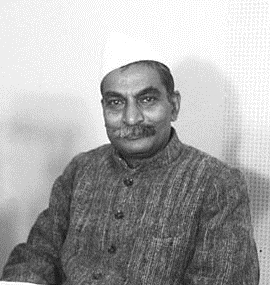
Electoral system
The President of India is chosen by an electoral college rather than by direct popular vote. That college comprises elected members of the Lok Sabha and Rajya Sabha and the elected members of each state legislative assembly. Votes in the college are weighted to provide a balance between the representation of states and the Parliament; the value attached to each member's vote is determined by a formula that takes state population and the number of elected legislators into account, using the most recent census then in effect. The election uses proportional representation by means of the single transferable vote and is conducted by secret ballot. Electors indicate preferences for candidates, and counting proceeds by allocating and, if necessary, transferring votes until a candidate attains the required quota.
Candidates and result
The 1957 contest was not competitive in practical terms. Dr. Rajendra Prasad, who had been the country's first President since 1950, was supported by the Indian National Congress, which held dominant majorities in Parliament and in many state assemblies following the 1957 general elections. Two other candidates were in the field but obtained only small shares of the electoral vote. Officially recorded figures show Rajendra Prasad receiving 459,698 votes in the electoral college count; his nearest rivals were Chowdhry Hari Ram, who received 2,672 votes, and Nagendra Narayan Das, who received 2,000 votes.
Procedure and counting
Nomination and scrutiny of candidates followed the statutory process, and polling—carried out only among electors—was overseen by the Election Commission of India. Because the single transferable vote system was in use, electors could express ordered preferences; in practice, the large majority backing the incumbent produced a decisive outcome without prolonged transfers. The secrecy of the ballot and the formal counting rules were designed to ensure an orderly and transparent result even in an indirect election conducted by legislators rather than by the general electorate.
Significance and aftermath
Rajendra Prasad's re-election in 1957 reinforced institutional continuity in the early years of the Indian republic. He served two full terms as President, covering the 1950s and into the early 1960s, and remains the only person to have held the office for two complete terms. The election illustrates how the electoral-college mechanism and the strength of party majorities in Parliament and state assemblies determine the outcome of indirect presidential elections in India. While the presidency is constitutionally meant to be non-partisan and largely ceremonial, party alignment within the electoral college has a decisive effect on results.
Notable facts
- The election was held shortly after the 1957 general elections, when the Indian National Congress enjoyed broad legislative majorities.
- Voting employed transferable ballots to produce a consensus choice from among electors rather than a simple plurality among candidates.
- Dr. Rajendra Prasad remains the only individual to have been elected President of India for two terms.
The 1957 presidential election is often cited in studies of India's political development as an example of how constitutional procedures for selecting a head of state interacted with party dominance during the early decades after independence.
Related articles
Author
AlegsaOnline.com 1957 Indian presidential election Leandro Alegsa
URL: https://en.alegsaonline.com/art/47120