
IMSAI 8080: early S-100 microcomputer and influential Altair-compatible system
The IMSAI 8080, introduced in late 1975, was an early microcomputer built around the Intel 8080/8085 and the S‑100 bus. It popularized a clone-compatible design, ran IMDOS (a CP/M derivative), and shaped hobbyist computing.
The IMSAI 8080 was one of the first commercially successful microcomputers aimed at hobbyists and small businesses. Introduced in late 1975 by IMS Associates, Inc. (later IMSAI Manufacturing Corp.), the system used the Intel 8080 processor and later compatible 8085 CPUs, and it relied on the S‑100 expansion bus that allowed users to assemble and expand systems with interchangeable cards. It is often remembered for its distinctive front panel, extensive expandability, and its role as an early "clone" of the MITS Altair 8800; that connection is discussed in contemporary accounts and retrospectives about the Altair.
Image gallery
7 Images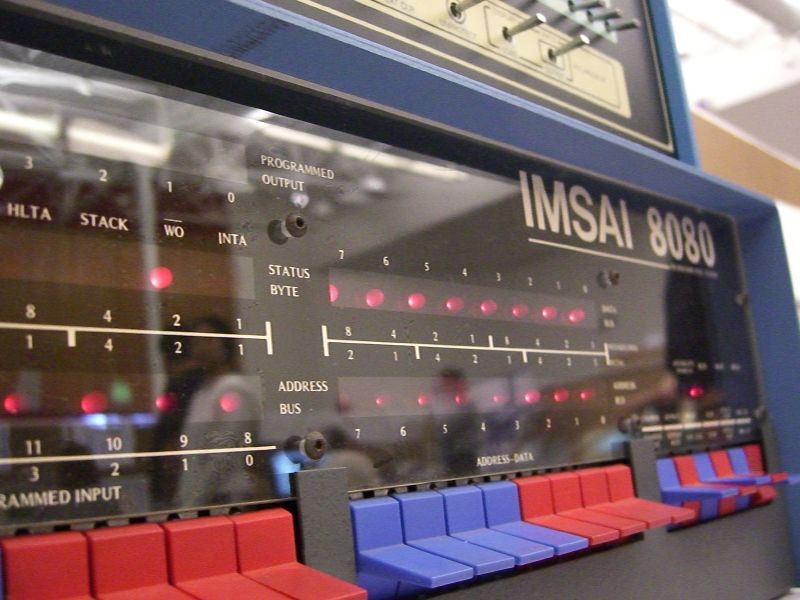



Design and main components
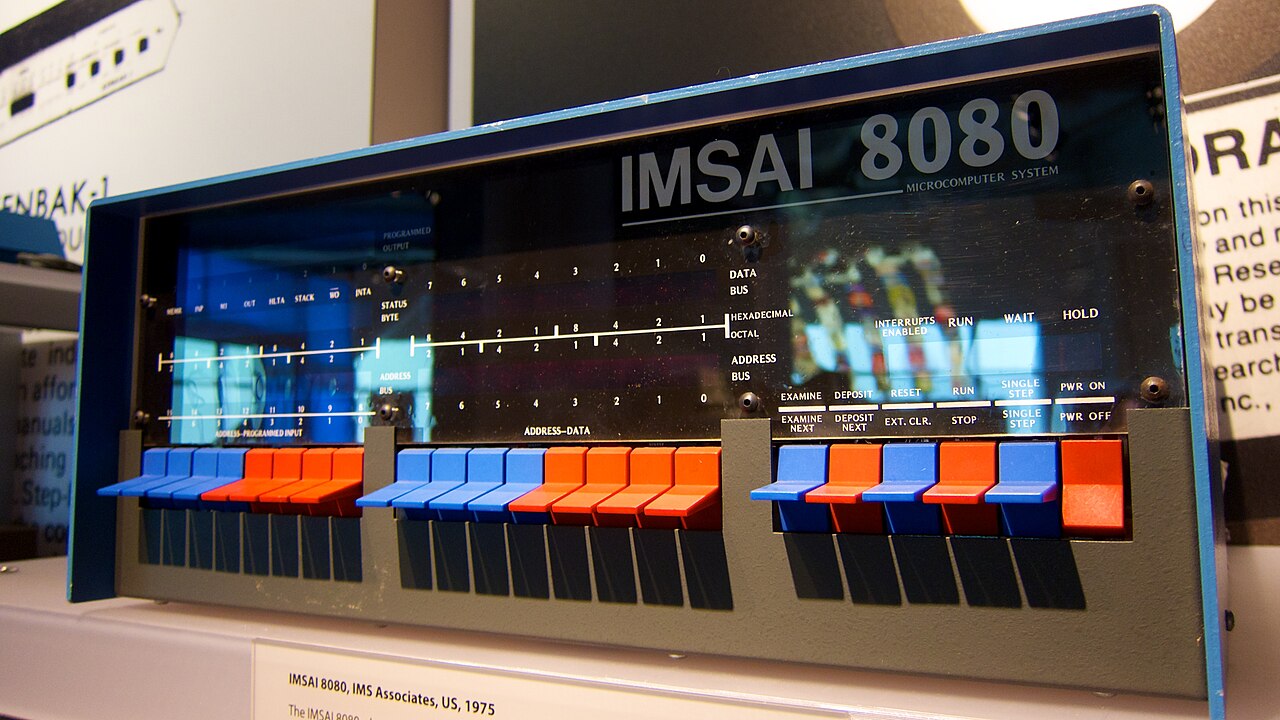
The IMSAI 8080 was built around a modular chassis that accepted multiple S‑100 cards. Typical components included the CPU board, memory boards, and peripheral interface boards. The front panel provided toggle switches and LEDs for entering bootstrap code and inspecting system state—features that were familiar to users of contemporary machines. The S‑100 bus architecture enabled a wide range of third‑party cards for serial I/O, disk controllers, and other functions, making the machine highly customizable.
Software and operating environment
Rather than shipping with the then‑nascent CP/M directly, many IMSAI systems used IMDOS, a heavily modified variant of CP/M adapted for the IMSAI hardware and available peripherals. This allowed users to run assemblers, editors, and a growing library of applications developed for CP/M‑style environments. Hobbyists also loaded monitor programs from front‑panel entry or bootstrapped from storage devices controlled by S‑100 bus cards.
History and production
Development of the IMSAI 8080 began in the mid‑1970s as microprocessor technology and hobbyist interest coalesced. Production ran from about 1975 until roughly 1978, during which time estimates place total units in the low tens of thousands. The company sold both kit and fully assembled versions, and its marketing emphasized compatibility with software and peripheral standards already in the marketplace. For more on the machine's origins and company history see contemporary retrospectives and technical writeups about IMSAI.
Uses, community and legacy
The IMSAI 8080 found a user base among electronics hobbyists, early software developers, and small businesses experimenting with microcomputer automation. Its openness encouraged modifications, aftermarket upgrades, and a community that shared schematics and software. Although later machines with integrated designs and higher performance displaced early S‑100 systems, the IMSAI contributed to the transition from kit‑based hobbyist projects to packaged machines and influenced later standards in expandability and software compatibility. Older units and documentation remain of interest to collectors and historians of computing; primary sources and community archives provide technical manuals and restoration tips for preservation.
Notable distinctions
- One of the earliest widely distributed S‑100 bus microcomputers.
- Recognized as an early "clone" architecture because of its functional compatibility with the Altair‑era ecosystem.
- Shipped as kits and assembled units, supporting a do‑it‑yourself hobby culture.
- Used IMDOS, a CP/M-like operating environment tailored to IMSAI hardware.
Questions and answers
Q: What was the IMSAI 8080?
A: The IMSAI 8080 was an early microcomputer based on the Intel 8080 and later 8085 and the S-100 bus. It was compatible with its main competitor, the earlier MITS Altair 8800.
Q: How many units of the IMSAI were produced?
A: Between 17,000 and 20,000 units of the IMSAI were produced from 1975 until 1978.
Q: What operating system did the IMSAI machine use?
A: The IMSAI machine used a highly modified version of the CP/M operating system called IMDOS.
Q: Who designed, made and sold the IMSAI computer?
A: The IMSAI computer was designed, made and sold by IMS Associates, Inc., which later became known as IMSAI Manufacturing Corp.
Q: When was production of the IMSAI computer begun?
A: Production of the IMSAI computer began in late 1975.
Q: What inspired development of the IMSAI computer?
A: The development of theIMASAI computer was inspired by its main competitor,the earlier MITS Altair 8800.
Related articles
Author
AlegsaOnline.com IMSAI 8080: early S-100 microcomputer and influential Altair-compatible system Leandro Alegsa
URL: https://en.alegsaonline.com/art/46924
Sources
- imsai.net : THE HISTORY OF IMSAI- The Path to Excellence, IMSAI of Fischer-Freitas Company (original text 1978)