
Idiophone: instruments that sound from their own material
Idiophones are instruments that produce sound primarily from the vibrating body of the instrument itself. They include struck, shaken, rubbed and scraped types such as bells, gongs, and maracas.
Overview
An idiophone is a musical instrument that generates sound through the vibration of its own material, without relying on strings, membranes, or free air columns. In broad instrument classifications the idiophones form one of the principal groups; their name comes from Greek roots meaning "self-sounding." For a concise overview of classification systems see classification references.
Image gallery
3 Images

How they produce sound
Idiophones make audible tones when their bodies are set into motion. Common excitation methods include striking, shaking, scraping, plucking, stamping, and using friction. Unlike instruments that depend on reeds or air flow, idiophones do not use a reed to produce tone—see the distinction with reed instruments here. Many are made from metal, wood, stone, glass, ceramic, or gourd; some employ a resonator to amplify sound, though the vibrating body itself is the primary sound source (resonator notes).
Types and classification
Organizing idiophones often follows historic systems such as Hornbostel–Sachs, which groups them by how they are played: struck (direct or indirect), plucked (lamellophones), friction, and shaken (rattles). They are distinct from membranophones (drums) — drums belong to another category and are not considered idiophones membranophone distinction.
Examples and common instruments
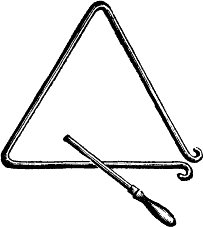
- Metal struck: bell (examples), triangle, glockenspiel
- Gongs and large plates: gong (gongs) and tam-tam
- Rattles and shakers: maracas, shekere, seed rattles
- Plucked lamellophones: mbira (thumb piano)
- Friction and scraped: musical saw, guiro
History, use and cultural importance
Idiophones appear across many musical traditions worldwide. Metal bells and gongs have long ritual and orchestral roles in Asia and Europe; wooden and gourd idiophones are central to many African and Latin American ensembles. In contemporary music they range from orchestral percussion to found-object experimental instruments. Their relative simplicity, durability, and variety of timbres make idiophones important both in folk traditions and in formal concert settings.
Notable distinctions and facts
Key distinctions are practical: idiophones do not require stretched skins or vibrating strings and thus produce sound from their solid material. Some instruments combine properties (for example, a bell mounted with a resonator box), but the defining criterion is the source of vibration. Because of their diverse materials and playing techniques, idiophones provide a wide palette of timbres used for rhythm, color, and pitched melody in many musical contexts.
Related articles
Author
AlegsaOnline.com Idiophone: instruments that sound from their own material Leandro Alegsa
URL: https://en.alegsaonline.com/art/46534
Sources
- dictionary.onmusic.org : "idiophone"