
Hydrozoa: biology, life cycles, diversity and ecological role
Hydrozoa are a class of mostly marine cnidarians including solitary and colonial forms. They show varied life cycles (polyp and medusa stages), include Hydra and siphonophores, and play key ecological roles.
Overview
The Hydrozoa are a class of animals within the phylum Cnidaria, composed mostly of small, predatory species found in marine and some freshwater habitats. Members range from solitary polyps to complex colonies and often show both sessile and free-swimming phases. For a concise taxonomic context see the entry for the class and the wider group Cnidaria.
Image gallery
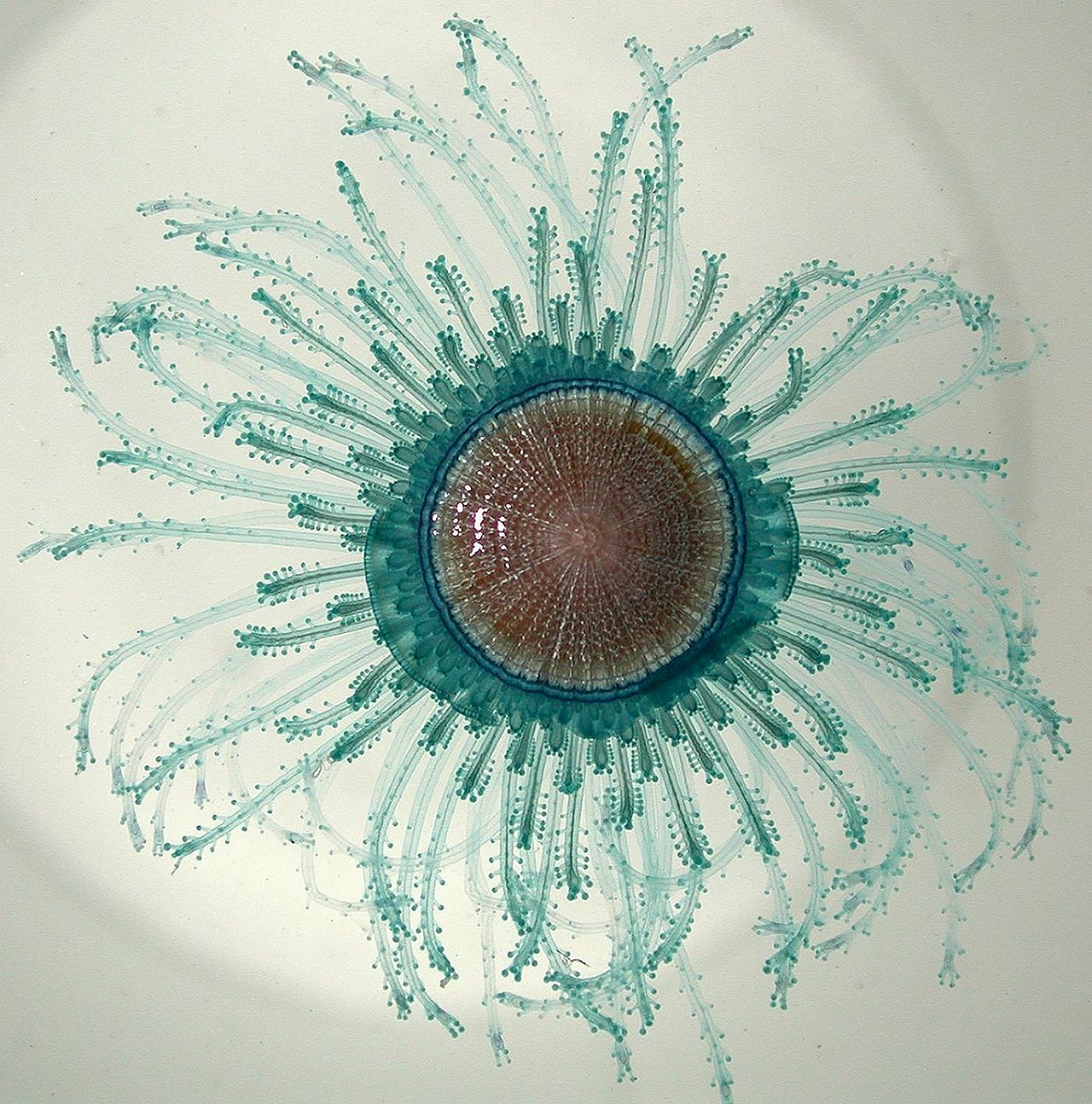
9 Images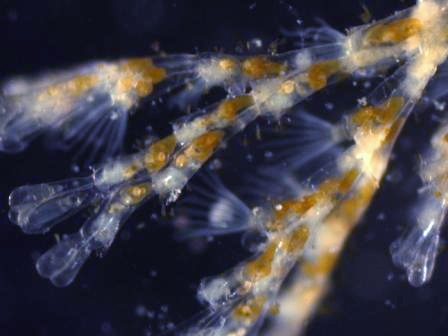




Key characteristics
Hydrozoans are characterized by specialized stinging cells (nematocysts), a simple gut with a single mouth opening, and body forms built around the polyp stage. Many reproduce by budding to form colonies, though some are solitary. External morphology varies widely: some colonies resemble branching plants while others are gelatinous and drift as integrated organisms.
Life cycle and reproduction
Typical hydrozoan life cycles show alternation between asexual polyps and sexual medusae, but this pattern is variable. Some species suppress the medusa phase, producing gametes directly from polyps; others form specialized reproductive zooids. Larvae are usually planktonic; dispersal and settlement lead to new polyps or colonies.
Diversity and notable examples
- Hydra — a freshwater genus notable for regeneration and often lacking a medusa stage.
- Obelia — a colonial coastal hydroid with alternating polyp and medusa generations.
- Siphonophores (including the Portuguese man o' war) — highly integrated colonies of specialized zooids that function like a single animal.
These examples illustrate the range from solitary to highly colonial lifestyles and the morphological specializations that accompany them.
Ecology, human relevance and research
Hydrozoans are important predators of plankton and small animals and serve as prey for larger species, thus contributing to marine food webs. Some species can sting humans; others — notably Hydra — are model organisms in studies of regeneration, development and aging. Siphonophores can be conspicuous components of open-ocean communities.
Classification and scientific interest
Higher-level relationships among hydrozoans remain actively studied and sometimes debated. Molecular phylogenetics has revised traditional groupings and clarified affinities, but complete consensus is lacking. For discussions on evolutionary relationships see current reviews and comparative resources like genus-level treatments in databases covering colonial forms. Additional general information is available through overview resources on polyp biology and taxonomic summaries for the class.
Questions and answers
Q: What is the Hydrozoa?
A: The Hydrozoa is a class of predatory animals that belong to the phylum Cnidaria and mostly live in the sea.
Q: What is the basic life form of Hydrozoa?
A: The basic life form of Hydrozoa is the polyp.
Q: Do all Hydrozoa live singly, or are there some that live in colonies?
A: Some Hydrozoa species live singly, while others live in colonies.
Q: Are the evolutionary relationships of Hydrozoa well understood?
A: The classification and evolutionary relationships of Hydrozoa are still under discussion.
Q: How can one best understand hydroids?
A: One can best understand hydroids by taking some examples.
Q: What kind of animals do Hydrozoa prey on?
A: Hydrozoa are predatory animals that typically feed on other small sea creatures.
Q: Can Hydrozoa be found in environments other than the sea?
A: No, Hydrozoa are exclusively marine animals.
Related articles
Author
AlegsaOnline.com Hydrozoa: biology, life cycles, diversity and ecological role Leandro Alegsa
URL: https://en.alegsaonline.com/art/46126