
Hospital ship: design, role, legal status, and history
A hospital ship is a vessel equipped and staffed to provide medical care at sea. This article explains design, medical capabilities, legal protections, historical use, and limits on military activity and inspections.
Overview
A hospital ship is a vessel expressly outfitted and staffed to deliver medical care to wounded, sick or shipwrecked personnel at sea and in littoral areas. Such vessels are distinct from regular naval combatants because their primary mission is humanitarian medical treatment rather than offensive action. In everyday language a hospital ship is still a type of ship, but it follows special rules and conventions that regulate its operation and protection.
Image gallery
10 Images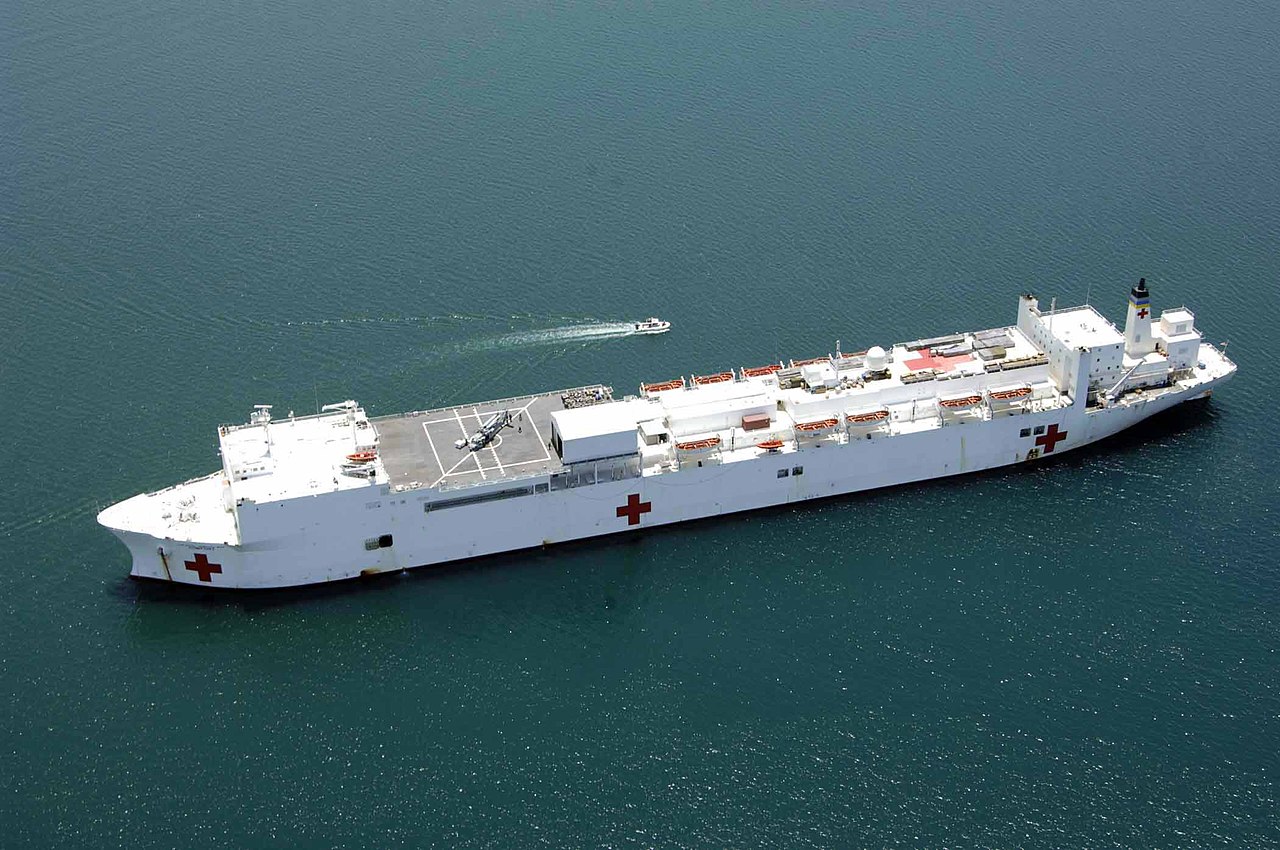


Design and medical capabilities
Hospital ships vary from purpose-built vessels to converted passenger liners and auxiliary ships. Typical features include operating theatres, intensive care units, wards, diagnostic imaging, laboratories and pharmacies. They carry medical teams made up of surgeons, physicians, nurses and allied health professionals alongside mariners and logistics staff. Some are equipped to support mass-casualty triage, provide long-term care, or offer outpatient services during humanitarian missions.
Legal status and protections
Hospital ships benefit from special protections under international law when properly identified, notified and used exclusively for medical purposes. They are commonly painted and marked to indicate non-combatant status and must refrain from hostile acts, reconnaissance, or carrying weapons beyond what is needed for self-defense and navigation. Attacking a duly marked and identified hospital ship is considered a serious violation and can be characterized as a war crime in many legal frameworks.
Inspection, operation and restrictions
When a hospital ship operates during an armed conflict, belligerent parties may have the right to inspect it to verify compliance with its humanitarian role. To keep protected status, such vessels cannot be used to transport able-bodied combatants or military materiel and are normally expected to be unarmed. They are often run by militaries, civilian agencies, or governments, and sometimes by non-governmental organizations in peacetime relief efforts.
History and notable uses
Hospital ships have a long history of service in wars, epidemics and disaster relief. Nations have converted ships to treat casualties during major conflicts and to respond to natural disasters by providing mobile hospitals where land facilities are damaged or overwhelmed. Modern examples also serve diplomatic and soft-power roles by bringing medical services to underserved coastal regions.
Key distinctions and practical considerations
- Protection depends on strict humanitarian use; misuse can forfeit immunity.
- Inspection by belligerents is a recognized safeguard to prevent abuse of status.
- They complement shore-based medical infrastructure rather than replace it.
For further reading on legal instruments, operational examples and technical standards see official references and maritime law texts. Practical deployments balance medical capability, navigational safety and compliance with international humanitarian law.
Learn more about ship types • Military medical services • Government humanitarian operations • Legal protections and war crimes
Related articles
Author
AlegsaOnline.com Hospital ship: design, role, legal status, and history Leandro Alegsa
URL: https://en.alegsaonline.com/art/45193