
Hour record (cycling) — history, rules, technology and notable marks
Overview of the cycling hour record: definitions, historical development, governing rules, bicycle design influences, notable record holders and the distinction between UCI and human-powered-vehicle marks.
Overview
The hour record in cycling measures the greatest distance ridden by a cyclist on a bicycle in the span of one hour. It is one of the purest tests of endurance, pacing and aerodynamics: a lone rider attempts to cover the maximum metres on a track, without drafting or external propulsion. The concept is often referred to simply as the hour record and is traditionally contested on a velodrome over the period of one hour.
Image gallery
6 Images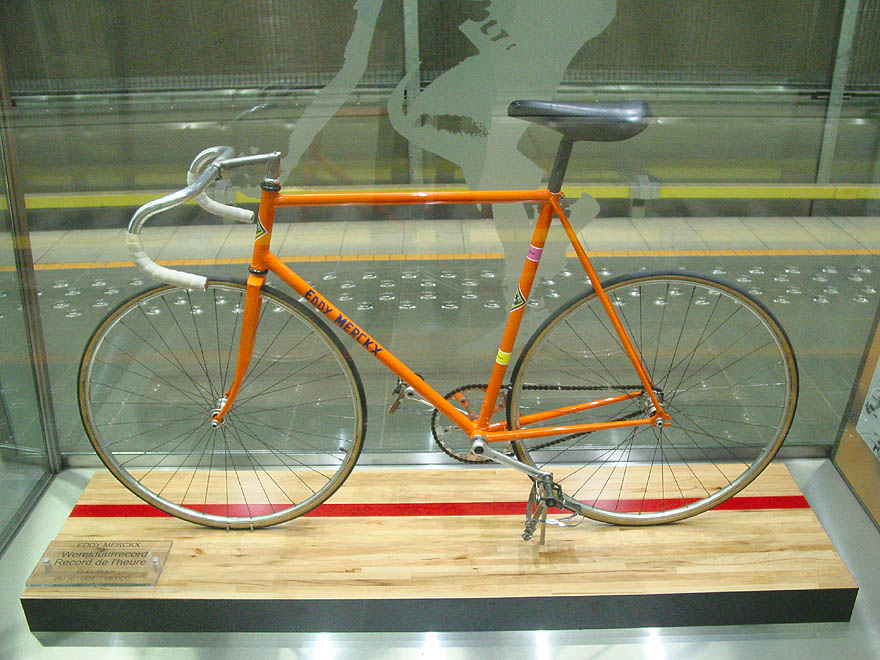


History and development
The first recognized attempts date from the late 19th century. An early benchmark was set in 1876 by F. L. Dodds, riding a high-wheeled penny-farthing, who covered roughly 26.5 kilometres; this early era was as much about machine novelty as athletic performance. Over subsequent decades successive riders pushed the mark, reflecting improvements in training, track surfaces and bicycle engineering. A landmark modern performance was achieved in 1972 when the Belgian rider Belgian champion Eddy Merckx set a long-standing mark of about 49.431 kilometres; his ride became a reference point for later debates about equipment and fairness. The hour record has continued to evolve alongside technology and regulation, leading to separate recognized categories.
Rules, categories and governing bodies
Governing rules shape what counts as an official attempt. The principal international body for mainstream cycling is the Union Cycliste Internationale (UCI), which has defined equipment standards and riding positions for the UCI hour record. In response to radical recumbent and faired designs, other organizations — notably the International Human Powered Vehicle community — maintain distinct records for highly streamlined machines. This split means there are at least two widely referenced marks: the UCI record for conventional bicycles and the human-powered-vehicle (HPV/IHVA) record for non‑standard, highly aerodynamic designs.
Bicycle design and performance factors
Performance in the hour depends on several interacting factors: the rider's aerobic capacity and pacing, the rolling resistance of tyres and track, and crucially the aerodynamic efficiency of the bicycle and rider. Innovations in frame shape, riding position, wheels and skinsuits have repeatedly shifted achievable distances. The UCI has periodically revised equipment rules to limit extreme positions and keep the event comparable over time, while the HPV community encourages experimental streamlining and enclosed recumbents that achieve much higher speeds.
Notable records and distinctions
- The early 1876 mark by F. L. Dodds is often cited as the pioneer recorded effort (1876).
- Eddy Merckx's 1972 ride (see 1972) stands as a celebrated performance in the era of conventional road bicycles.
- In the modern era Ondřej Sosenka set a UCI-sanctioned best of about 49.700 kilometres under rules that allowed some equipment differences; such numbers are frequently discussed in relation to regulation changes.
- Separately, experimental recumbent riders such as Sam Whittingham have recorded far greater distances (for example roughly 86.752 kilometres) under HPV categories, illustrating the impact of aerodynamics and enclosure.
Significance, preparation and legacy
The hour record is valued for its simplicity and the way it isolates an athlete's sustained power and the machine's efficiency. Attempts attract attention from manufacturers and sports scientists because small gains in aerodynamics or physiology translate directly into metres gained. Training focuses on threshold power, precise pacing strategies and controlled environmental conditions. Historically the quest for the hour record has driven innovations that later filtered into mass-market bicycle design and competitive cycling more broadly.
For further reading, consult official rule documents and historical summaries from governing organizations and specialist communities: see the UCI rules and accounts of HPV activity (aerodynamic discussions), as well as archives and biographies that place individual attempts in context (hour record). Additional resources and summaries are available through dedicated sport history sites and technical analyses (one hour, 1876, 1972, Belgian, Eddy Merckx, UCI).
Questions and answers
Q: What is the hour record for bicycles?
A: The hour record for bicycles is the record for the longest length rode in one hour on a bicycle.
Q: When was the first recorded hour record?
A: The first recorded hour record was in 1876 when F. L. Dodds rode 26.508 kilometres on a penny-farthing bicycle.
Q: Who set the hour record in 1972 and what was the distance he rode?
A: The Belgian cyclist Eddy Merckx set the hour record in 1972 by riding 49.431 kilometres, which was the record for twelve years.
Q: How has the hour record led to changes in bicycle designs?
A: People trying to break the hour record have helped to change bicycle designs, and technology has allowed much more aerodynamic bicycle designs.
Q: What is the Union Cycliste Internationale (UCI)?
A: The Union Cycliste Internationale (UCI) is an organization that has made Eddy Merckx's hour record design standard for their competitions.
Q: What is the International Human Powered Vehicle Association (IHVA) hour record?
A: The International Human Powered Vehicle Association (IHVA) hour record is a record for other bicycle designs besides the UCI record.
Q: Who holds the UCI and IHVA hour records, and what are the distances they rode?
A: Ondřej Sosenka holds the UCI hour record at 49.700 kilometres, and Sam Whittingham holds the IHVA hour record at 86.752 kilometres.
Related articles
Author
AlegsaOnline.com Hour record (cycling) — history, rules, technology and notable marks Leandro Alegsa
URL: https://en.alegsaonline.com/art/45285