
Hornbach chain (Hornbachkette) — a ridge of the Allgäu Alps
A compact overview of the Hornbach chain (Hornbachkette), a roughly 15 km long mountain ridge in the Allgäu Alps of Tyrol, Austria, its main peaks, geology, access and significance for alpinism.
Overview
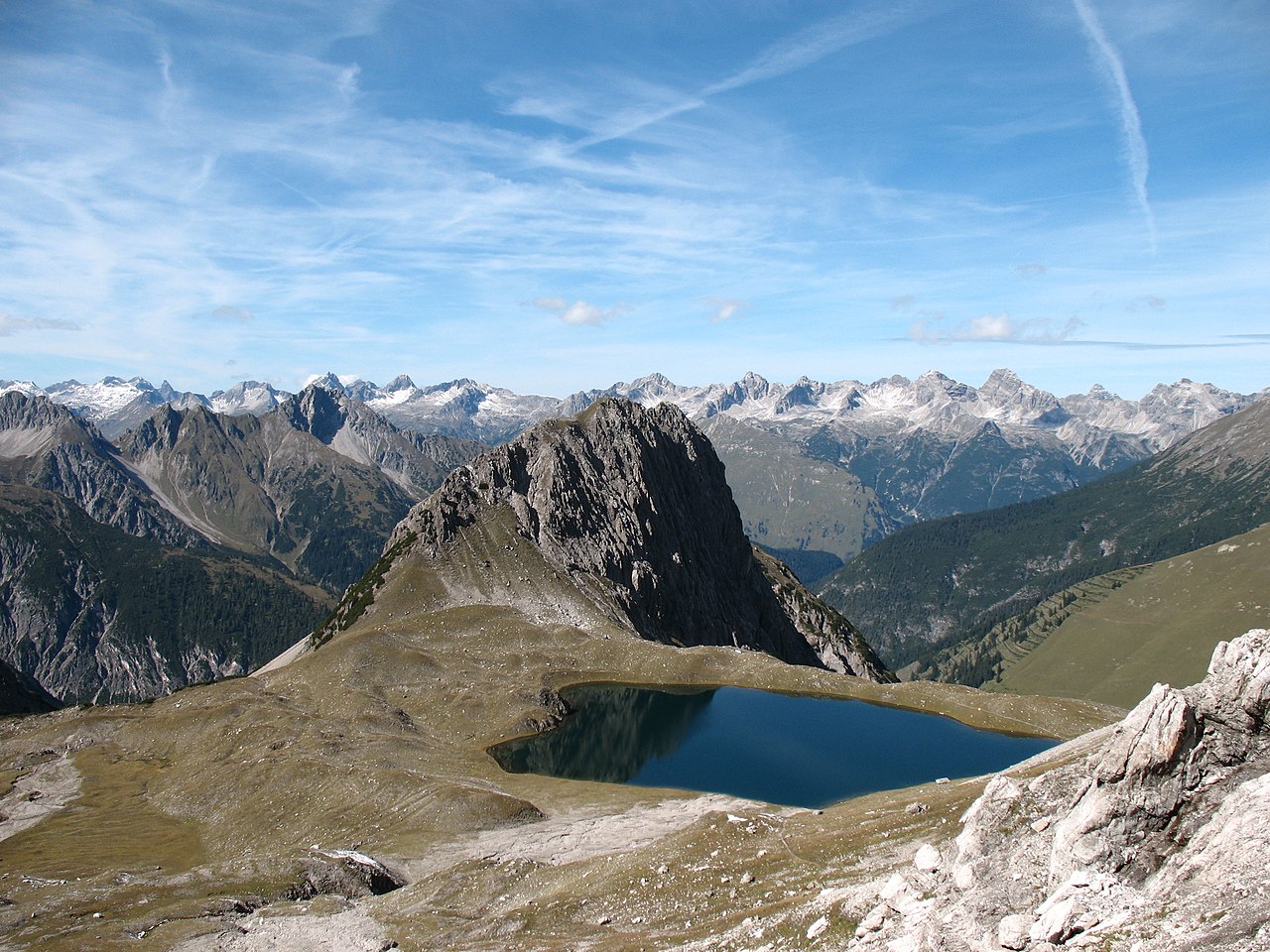
The Hornbach chain (German: Hornbachkette) is a compact mountain ridge of the Allgäu Alps located in the Austrian state of Tyrol within Austria. About 15 kilometres in length, the chain branches away from the main Allgäu ridge and describes an arc that sweeps from north to east. Although modest in extent compared with some other alpine groups, the Hornbach chain includes multiple high summits and steep, rocky ridgelines that give it a distinctly alpine character.
Image gallery
3 Images

Geography and geology
The Hornbach chain separates off from the principal Allgäu crest at the Öfnerspitze (Öfnerspitze) and continues in an arc before sending a subsidiary branch southward in the western sector. The highest summit associated with that southern branch is the Großer Krottenkopf (Großer Krottenkopf, 2,656 m), which is the tallest peak in the entire Allgäu Alps. Like much of the Allgäu region, the Hornbach chain is primarily formed of beds of sedimentary rock typical of the Northern Limestone Alps, producing steep faces, narrow cols and karst-like terrain in places.
Principal summits
Several peaks on the Hornbach main ridge are notable for their height and prominence. Among the best known are:
- Urbeleskarspitze — approximately 2,632 m
- Marchspitze — approximately 2,609 m
- Bretterspitze — approximately 2,608 m
- Großer Krottenkopf — approximately 2,656 m (associated southern summit)
These mountains rank among the more important summits of the Allgäu Alps and form a compact cluster of high, rocky peaks that attract mountaineers and experienced hikers.
History, name and human use
The name Hornbach chain derives from the nearby Hornbach valley (Hornbachtal), which provides one of the natural corridors into the range. Historically the area was used for seasonal grazing, shepherding and alpine farming, and more recently for mountain recreation. Human structures such as mountain huts and marked paths allow access, but the remoteness and exposed terrain of some ridge sections still demand careful planning and alpine competence.
Recreation and safety
The Hornbach chain is popular with climbers, ridge walkers and scramblers who seek routes that are steeper and more rugged than ordinary hillpaths. Trails cross high cols, rocky arêtes and steep couloirs; many routes require sure-footedness, basic route-finding and, on the steeper faces, climbing experience or the use of ropes. Weather in high alpine terrain can change rapidly, so parties should be prepared with appropriate equipment, local route information and knowledge of alpine safety practices.
Notable facts and distinctions
Although relatively short in length, the Hornbach chain stands out within the Allgäu Alps for its concentration of high peaks and pronounced relief. It contains several summits that are regularly listed among the region's most significant mountains, and its combination of limestone geology, steep ridgelines and secluded valleys gives the area a distinct, wild character that is valued by mountaineers and naturalists alike.
For further topographic and route information see local alpine guides and regional maps: many authoritative resources and guidebooks cover the Hornbach chain and the surrounding Allgäu massif (Hornbachkette, Allgäu Alps, Tyrol).
Related articles
Author
AlegsaOnline.com Hornbach chain (Hornbachkette) — a ridge of the Allgäu Alps Leandro Alegsa
URL: https://en.alegsaonline.com/art/45124