
Honeydew (melon)
Honeydew, or honey melon, is a pale-skinned, green-fleshed cultivar of Cucumis melo (Inodorus group), valued for its sweet, firm flesh and long shelf life. Common in summer fruit markets and culinary use.
Overview
Honeydew, also called honey melon or green melon, is a sweet, round to slightly oval fruit in the species Cucumis melo, typically placed in the Inodorus group. It is grown and eaten worldwide and is recognized for its smooth pale rind and green, juicy flesh. The Inodorus group includes related types such as casaba, Persian and winter melons; these varieties are generally less aromatic and firmer than some other muskmelons.
Image gallery
5 Images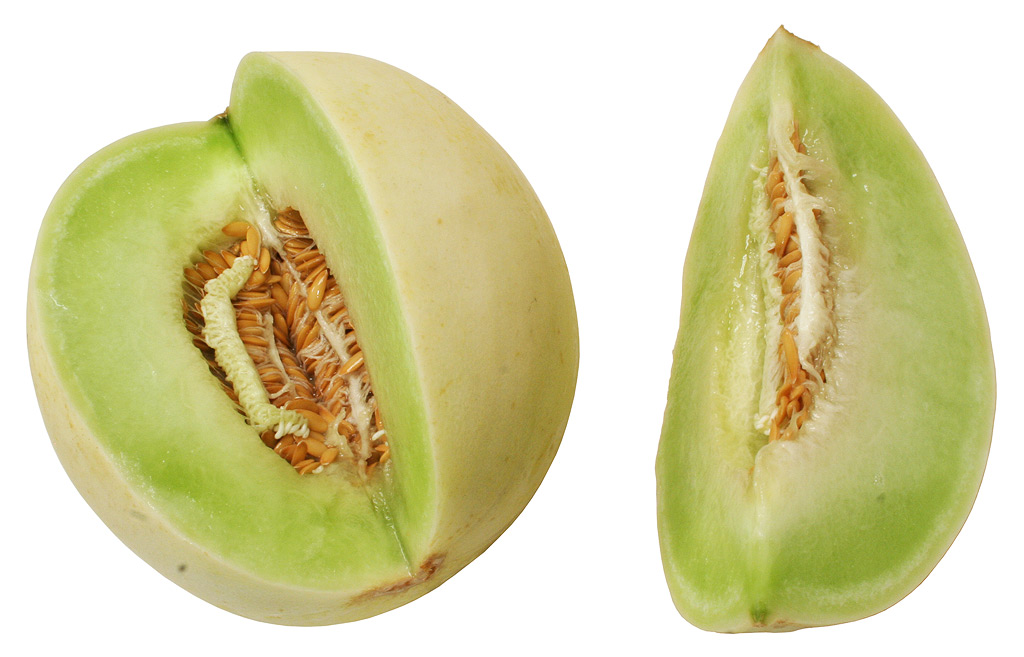


Characteristics
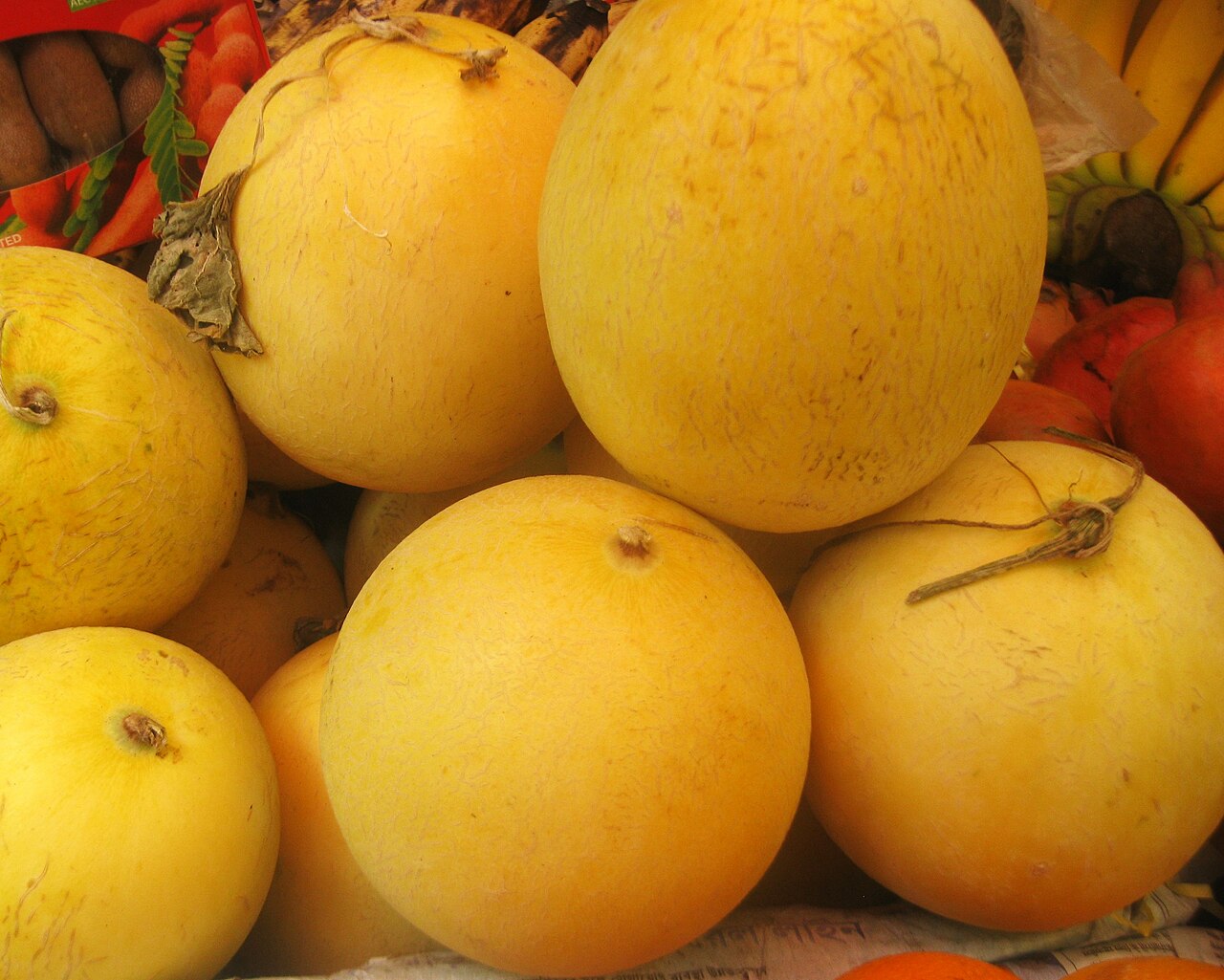
- Appearance: A smooth, waxy rind that ranges from nearly white to yellowish or pale green; flesh is usually light green.
- Texture and flavor: Firm, juicy flesh with a mildly sweet, honey-like flavor and a less pronounced perfume than cantaloupes.
- Storage: Noted for a relatively long shelf life compared with highly aromatic melons; often allowed to ripen at room temperature and kept refrigerated after cutting.
Origins and cultivation
Cucumis melo as a species has a long history of cultivation, with domesticated forms spreading across Africa, Asia and the Mediterranean over millennia. Honeydew-type melons were selected for their firm flesh and keeping qualities. They are produced on trailing vines in warm-season climates and rely on insect pollinators for fruit set. Commercial production emphasizes uniform shape, sweetness and skin color.
Uses and culinary notes
Honeydew is commonly eaten fresh, alone or in fruit salads, and is used in smoothies, sorbets and cold soups. Its subtle sweetness pairs well with savory items such as cured ham or salty cheeses. Because of its mild aroma and firm texture, it is popular where longer transport and storage are needed before sale.
Distinctions and selection
- Compared with cantaloupe (a netted, aromatic muskmelon), honeydew has a smooth rind and green flesh rather than orange flesh.
- Ripeness clues include a slightly waxy sheen and a faint give at the blossom end; aroma is not always a reliable indicator because the scent is mild.
- Varieties within the Inodorus group include casaba and others that share similar keeping traits but differ in shape and rind texture.
For more botanical classification and cultivar lists, see general melon references: Cucumis melo overview, Inodorus group details, and practical guides on selection and storage: harvesting and handling and culinary uses and recipes.
Related articles
Author
AlegsaOnline.com Honeydew (melon) Leandro Alegsa
URL: https://en.alegsaonline.com/art/44990