
Homo sapiens idaltu — an extinct early subspecies of Homo sapiens
Homo sapiens idaltu is an extinct early subspecies of modern humans known from fossil crania discovered in Ethiopia and dated to about 154–160 thousand years ago; its study informs debates on early Homo sapiens variation.
Homo sapiens idaltu is an extinct early form of human classified by its describers as a subspecies of Homo sapiens. The subspecific name idaltu comes from a local language and is commonly rendered as "elder" or "first born"; in paleontological usage the label has been used to emphasize distinctive features observed in the material when it was described. The specimens are part of the African fossil record that documents the emergence and early variability of anatomically modern humans.
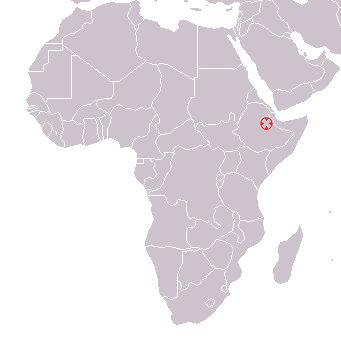
The principal fossils were recovered in 1997 from the Afar region of Ethiopia. The field locality lies within the geologically active Afar Triangle, where sequences of volcanic deposits and sedimentary layers preserve an extensive record of Pleistocene environments in Africa. The recovered material consists mainly of three well-preserved cranial specimens; the most complete cranium is catalogued as BOU-VP-16/1. These are fossilized remains that were analyzed in context, including the volcanic layers above and below the finds, to establish their age and taphonomic history.
Laboratory analyses and stratigraphic work indicated an age of roughly 154,000–160,000 years for the idaltu fossils, based on a combination of radiometric dating applied to the surrounding volcanic deposits and standard geological correlation. The date places idaltu within the later part of the Pleistocene, a period of repeated climatic fluctuations that influenced population distribution and evolution across the continent.
Morphologically, the idaltu crania show a mixture of features. Cranial capacity for the best-preserved individual has been reported at around 1,450 cm3, within the range of present-day humans. At the same time, some aspects of vault shape and robusticity appear more pronounced than is typical for most recent human populations. One specimen bears cut marks that have been interpreted cautiously as evidence for deliberate post-mortem treatment; this finding has prompted discussion about early mortuary behavior but remains a subject of interpretation and debate.
Image gallery
5 Images



Context, comparisons and subsequent finds
The idaltu material is part of a broader East African fossil record of early Homo sapiens. Later work on other Ethiopian sites provided additional early human remains. Notably, fossils from the Omo region, studied by teams including those led by Richard Leakey, were associated with volcanic tuff and dated using potassium–argon methods to an age that some analyses place at about 195,000 years or older. That work, which used volcanic tuff as a stratigraphic and dating marker, indicates that anatomically modern human morphology was present in eastern Africa at least by the earlier part of the Late Middle Pleistocene. The Omo remains have not been given a formal subspecific name and are usually treated as early anatomically modern Homo sapiens.
Debate continues over the taxonomic significance of the idaltu designation. Some researchers accept the subspecies label as a useful way to describe a distinctive, well-dated population sample, while others prefer to treat all such fossils as part of a continuum of early Homo sapiens variation without formal subspecific ranks. The idaltu specimens are therefore frequently cited in discussions of human origins, regional variation, and how to interpret morphological differences in a fossil sample.
Scientific methods and importance
Interpretation of idaltu relies on several standard paleoanthropological approaches. Field stratigraphy and careful excavation record the position of bones within sedimentary and volcanic units; radiometric techniques applied to volcanic layers provide absolute or bracketing ages; and comparative anatomy places the fossils within the morphological range known for present and past human populations. Taphonomic study examines how the bones were modified after death and whether marks reflect natural processes or human activity.
- Where found: Afar region, Ethiopia (Afar Triangle).
- Age: commonly cited as about 154,000–160,000 years based on radiometric dating of volcanic layers.
- Material: three main cranial specimens, best preserved as BOU-VP-16/1 (fossil remains).
- Morphology: large brain size within modern range but with some robust cranial features.
- Comparative finds: older Omo fossils in Ethiopia dated with volcanic tuff techniques and discussed by teams including Leakey.
- Terminology: the word Afar (idaltu) reflects local language and the practice of using regional names for fossil taxa and sites.
H. s. idaltu remains an important and well-dated data point for studies of human evolution in Africa. Whether treated as a subspecies or as part of early H. sapiens variation, the fossils contribute to understanding when and how modern human anatomy emerged and the diversity present within ancestral populations during the Pleistocene. For more technical discussion consult specialist literature and site reports that synthesize the anatomical descriptions, stratigraphic evidence and dating results.
Related articles
Author
AlegsaOnline.com Homo sapiens idaltu — an extinct early subspecies of Homo sapiens Leandro Alegsa
URL: https://en.alegsaonline.com/art/44935
Sources
- ui.adsabs.harvard.edu : 2005Natur.433..733M
- doi.org : 10.1038/nature03258
- pubmed.ncbi.nlm.nih.gov : 15716951