
Holmium (chemical element)
Holmium (Ho, atomic number 67) is a lanthanide rare-earth metal. It is silvery, malleable, usually trivalent, and used in medical lasers, optical calibration glasses, and specialized magnetic and nuclear applications.
Holmium is a metallic chemical element with the symbol Ho and atomic number 67. It belongs to the lanthanide series and is classified as a rare-earth metal. In bulk it appears as a soft, silvery, malleable metal that is relatively stable in dry air but will oxidize slowly when exposed to moisture or elevated temperatures. Its chemistry is dominated by the +3 oxidation state, typical of lanthanides.
Image gallery
5 Images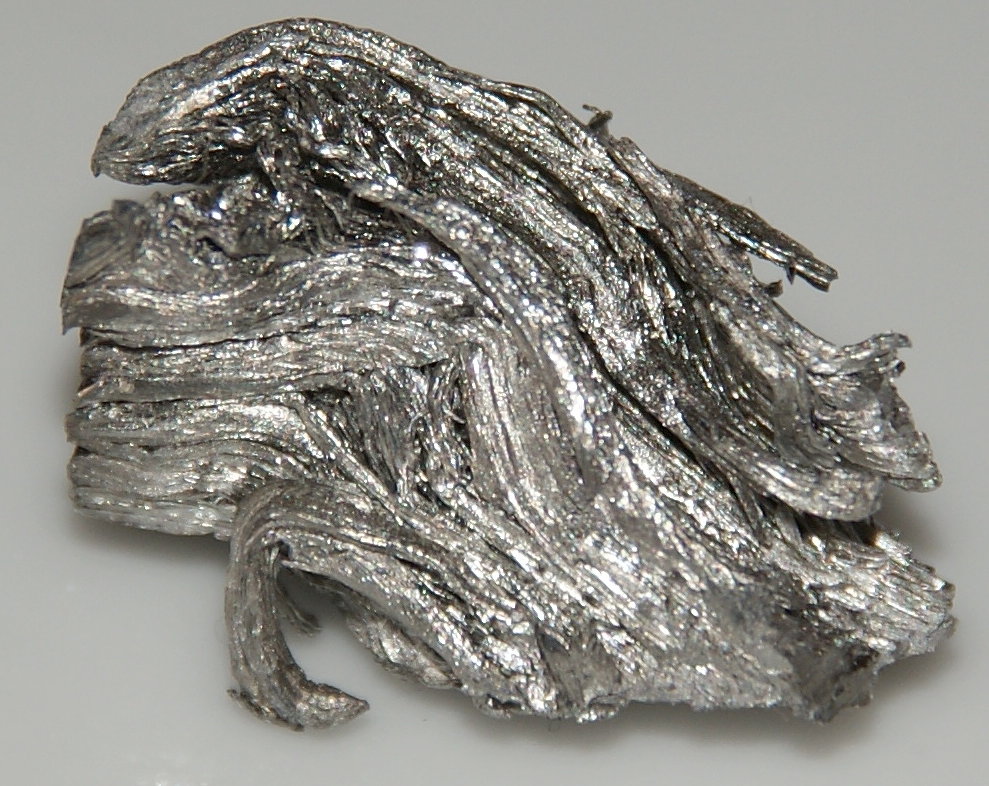



Characteristics and chemistry
Holmium metal and its common compounds display the expected lanthanide behavior: metallic bonding with a tendency to form trivalent ions, oxides such as Ho2O3, and salts soluble in acids. It has notable magnetic properties among the elements and is often discussed for its large magnetic moment in certain alloys and compounds. Finely divided holmium powder can be combustible or pyrophoric, and the metal reacts slowly with oxygen and water.
Occurrence and production
Holmium occurs naturally in several rare-earth minerals, notably monazite and gadolinite, from which it is separated during the production of mixed rare-earth concentrates. Commercial isolation typically uses solvent extraction or ion-exchange techniques applied to minerals and concentrates. Samples and descriptions often highlight its silvery-white appearance as a characteristic of the freshly prepared metal (silvery-white metallic).
History and name
The element was identified in the late 19th century and was given a name derived from Holmia, the Latin name for Stockholm. Early work that distinguished it from neighboring rare-earth elements established its place in the periodic table as element 67 and clarified its chemistry relative to other lanthanides.
Uses and applications
Although not abundant in commercial applications, holmium has important niche roles. Holmium-doped YAG and other crystals are used in medical lasers for urology and soft tissue surgery. Holmium oxide glass is valued as a wavelength calibration standard in optical spectrophotometry because of its sharp, well-defined absorption lines. Specialized alloys and magnetic devices may exploit holmium's magnetic characteristics, and certain radioisotopes of holmium have been explored in medical and nuclear contexts.
Practical notes and safety
- Common oxidation state: +3.
- Primary sources: minerals such as monazite and gadolinite.
- Handling: bulk metal is of low chemical reactivity but metal dust can be flammable; standard rare-earth precautions apply.
- Further reference: chemical element overview and technical summaries are available from elemental and materials databases.
Related articles
Author
AlegsaOnline.com Holmium (chemical element) Leandro Alegsa
URL: https://en.alegsaonline.com/art/44798