
Hodnet, Shropshire: village, history and local features
Hodnet is a village and civil parish in Shropshire, England. This article outlines its location, origins, archaeology, transport links, notable buildings and local character.
Hodnet is a rural village and civil parish in the ceremonial county of Shropshire, in England. It lies to the south‑west of the market town of Market Drayton and is situated on the road axis that links Shrewsbury with Newcastle‑under‑Lyme. The civil parish has a small population and a character typical of lowland Shropshire: a nucleated village surrounded by farmland, hedgerows and pockets of ancient woodland. In modern descriptions Hodnet is often referred to simply as a village within the wider county community.
Image gallery
8 Images


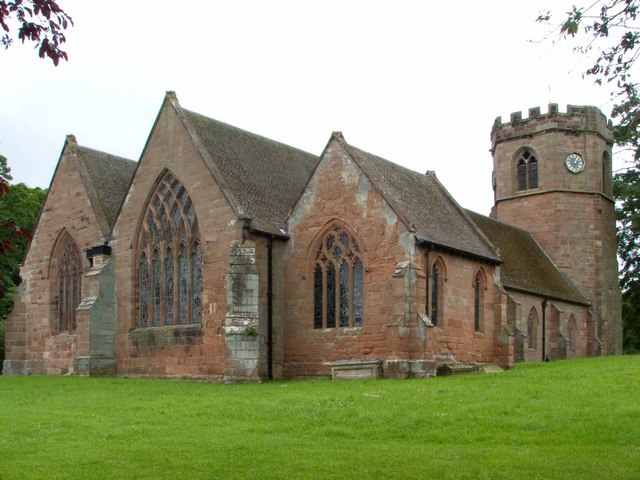
Location and transport
Hodnet sits close to the A53 trunk route and has regular local bus services that connect residents to nearby towns; the village is served by the route between Shrewsbury and Market Drayton. A bypass was constructed in recent decades to ease traffic through the centre; during works for that road a number of archaeological discoveries were made. The surrounding landscape is agricultural, and the parish includes several hamlets and scattered farmsteads that form its civil boundary.
History and name
The place-name has ancient roots. The name Hodnet is derived from Celtic elements related to the Welsh language: hawdd (pleasant or peaceful) combined with nant (a valley or stream), reflecting the area's valley setting. Hodnet appears in medieval records, and is recorded in the national survey known as the Domesday Book under an early form of the name. Over time the village developed around agriculture and local markets, with some gentry estates influencing its landscape and architecture.
Archaeology and heritage
Evidence of much earlier occupation has been found in and around the parish. During construction work on the bypass in 2002 archaeologists uncovered a burial site dating to the Bronze Age, a reminder that this area has been used by people for several millennia. The village contains surviving historic buildings, including a 17th‑century Hundred House that reflects its administrative role in earlier centuries, and several cottages and farm buildings that display traditional local materials and styles.
Local features and amenities
- Community facilities: village hall, church, primary school and local shops.
- Green spaces: village green, nearby woodlands and footpaths for walking.
- Transport links: A53 road access and public buses connecting to Shrewsbury and Market Drayton.
- Historic sites: the Hundred House and scattered listed buildings.
The parish continues to blend rural life with commuter accessibility; many residents work in nearby towns while maintaining agricultural and small‑scale local enterprises within the parish.
Notable facts and distinctions
Hodnet's name preserves a Celtic linguistic heritage that is visible in place‑names across the borderlands. The discovery during the bypass works in 2002 added a prehistoric dimension to its recorded history. For visitors and researchers the village provides a compact example of Shropshire rural settlement, linking prehistory, medieval records and modern community life. Further information about the village and parish can be found through local council pages and regional histories (bypass project details, local archives) and by consulting maps and transport timetables for the area served by local routes such as those run by regional operators (historic records). For a concise sense of place, Hodnet lies within a county that combines borderland history and agricultural traditions: Shropshire remains strongly associated with these themes.
Additional local resources include parish publications and conservation group notes; for practical matters and visiting, check community notices and bus information provided by local operators (village information, national context, linguistic background, topographical terms, archaeology, road works, year references, regional links, county details, nearest market town, principal nearby town, historic survey, county name).
Questions and answers
Q: Where is Hodnet located?
A: Hodnet is located in the county of Shropshire, England, 5.7 miles (9.2 km) south-west of the town of Market Drayton.
Q: What is the population of Hodnet's civil parish?
A: The civil parish of Hodnet currently has a population of 1,534.
Q: What is the meaning behind Hodnet's name?
A: Hodnet's name has Celtic origins derived from the Welsh hawdd, meaning pleasant or peaceful, and nant, a glen or valley in Old Welsh.
Q: Were any historical artifacts discovered during construction in Hodnet?
A: Yes, evidence of a Bronze Age burial site was discovered during the construction of the bypass in 2002.
Q: What is the origin of the Hundred House in Hodnet?
A: The village's 17th-century Hundred House was named after Hodnet, which was recorded in the Domesday Book as Odenet.
Q: What is the main road that passes through Hodnet?
A: Hodnet located on the A53 road from Shrewsbury to Newcastle-under-Lyme.
Q: What bus route serves Hodnet?
A: Hodnet is served by the 511 bus route, operated by Arriva Midlands, between Shrewsbury and Market Drayton.
Related articles
Author
AlegsaOnline.com Hodnet, Shropshire: village, history and local features Leandro Alegsa
URL: https://en.alegsaonline.com/art/44636