
Hœnir — Aesir god associated with silence and deliberation
Hœnir (Hoenir) is a minor Aesir figure in Norse mythology, noted for his silence, his role in the Æsir–Vanir hostage exchange, and his appearances in the Poetic and Prose Eddas.
Overview
Hœnir (often rendered Hoenir) is an Old Norse deity appearing in the medieval sources that preserve Norse myth. He is counted among the Æsir, the principal pantheon of Norse gods, but he is a relatively sparely attested figure: his character is sketched through a few narrative episodes rather than through a developed cult or many surviving poems. In later commentary and modern summaries he is commonly described as calm, slow to speak, or silent; some traditions connect him with thoughtful deliberation rather than decisive action.
Image gallery
1 Image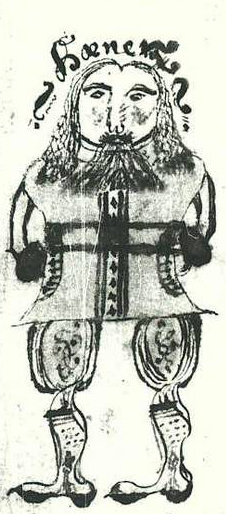
Attestations in the sources
Hœnir is named in the Poetic Edda and the Prose Edda and appears in several prose narratives that summarize older mythic material. These attestations form the basis for most modern understanding of him. Key episodes where he figures include:
- His role as one of the gods sent to the Vanir as a hostage during the resolution of the Æsir–Vanir war; he travels with Mímir in those accounts.
- Associations in lists and catalogues of gods and survivors in prophetic passages, where his name appears among other deities.
- Appearances alongside principal figures—he is sometimes mentioned as a companion of major gods such as Odin in narrative contexts.
Myths and traditional roles
The best-known narrative involving Hœnir concerns the exchange of hostages between the Æsir and the Vanir. According to the preserved versions, Hœnir and Mímir were sent to the Vanir to cement peace. While Mímir provided counsel and speech, Hœnir reputedly deferred to him when asked to make decisions. The Vanir interpreted Hœnir's dependency and apparent indecision as a sign of bad faith and, in vengeance for feeling cheated by the exchange, they killed or beheaded Mímir in retaliation. This sequence is often used to explain why Mímir's severed head becomes a source of wisdom for Odin, while Hœnir returns diminished in reputation.
Character, interpretations and name
Because the textual record is brief, scholars offer cautious interpretations: Hœnir is sometimes taken to represent silence, restraint or contemplative thought rather than active leadership. He has therefore been described in secondary literature as linked to speechlessness or to the quality of being slow to speak; a number of modern summaries label him a god of silence or deliberation. At the same time, older editors and translators have occasionally conflated or compared him with other creation or helper gods (for example, Vili) because overlapping brief references in different manuscripts make exact identification difficult.
Significance and legacy
Hœnir's importance in the Norse mythic corpus lies less in an extensive mythic biography and more in the roles he fills within a few high-profile tales: the hostage episode illustrates themes of trust, communication and the perils of deferral; his presence in lists of gods that survive cosmic upheaval suggests he belonged to the circle of notable Æsir. Modern interest in Hœnir centers on how small, cryptic figures in the Eddic tradition illuminate wider cultural ideas about wisdom, speech and social exchange.
Further notes
- References to Hœnir are few and sometimes variant in spelling; he is primarily known through medieval Scandinavian compilations that preserve earlier oral traditions.
- Because the primary evidence is limited, many specific claims about attributes or cult practice are speculative; reliable summaries therefore treat Hœnir as a minor but thematically interesting member of the Æsir.
- For overviews of the wider mythic background in which Hœnir appears, consult general works on Norse mythology and studies of Mímir and the Æsir–Vanir war (Mímir; Odin).
Related articles
Author
AlegsaOnline.com Hœnir — Aesir god associated with silence and deliberation Leandro Alegsa
URL: https://en.alegsaonline.com/art/44582