
Honeyberry (Lonicera caerulea): blue honeysuckle, haskap
Honeyberry or blue honeysuckle (haskap) is a cold-hardy shrub grown for elongated blue edible berries, valued for their tangy flavor, antioxidants and ease of cultivation in northern climates.
The honeyberry (Lonicera caerulea), commonly called blue honeysuckle or haskap, is a deciduous shrub cultivated for its elongated blue edible fruit. The berries ripen early in the season and have a tart‑sweet taste that makes them suitable for fresh eating and processing. The plant is increasingly grown in home gardens and small commercial plantings outside its native range because of its cold tolerance and culinary versatility.
Image gallery
5 Images


Description
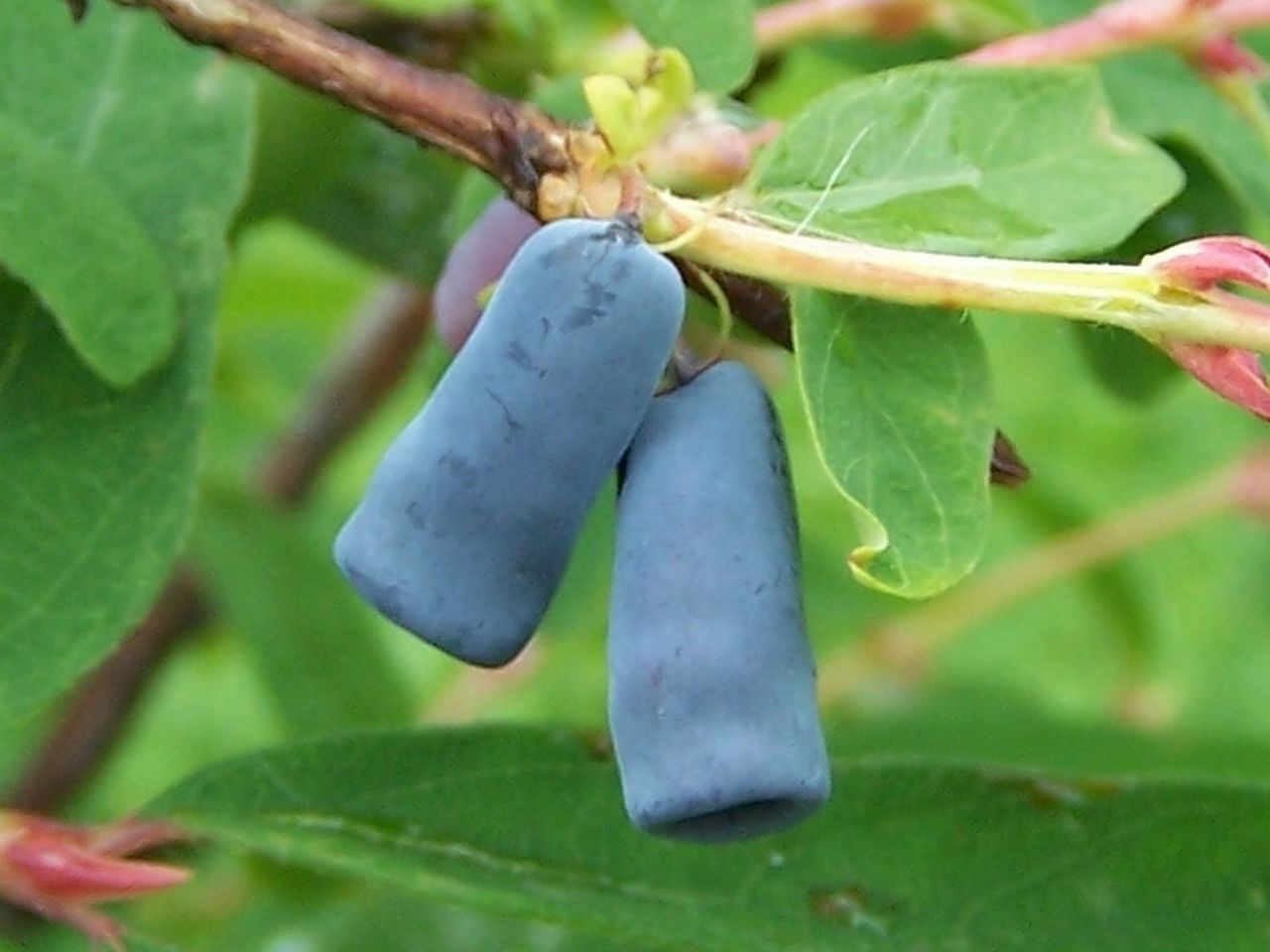
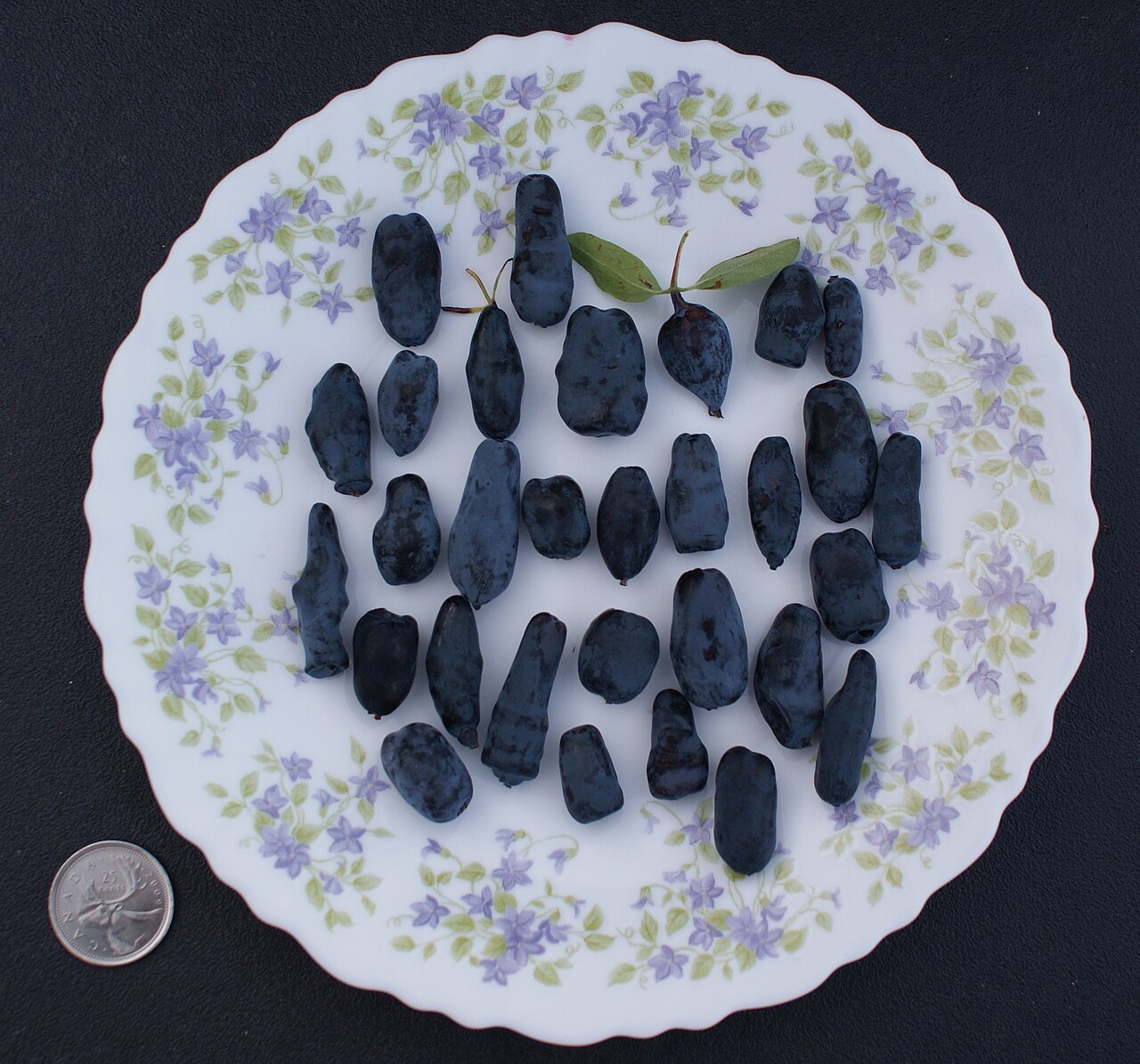
Honeyberry belongs to the genus Lonicera, part of the broader honeysuckle family. Plants typically form multi-stemmed shrubs with opposite leaves and clusters of tubular white to pale pink flowers in spring. The fruit are oblong to nearly spherical, blue to dark blue in color, and often have a waxy bloom. Flowers are insect-pollinated, and many cultivars require cross-pollination between two compatible varieties for reliable fruit set.
Origin and distribution
Wild and cultivated forms of honeyberry are native to cold temperate parts of northern Asia and northern Russia, and they have a long history of use in parts of Eastern Europe. Traditional cultivars were selected for flavor and hardiness; more recent breeding programmes have focused on fruit size, disease resistance and uniform ripening to suit commercial production in other temperate regions.
Cultivation
Honeyberry is noted for exceptional cold hardiness and can survive very low winter temperatures that limit many fruit crops. It blooms early, so site selection should avoid late‑frost pockets. The plants are generally easy to grow and suffer from few pests, though they do benefit from proper pruning and soil management. Most growers plant at least two genetically distinct cultivars to ensure cross‑pollination.
- Site: full sun to partial shade
- Soil: well‑drained, fertile, slightly acidic to neutral
- Water: regular moisture during establishment and fruiting
- Pollination: cross‑pollination improves yield
Uses and importance
Honeyberries are used fresh, in jams, jellies, syrups, baked goods and fermented beverages. They are appreciated for a distinctive tangy flavor and are noted for being rich in antioxidants and vitamin C relative to many common fruits. Because of their early harvest time, they can extend the season for fresh berries in cool climates.
Horticultural notes and status
Many gardeners appreciate honeyberry for its compact habit, ornamental spring flowers and reliable fruit in cold areas. It is not generally regarded as invasive in regions where it is grown, making it a garden‑friendly alternative to some more aggressive shrubs; see discussions about invasive plants at relevant resources. Breeders continue to develop cultivars with larger fruit, improved sweetness and mechanical harvest traits to support wider commercial adoption.
Questions and answers
Q: What is a honeyberry?
A: Honeyberry is a fruit that is edible and a member of the honeysuckle family.
Q: Where are honeyberries native to?
A: Honeyberries are native to Russia.
Q: Can honeyberries grow in very cold weather?
A: Yes, honeyberries can tolerate very cold weather and can survive down to −55°F (−48°C).
Q: Where have honeyberries been raised for centuries?
A: Honeyberries have been raised for centuries in Asia and Eastern Europe.
Q: Is honeyberry considered an invasive species?
A: No, honeyberry is a well-behaved plant and is not seen as being an invasive species.
Q: Is honeyberry easy to grow?
A: Yes, honeyberry is easy to grow and has few pests.
Q: What are some other names for a honeyberry?
A: Other names for a honeyberry include blue honeysuckle, sweetberry honeysuckle, fly honeysuckle, blue fly honeysuckle, blue-berried honeysuckle, or haskap.
Related articles
Author
AlegsaOnline.com Honeyberry (Lonicera caerulea): blue honeysuckle, haskap Leandro Alegsa
URL: https://en.alegsaonline.com/art/44987
Sources
- garden.org : "Edible of the Month: Honeyberry"
- gardeningknowhow.com : "Haskap Berry Info – How To Grow Honeyberries In The Garden"
- uncommonfruit.cias.wisc.edu : "Uncommon Fruit"