
Annapurna Massif
Annapurna is a massif in central Nepal that includes one 8,000‑metre peak and many high summits; noted for its dramatic landscapes, biodiversity, trekking routes and challenging mountaineering history.
The Annapurna massif is a compact and striking group of high mountains in the Himalaya of central Nepal. Its name comes from the Sanskrit tradition — the goddess of food and nourishment — and the range is often written in local scripts; see the Sanskrit form (Sanskrit) and the Nepali form (Nepali). Geographically the massif occupies a distinct cluster of peaks, glaciers and deep river valleys that rise steeply from the surrounding lowlands.
Image gallery
2 Images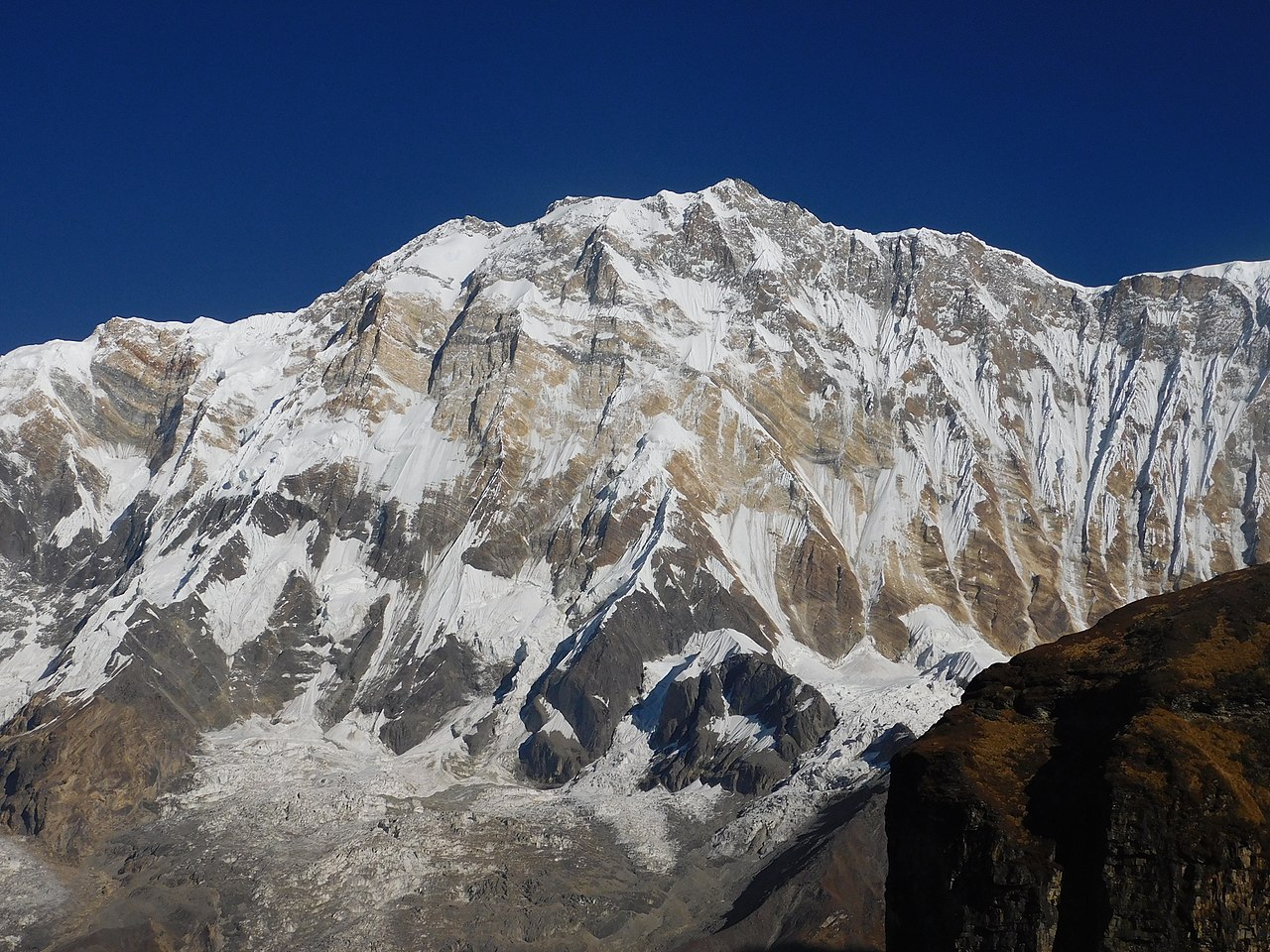

Peaks and physical characteristics
Within the Annapurna group there is one summit above 8,000 metres, thirteen summits above 7,000 metres and sixteen above 6,000 metres. The highest and best known is Annapurna I Main, the principal 8,000‑metre summit of the massif (Annapurna I Main), which is classed among the highest mountains in the world (global ranking). The terrain combines long ridges, seracs and steep cliffs; heavy snowfall and avalanche danger are common at high elevation.
History and mountaineering
The massif has a notable climbing history. Annapurna I was the first 8,000‑metre peak successfully climbed, and the massif has attracted early Himalayan expeditions, pioneering routes and serious technical challenges. Several of the higher Annapurna routes are regarded as among the most difficult and hazardous, and mortality on those routes has historically been higher than on many other 8,000‑metre peaks.
Trekking, conservation and local importance
Beyond technical climbing, the Annapurna region is famous for trekking. Trails such as the Annapurna Circuit and the approaches to the Annapurna Sanctuary bring thousands of visitors a year and pass through villages, terraced fields and varied ecosystems. Much of the area lies within the Annapurna Conservation Area, which balances tourism, local livelihoods and habitat protection. The range also feeds rivers and supports agriculture and hydro resources downstream.
Ecology and culture
The massif spans climatic zones from subtropical foothills to alpine and glaciated summits, creating high biological diversity: forests of rhododendron and oak lower on the slopes and alpine meadows higher up. The region supports a mosaic of ethnic communities with distinct languages, customs and religious practices tied to the mountains and their deities.
Notable facts
- Annapurna I Main is the best known summit in the group and a focus of high‑altitude mountaineering (Annapurna I).
- The massif contains one >8,000 m peak, thirteen >7,000 m peaks and sixteen >6,000 m peaks.
- The area is governed for conservation and tourism by the Annapurna Conservation Area authorities and local communities.
- For general information about the range as part of Himalayan mountains see mountains and regional resources (Nepal).
Related articles
Author
AlegsaOnline.com Annapurna Massif Leandro Alegsa
URL: https://en.alegsaonline.com/art/4396
Sources
- c498469.r69.cf2.rackcdn.com : "Classification of the Himalaya"
- wikidata.org : wikidata.org/wiki/Q159621
- aleph.nkp.cz : ge161070
- viaf.org : 315526271
- worldcat.org : viaf-315526271