
Annapurna I Main
Annapurna I Main is an 8,091 m Himalayan peak in Nepal, part of the Annapurna Massif. Noted for being the first 8,000‑metre summit climbed and for its challenging routes and high historical fatality rate.
Annapurna I Main rises to 8,091 metres (26,545 feet) and is the tenth highest mountain on Earth. Located in the Himalayas within modern Nepal, it forms the highest point of the Annapurna Massif. The name Annapurna comes from Sanskrit and denotes a goddess of nourishment, often translated as "full of food".
Image gallery
4 Images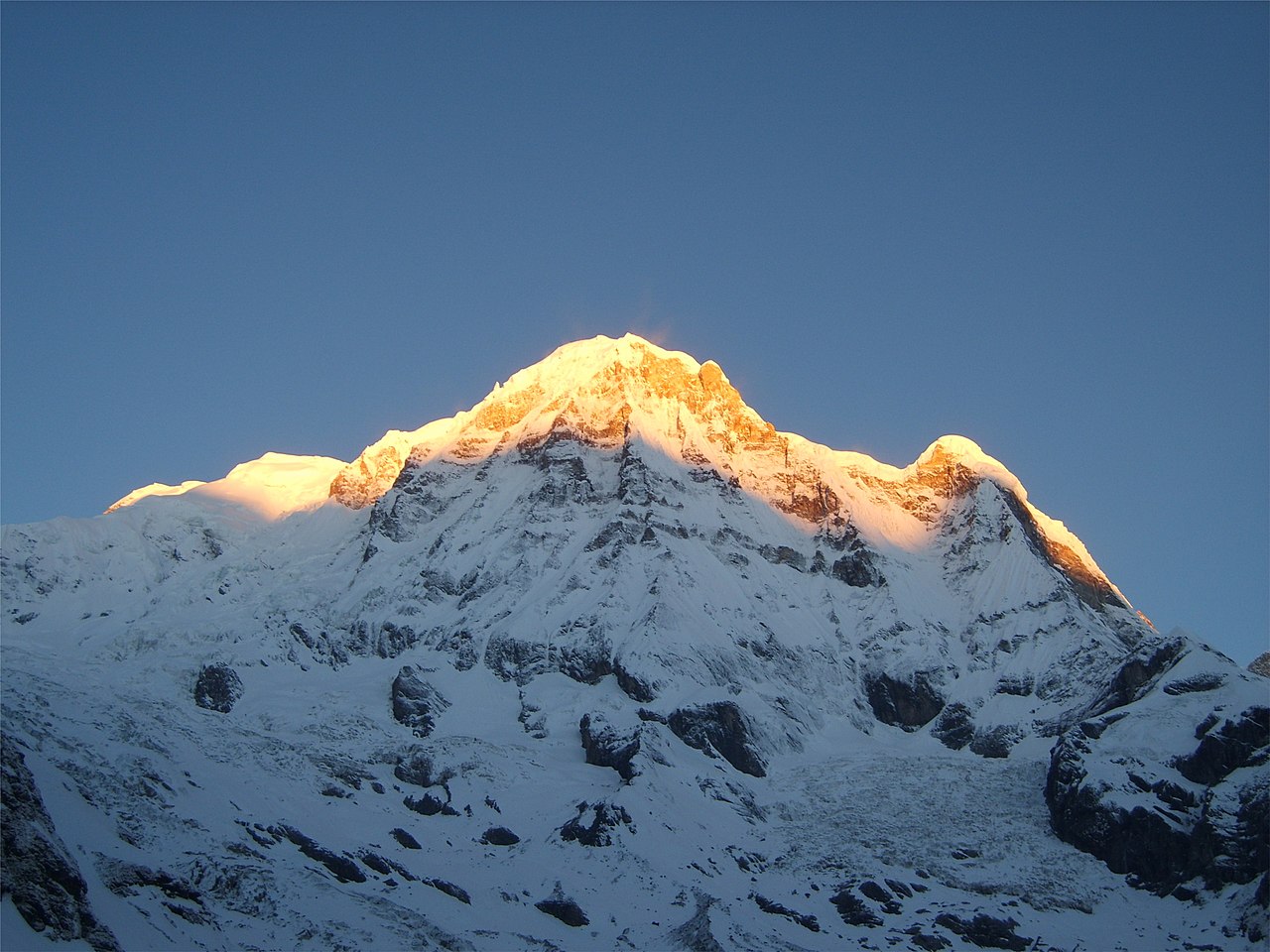

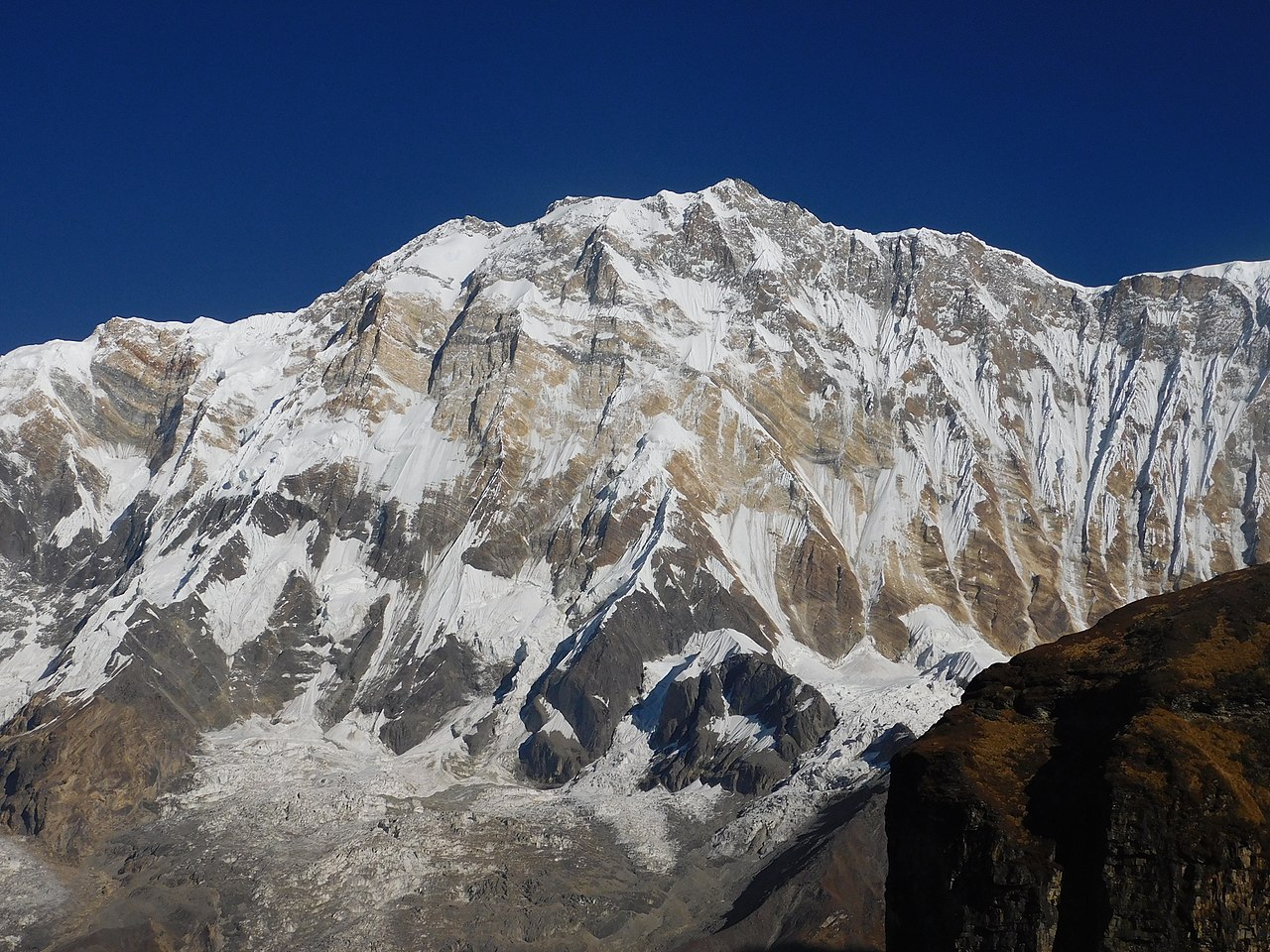

Physical characteristics
Annapurna I has steep, complex faces and long ridges; its south face is particularly imposing and has been described as one of the largest mountain faces in the world. The massif contains several subsidiary peaks and extensive glaciers that drain into river systems below. Weather in the region is strongly influenced by the South Asian monsoon, producing a limited climbing season and volatile conditions above base camp.
Climbing history and routes
The summit was first reached in June 1950 by a French expedition led by Maurice Herzog; the successful ascent by Herzog and Louis Lachenal marked the first time humans stood atop an 8,000‑metre peak. Since then climbers have used a variety of lines, including the classic north and south approaches, technical alpine routes on steep faces, and mixed ice and rock ridges. Routes vary widely in objective danger, technical difficulty, and exposure to avalanches and serac fall.
Importance, risks and conservation
Annapurna I is famous both as a landmark of mountaineering history and for its serious hazards: it has long been associated with a high fatality‑to‑summit ratio compared with many other eight‑thousanders. The mountain sits within the broader Annapurna region, which is a focus for trekking (notably the Annapurna Circuit and approaches to base camp), tourism, and the Annapurna Conservation Area. Like other Himalayan glaciers it shows signs of environmental change, prompting research and conservation efforts.
Notable facts
- First 8,000‑metre peak climbed (1950), a milestone in high‑altitude mountaineering.
- Renowned for steep faces and objective hazards such as avalanches and icefall.
- Surrounding region combines popular trekking routes with fragile mountain ecosystems.
For further reading on routes, history and current conditions see expedition reports and regional resources: Annapurna I overview, Himalayan geography, Nepal's mountain parks, and Annapurna Massif.
Related articles
Author
AlegsaOnline.com Annapurna I Main Leandro Alegsa
URL: https://en.alegsaonline.com/art/4394