
Area of Outstanding Natural Beauty (AONB)
A UK statutory landscape designation protecting notable countryside for its natural beauty, managed through planning, partnerships and conservation to balance protection, quiet recreation and local livelihoods.
Overview
An Area of Outstanding Natural Beauty (AONB) is a statutory designation in the United Kingdom applied to landscapes judged to have high scenic value and distinctive character. The principal aim of the designation is to conserve and enhance the natural beauty of the area. AONBs exist to protect important countryside while allowing people to enjoy it, and to recognise the needs and rights of communities that live and work in these places.
Image gallery
10 Images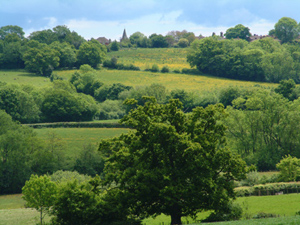


How AONBs are designated and managed
Designation is made by national conservation authorities on behalf of the relevant governments: in England by Natural England, in Wales by Natural Resources Wales, and in Northern Ireland by the Northern Ireland Environment Agency (the agency name is often used when referring to the designation process there). AONBs are created under the same 1949 legislation as national parks (National Parks and Access to the Countryside Act 1949), but their governance model is different. Management is usually delivered through a combination of local authority planning, AONB partnerships or conservation boards, voluntary agreements, and community and landowner cooperation.
Purposes and typical measures
The statutory purposes of AONBs are primarily to conserve and enhance natural beauty. Two secondary aims are to support quiet recreation and to have regard for the social and economic needs of local residents. Typical measures used to meet those aims include local planning controls that guide development, targeted habitat restoration, farmland and woodland management schemes, visitor management to avoid erosion and disturbance, and education or outreach to promote sustainable use.
Characteristics and examples
AONBs cover a wide range of landscapes: coastal headlands and islands, rolling lowland countryside, river valleys, hills and moorland. For example, the first designated AONB was the Gower Peninsula (declared in 1956). The Isles of Scilly, designated in 1976, is among the smallest (Isles of Scilly), while the Cotswolds is the largest (Cotswolds). The Wye Valley is an example of a cross-border AONB lying in both England and Wales. There are dozens of AONBs across the UK: several in England, a few in Wales and a number in Northern Ireland, each reflecting local geology, land use and cultural history.
History and legal context
AONBs were established in the mid‑20th century in recognition that many landscapes of exceptional quality did not fall within national parks. The 1949 Act provided a mechanism to protect such areas without creating national park authorities. Over time management approaches have evolved: modern AONB teams often prepare statutory or non‑statutory management plans, coordinate grant schemes, and work with farming, forestry and tourism sectors to align conservation with sustainable rural economies.
Importance and distinctions
AONBs play a key role in conserving biodiversity, cultural heritage and scenic character at a landscape scale. They provide habitats, support agriculture and forestry, sustain rural economies, and offer opportunities for recreation and learning. Compared with national parks, AONBs generally do not have the same single dedicated authority: planning powers remain with local councils, and AONB bodies tend to operate through partnership and influence rather than direct statutory control. Nonetheless, the legislative protection and local management make AONBs a cornerstone of landscape conservation in the UK. For more information about the designation and specific areas, see resources for England and Wales and for Northern Ireland, or consult the national designating agencies listed above.
Questions and answers
Q: What is an Area of Outstanding Natural Beauty (AONB)?
A: An AONB is an area of countryside considered to have significant landscape value in England, Wales or Northern Ireland. It is designated by the UK government, Welsh Government or Northern Ireland Executive with the aim of conserving and enhancing the natural beauty of the landscape.
Q: How many AONBs are there?
A: There are 35 AONBs in England, four in Wales, one (Wye Valley) that is in both England and Wales and nine in Northern Ireland.
Q: When was the first AONB awarded?
A: The first AONB was awarded in 1956 to the Gower Peninsula, south Wales.
Q: What is the smallest AONB?
A: The smallest AONB is the Isles of Scilly (1976), 16 km2 (6.2 sq mi).
Q: What is the largest AONB?
A: The largest AONB is the Cotswolds (1966), 2,038 km2 (787 sq mi).
Q: How much countryside do all of England and Wales' combined AONBs cover?
A: All of England and Wales' combined AONBs cover around 18% of their total countryside.
Tags
Related articles
Author
AlegsaOnline.com Area of Outstanding Natural Beauty (AONB) Leandro Alegsa
URL: https://en.alegsaonline.com/art/5411