
Hesperis matronalis (Dame's Rocket): description, habitat, and identification
Dame's Rocket (Hesperis matronalis) is a fragrant mustard-family plant, often grown ornamentally and naturalized in parts of North America; blooms in late spring and favors roadsides and open woods.
Overview
Hesperis matronalis, commonly called Dame's Rocket, is a flowering plant in the mustard family. It is widely cultivated for its showy, fragrant flowers and has become naturalized in many regions outside its native range. For a general species profile see species information and for horticultural notes see plant resources.
Image gallery
7 Images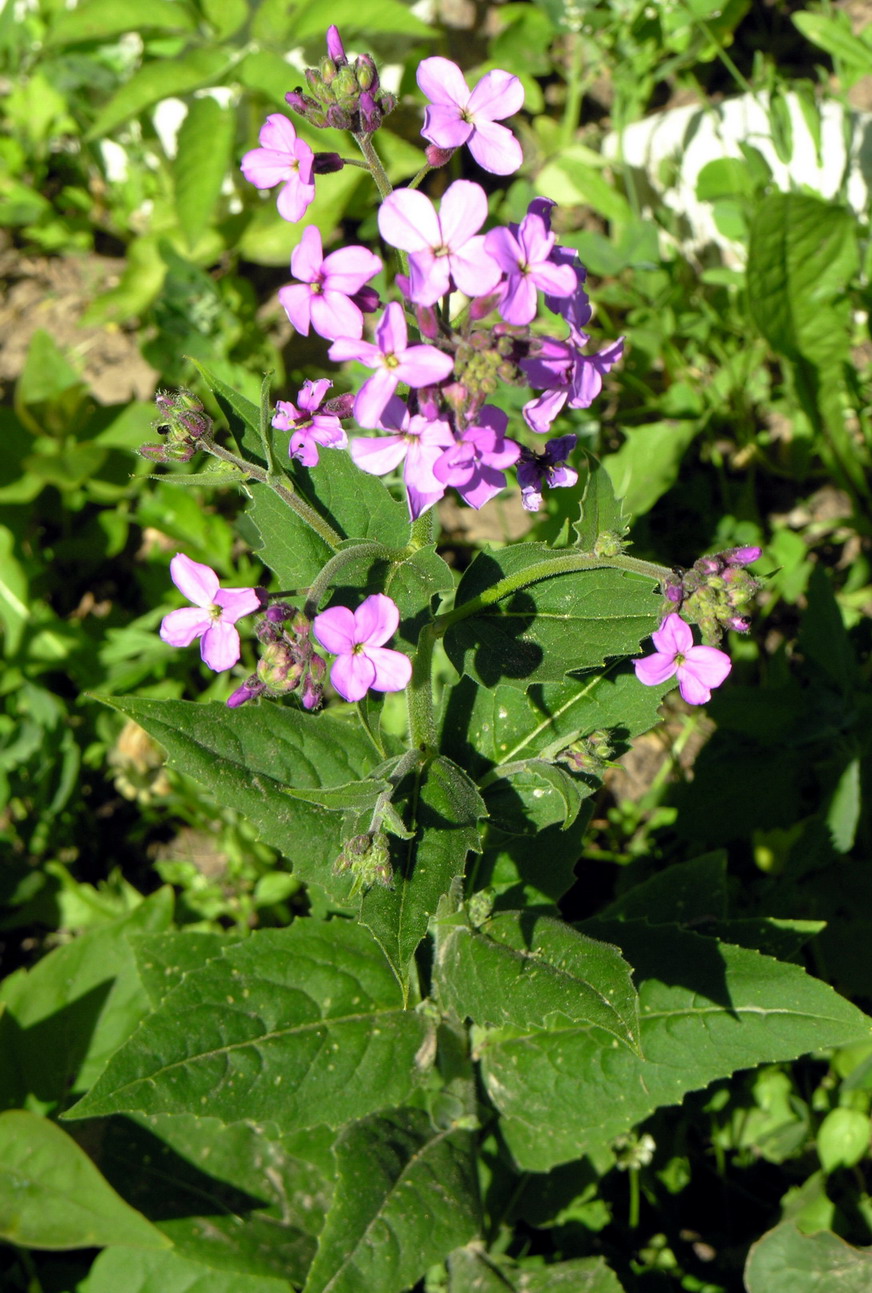


Description and life cycle
Dame's Rocket typically reaches about 51 to 102 cm (20–40 in) in height. Plants produce erect stems bearing alternate, toothed leaves and clusters of four-petaled flowers in shades of purple, pink or white. Blooming commonly occurs from May to June, with fragrant blossoms that are attractive to pollinators. The fruit is a slender pod typical of the Brassicaceae family (family details), and the species is usually biennial or a short-lived perennial rather than a long-lived shrub.
Distribution, habitat and introduction
Native to parts of Eurasia, H. matronalis has been introduced to other continents. It is established in North America after human introduction and garden escape; see regional introductions at introduction records and North America status. Typical habitats include roadsides, open woods and disturbed ground where partial shade and well‑drained soils are available (habitat examples).
Ecology, uses and impact
The plant is valued in ornamental plantings for its early-summer color and sweet scent, which is often strongest in the evening and can attract bees and moths. While useful in gardens, it can naturalize outside cultivation; in some areas this has raised concern about competition with native wildflowers. Practical information for gardeners and ecological assessments can be consulted via family and care guides and local reports at bloom timing.
Identification tips and notable distinctions
Hesperis matronalis is sometimes confused with spring-blooming perennials such as phlox. Useful distinguishing features include:
- Flowers with four petals (mustard family) rather than five — a quick field check linked to identification notes.
- Presence of elongated seed pods (siliques) after flowering typical of Brassicaceae.
- Fragrant blooms and a biennial or short-lived perennial habit rather than a long-lived perennial.
Because it occupies both garden and wild settings, observers should consult local authorities or conservation organizations when managing populations. For additional reading and regional guidance use taxonomic resources and the regional links above.
Related articles
Author
AlegsaOnline.com Hesperis matronalis (Dame's Rocket): description, habitat, and identification Leandro Alegsa
URL: https://en.alegsaonline.com/art/43936