
Hertfordshire — county north of London, England
Hertfordshire is a Home County north of London in England, noted for historic St Albans, a mix of countryside and commuter towns, and close links to surrounding counties and transport corridors.
Overview
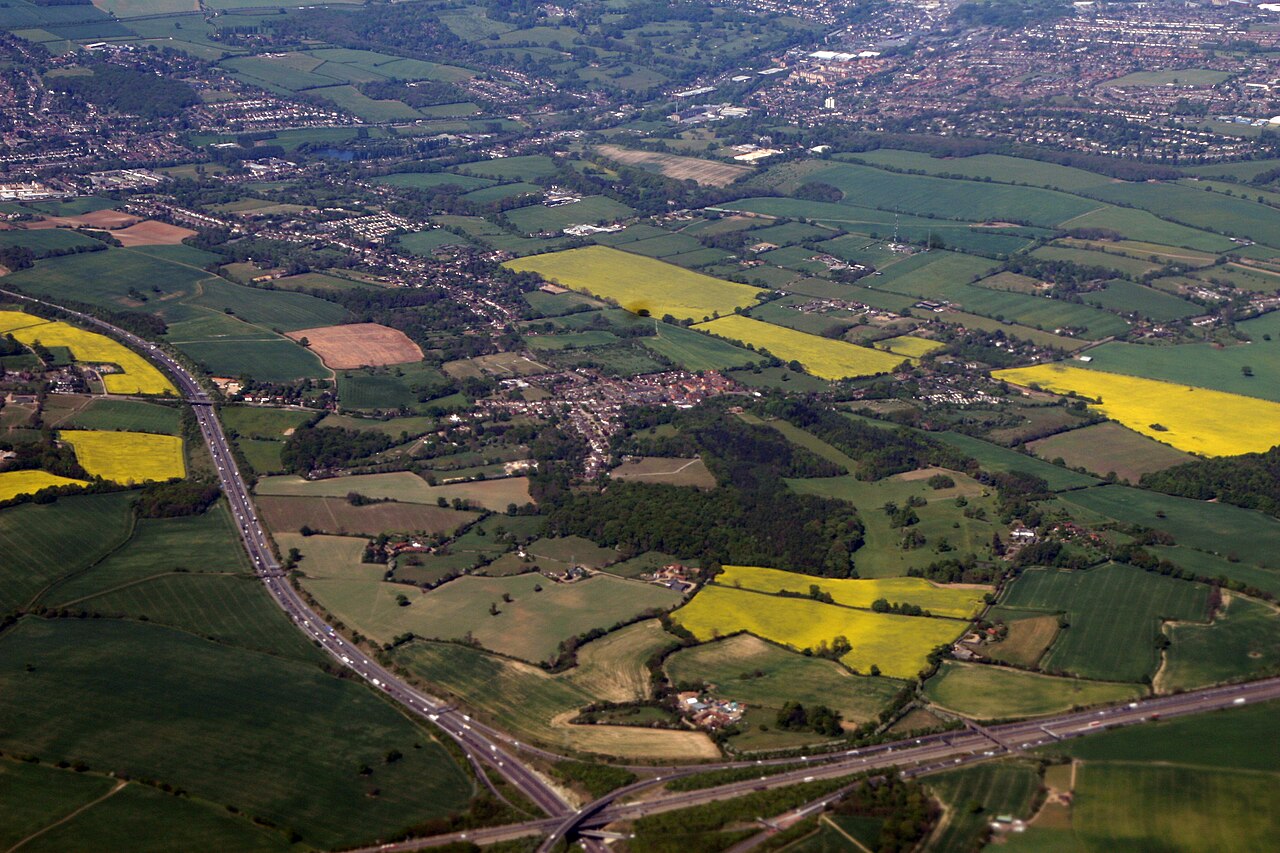
Hertfordshire is a ceremonial and administrative county in England, traditionally counted among the Home Counties that border or ring Greater London. It combines a semi-rural landscape with dense suburban development around transport corridors into the capital. The county contains a mixture of small market towns, commuter settlements and pockets of open countryside valued for recreation and ecology.
Image gallery
10 Images


Geography and settlements
The county sits north of London and is bounded by several other counties: to the east by Essex, to the north-east by Cambridgeshire, to the west by Buckinghamshire and to the north-west by Bedfordshire. Its administrative centre is the county town of Hertford, while its oldest city in terms of historical settlement is St Albans. Other larger towns and commuter centres include Watford, Hemel Hempstead, Stevenage and Bishop's Stortford.
History and development
The area now called Hertfordshire has a long human presence. In antiquity the region contained important Roman settlements and roads, and places such as St Albans preserve visible Roman and medieval heritage. Over subsequent centuries it developed as agricultural land with market towns serving local trade. From the 19th century onward improved roads and railways increasingly tied the county to London, and the 20th century brought population growth, planned new towns and suburban expansion.
Economy, land use and culture
Land use in Hertfordshire ranges from arable and pastoral farmland to urban and suburban neighbourhoods. The county participates in the wider London economy as a commuter zone, while also hosting light industry, business parks, cultural institutions and tourist attractions that draw on its historic towns and green spaces. Conservation interests and green-belt policy influence planning, helping to limit unchecked urban sprawl and preserve countryside around settlements.
Transport and connections
Transport links are a defining feature of Hertfordshire’s modern character: many of its towns grew with the arrival of rail and road connections to London and to other parts of England. Commuter rail services, arterial roads and proximity to major orbital routes support travel to the capital and beyond, making the county important for people who live outside London but work or study there.
Notable facts and distinctions
- Home County status: Hertfordshire is commonly regarded as part of the Home Counties because of its immediate relationship with London.
- Historic centres: St Albans is notable for its Roman past and medieval cathedral town character; Hertford functions as the county town and administrative focus.
- Landscape variety: The county balances urban areas with agricultural land, parks and local nature reserves valued for leisure and biodiversity.
- Commuter and economic role: Its connectivity to London shapes housing, employment and development patterns across the county.
Related articles
Author
AlegsaOnline.com Hertfordshire — county north of London, England Leandro Alegsa
URL: https://en.alegsaonline.com/art/43907