
Greater London
Greater London is the metropolitan and administrative region that surrounds the City of London, made up of 32 boroughs plus the City, home to roughly 7.5 million people and the UK's principal economic hub.
Overview
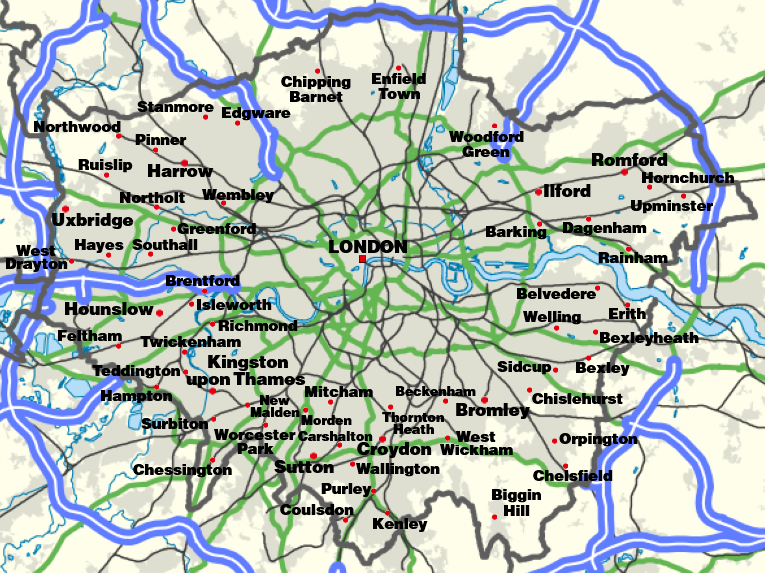
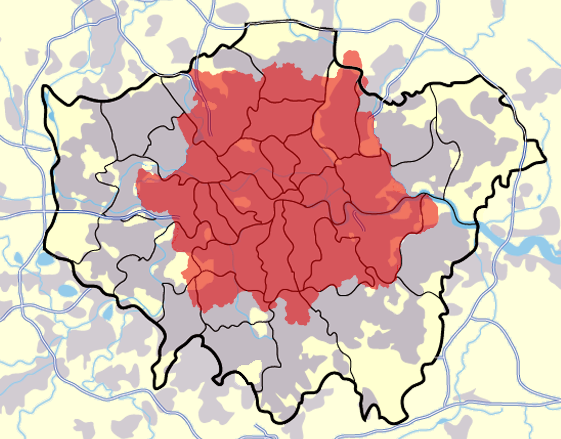
Greater London is the administrative region that encompasses the continuous urban area centred on the historic City of London. It is often referred to simply as "London" in everyday speech, but in legal and governmental contexts the distinction between the small financial district of the City and the wider metropolitan area is maintained. Greater London covers the capital's 32 boroughs together with the City, forming an area used for governance, planning and statistics.
Image gallery
10 Images




Characteristics and components
The region is a large conurbation composed of many formerly separate towns and villages now linked by continuous settlement. It includes central commercial districts, extensive suburban neighbourhoods, parks and river corridors. Administratively, Greater London contains 33 local authority areas: 32 London boroughs plus the ancient City of London. These authorities share responsibilities for services such as education, waste collection and local planning, while some strategic functions are handled at a regional level.
History and development
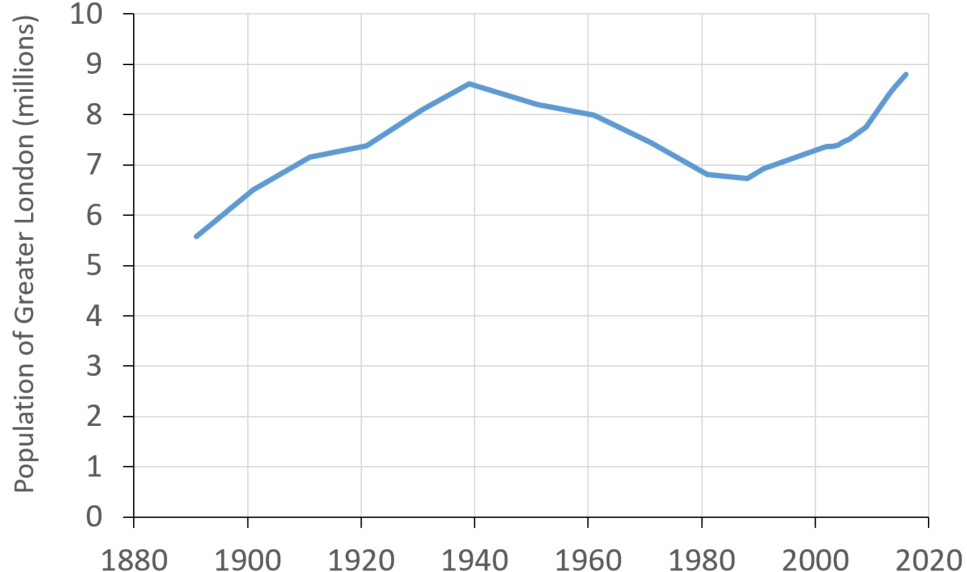
The modern concept of Greater London developed as the urban population and built-up area expanded beyond the bounds of the old City. Over centuries, small villages and market towns were absorbed into the expanding metropolis. The formal administrative boundaries of Greater London were created in the 20th century to provide a unified framework for transport, housing and public services across the growing urban area. Its development reflects industrialisation, suburbanisation, and successive waves of migration that shaped the city's economy and culture.
Role, functions and importance
Greater London is the primary political, economic and cultural centre of England and a major global city. It contains national government institutions, leading museums, universities and financial markets. Transport networks — including railways, the Underground, buses and a major international airport network — link the boroughs internally and connect the metropolis to the rest of the country and world. The region's size and diversity make it a focal point for business, tourism, education and the arts.
Practical distinctions and governance
When distinguishing terms are needed, writers and officials use phrases such as "Greater London", "London boroughs" or the specific borough name to avoid confusion with the small geographic area of the City of London. For statistical and planning purposes the wider built-up urban area is sometimes measured differently from the administrative region, and boundaries may vary depending on the purpose. The Greater London Authority provides strategic oversight for the whole region while day-to-day local services are managed by borough councils.
Notable facts and examples
- Population: commonly cited as around 7.5 million, though official estimates and census counts vary over time.
- Composition: 32 boroughs plus the historic City of London, each with a local council.
- Urban character: an extensive conurbation combining dense central districts and wide suburban areas.
- Usage: the term "Greater London" is used in government, transport planning and statistics to mean the metropolitan region rather than just central London or the ancient City.
For further reading on the city's geography and administration, consult authoritative regional statistics and planning documents, or overview material about London and its role within England.
Related articles
Author
AlegsaOnline.com Greater London Leandro Alegsa
URL: https://en.alegsaonline.com/art/40592