
Helping hand (third hand) — adjustable jig for soldering and fine work
A helping hand (third hand) is a small, adjustable jig used to hold parts steady during soldering, modelmaking, jewelry work and other precision tasks. It improves accuracy and safety.
A helping hand, often called a third hand, is a compact work-holding tool designed to hold small parts steady during tasks that require precision and both hands free. Most commonly associated with soldering, the device is also used in electronics assembly, jewelry making, model construction, and hobby crafting. It reduces the need to hold fiddly components by hand, improving accuracy and reducing the risk of burns or misaligned joints.
Image gallery
3 Images
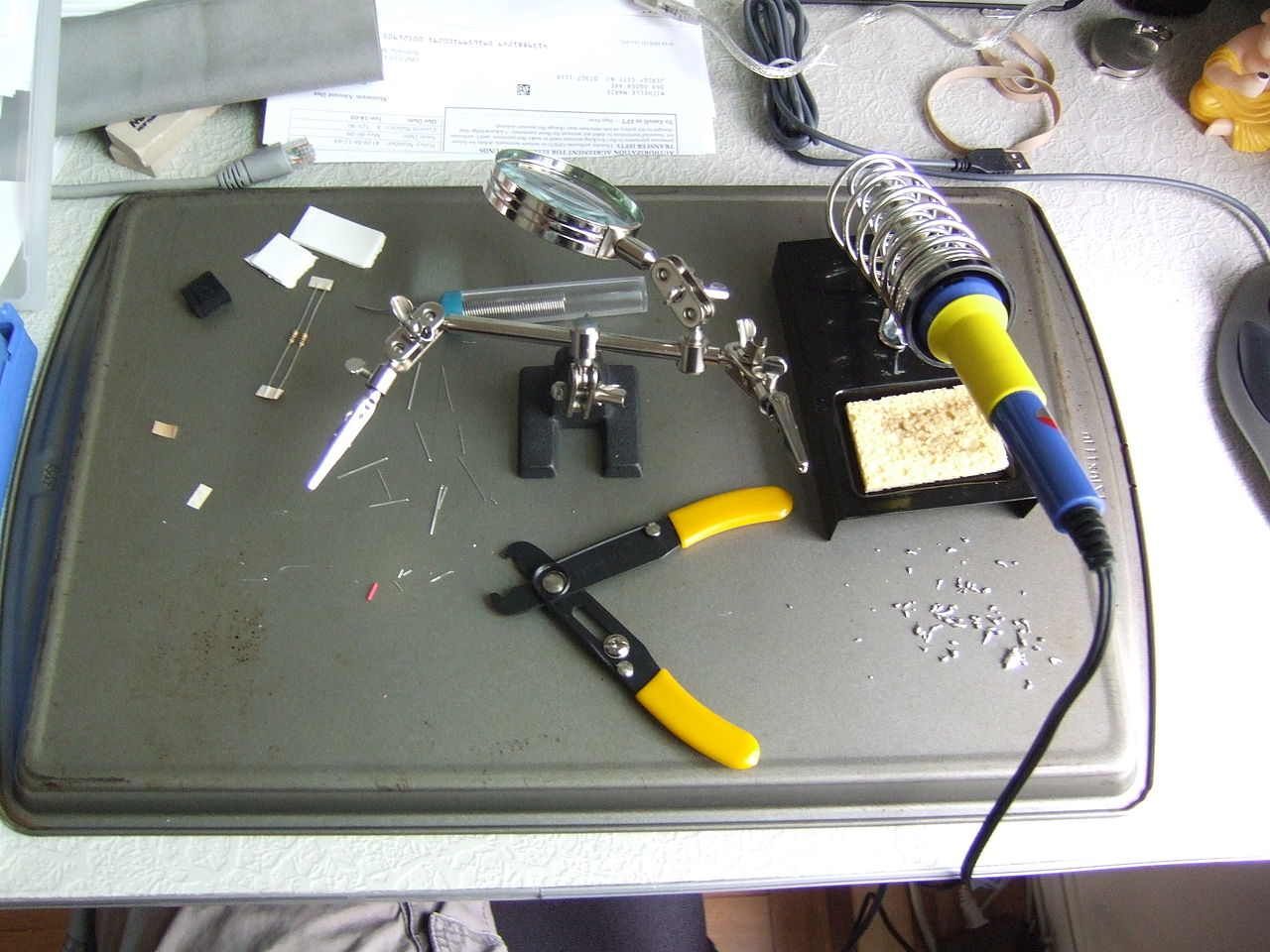

Design and components
Typical helping hands are simple but versatile. Common elements include:
- One or more flexible or articulated arms that can be positioned and locked in place.
- Alligator or crocodile clips at the ends of the arms to grip wires, leads, small circuit boards or components. These clips are often removable or replaceable.
- A stable base—cast metal, weighted plate, or a clamp for mounting to a bench—to prevent tipping while working.
- An optional magnifying glass and sometimes an integrated light to improve visibility when working with small parts.
The magnifier, when present, helps with inspection and fine adjustments; a typical unit combines an adjustable lens with the arms so that the user can both hold and magnify the workpiece simultaneously. Different models vary in arm length, clip strength, and base design to suit different tasks.
History and development
The precise origin of the helping hand is not well documented, but the concept evolved naturally from traditional bench tools used by watchmakers, jewelers and instrument makers who long required an extra steadying hand. Over the 20th century, inexpensive, mass-produced versions became common among hobbyists and electronics technicians as consumer electronics and home hobby activities expanded. The informal name "third hand" reflects the tool’s role as an extra pair of hands when two are insufficient.
Uses and benefits
- Electronics: Holding wires, components, and small printed circuit boards steady during soldering and inspection.
- Jewelry and watch repair: Securing tiny parts while filing, soldering, or polishing.
- Model making and crafts: Gluing, painting or assembling delicate scale parts.
- Any precision task where a stable grip improves quality and safety, such as bending leads or holding connectors.
Advantages include improved joint quality, reduced risk of accidental burns or cuts, steadier hands for delicate work, and increased efficiency because users can manipulate tools and materials simultaneously.
Variations, accessories and alternatives
Helping hands range from very simple two-clip units to multi-arm rigs with magnifiers and lights. Accessories and variations include replaceable jaws for different shapes, bench-mounted vises for heavier-duty tasks, and articulating arms with more precise locking mechanisms. For some applications, a bench vise or a specialized clamp is a better alternative when greater force or stability is needed.
Many users add simple improvements such as soft covers on clips to avoid marring surfaces or use a dedicated magnifying lamp in place of the small built-in lens. For holding very small or delicate components, fine-tipped tweezers and specialized fixtures complement or replace the alligator clips; see common grip options and wire-holding techniques in detailed guides linked to magnifier and clip resources here and here.
When choosing a helping hand, consider the weight and stability of the base, the flexibility and range of the arms, clip design, and whether a magnifier or illumination is required for your tasks. Proper selection and safe use can make the tool an indispensable aid for precision work.
Related articles
Author
AlegsaOnline.com Helping hand (third hand) — adjustable jig for soldering and fine work Leandro Alegsa
URL: https://en.alegsaonline.com/art/43427