
Hello Kitty
Hello Kitty is a fictional character created by Sanrio in 1974. An icon of Japanese kawaii culture, she appears on thousands of products and in animation, theme parks, and international collaborations.
Overview
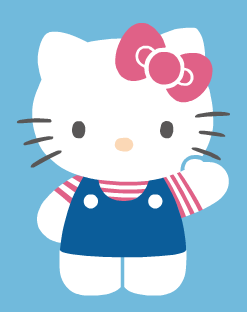
Hello Kitty is a fictional character developed by the Japanese company Sanrio in 1974. Presented as a friendly, stylized white cat with a red bow, she is officially named Kitty White. Sanrio has described the character as communicating through emotion rather than language — a concept often cited to explain why Hello Kitty is depicted without a mouth. As a global symbol of "kawaii" (cute) culture, Hello Kitty appears on a wide range of consumer goods, from stationery and clothing to accessories and homewares.
Image gallery
10 Images




Design and character traits
The visual design of Hello Kitty is simple and highly recognizable: a large, rounded head, small black eyes, a prominent bow between one ear and a lack of a mouth. This minimalism supports broad emotional interpretation — fans can project feelings onto the character. Sanrio has provided a fictional background for the character, presenting Kitty White as a cheerful girl living in London with a small, family-centered biography used in marketing and media.
History and development
Introduced in the mid-1970s, Hello Kitty gained particular popularity among young schoolgirls in the 1980s. Over subsequent decades Sanrio expanded the character’s audience by introducing more mature product lines and collaborations aimed at teenagers and adults. The character has been adapted into animated productions and TV series and contributed to the expansion of Sanrio’s branded entertainment. The company has maintained and refreshed the image through new designers and partnerships while retaining core visual traits.
Cultural impact and commercial use
Hello Kitty evolved from a children's icon into a cross-generational cultural phenomenon. The image is licensed globally and used on tens of thousands of products, in fashion collaborations, and as part of themed attractions such as Sanrio Puroland. Hello Kitty has also appeared in short-form animation and special media projects, and she is frequently featured in brand collaborations, celebrity endorsements, and pop-culture events.
Notable facts and distinctions
- No mouth: Sanrio explains this choice as a means for emotional universality; fans interpret her expression according to their own feelings.
- Merchandising: The character’s image has been used across an exceptionally wide product range and numerous international markets.
- Media adaptations: Hello Kitty has appeared in animated series and specials and has been used in music and advertising tie-ins.
- Theme parks and exhibits: Sanrio operates themed attractions that feature Hello Kitty as a central figure.
Further reading and sources
For official background and corporate information see Sanrio profile and company pages such as brand history. Biographical or design notes can be found on resources about the character and creators: character details, Sanrio history. Media and animation references appear in archives and program guides: animation credits, television listings, series summaries. Collections and merchandising studies are available at retail and licensing overviews: licensing overview, product catalogs, collaboration case studies. For cultural analysis and the role of kawaii culture consult essays and media coverage: cultural analysis, pop culture studies, celebrity collaborations, and exhibition and theme park information.
Related articles
Author
AlegsaOnline.com Hello Kitty Leandro Alegsa
URL: https://en.alegsaonline.com/art/43398
Sources
- sanrio.co.jp : sanrio.co.jp/english/corporate/about_s/history/
- independent.co.uk : Esther Walker, The Independent, 20 May 2008
- sanriotown.com : Sanriotown website