
Helen Keller: life, education, writings and public advocacy
Overview of Helen Keller (1880–1968), the American deafblind author, educator, and advocate, covering her early life, education with Annie Sullivan, major works, activism, and lasting influence.
Helen Adams Keller (1880–1968) was an American writer, lecturer, and advocate who became one of the best-known figures for people with sensory disabilities. Born in Tuscumbia, Alabama, she lost both sight and hearing as an infant after a severe illness whose precise diagnosis remains uncertain; medical historians have suggested scarlet fever or meningitis among possibilities. Keller transformed the personal challenge of deafblindness into a public career that combined literature, education, and campaigning for social causes. Her life story and her long partnership with teacher Annie Sullivan have inspired books, plays and films, most famously the play and later motion picture titled The Miracle Worker.
Image gallery
10 Images





Early childhood and communication
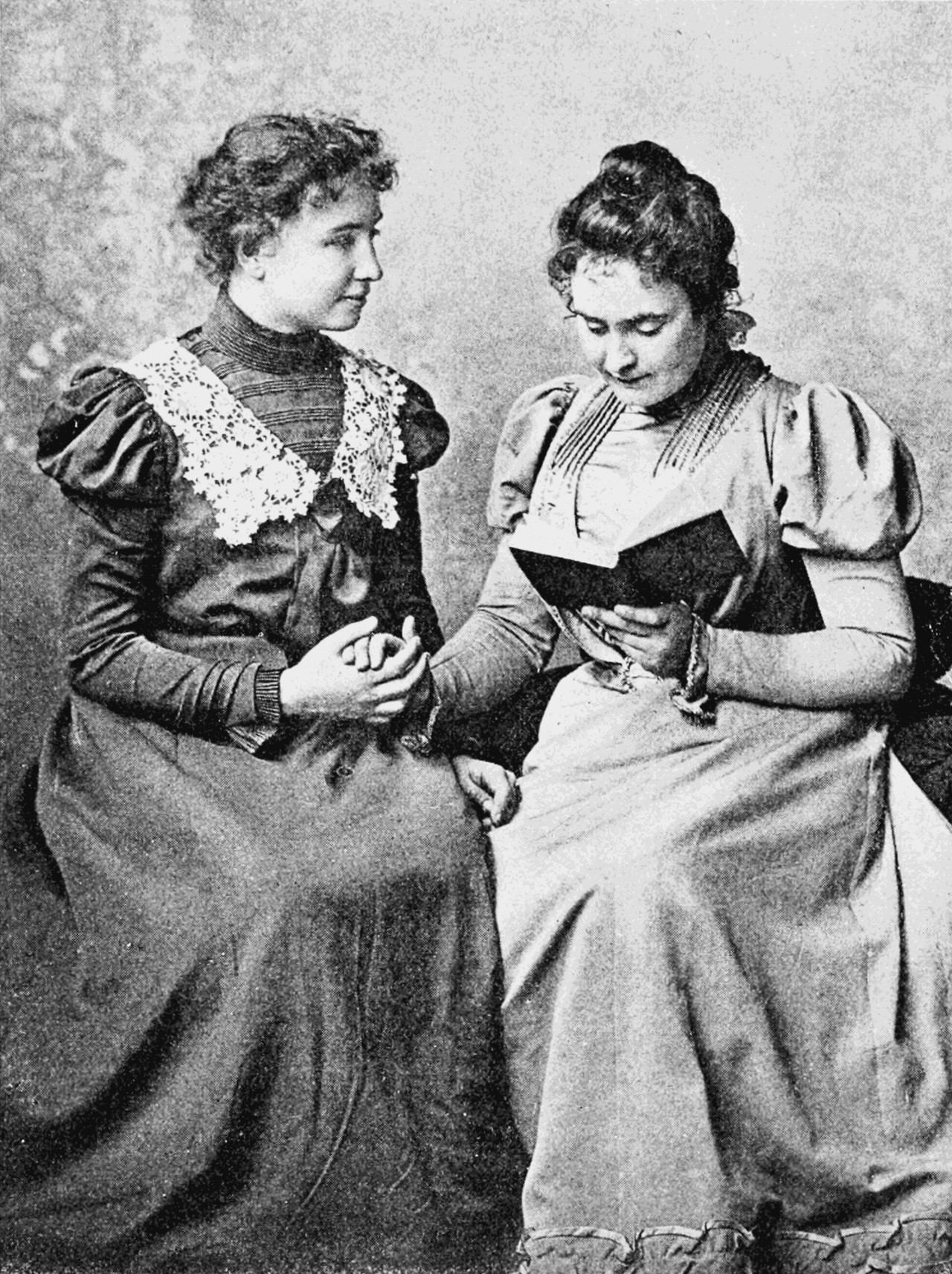
Keller’s early years were marked by frustration and isolation. Before she learned a formal method of communication she and her family developed simple home signs—gestures that expressed ideas such as "come" or "go"—but those methods were limited and often misunderstood. At seven, the Kellers sought professional help and reached out to the Perkins Institution for the Blind. Michael Anagnos, then director of Perkins, recommended a young teacher, Annie Sullivan, who arrived at the Keller home in 1887. Sullivan had experienced vision problems of her own in youth and had trained at Perkins; she brought disciplined methods and patience to Helen’s instruction.
Learning language and schooling
Sullivan introduced Keller to tactile spelling: she would place objects in Keller’s hand while forming letters into Keller’s palm to link the manual alphabet with concrete things and actions. The breakthrough episode most often recounted is when Keller understood that the sequence of letters W-A-T-E-R referred to the running water she felt on her hand. That moment opened the way to systematic instruction in vocabulary, concepts, reading by touch, and later speech. Keller studied at Perkins and other institutions adapted for blind and deaf students, and in 1900 she entered Radcliffe College as a student. In 1904 she graduated from Radcliffe with a Bachelor of Arts degree, becoming the first deafblind person known to have earned that degree.
Writing, public speaking and travel
Helen Keller wrote autobiographical material and several books and essays that described her life and argued for improved education and social services. Her best-known work, The Story of My Life (first published in the early 20th century), recounts her early years and the process of learning language with Annie Sullivan. She also wrote a biography of Sullivan, several collections of essays, and other books addressing social themes. Keller and Sullivan traveled together extensively on lecture tours that brought her message to audiences in the United States and abroad. During these travels Keller visited more than thirty countries and met many public figures; a frequently cited anecdote describes her encounter with the dog Hachikō while in Japan and her role in introducing the Akita breed to the United States.
Activism, causes and public life
Beyond memoir and lecturing, Keller used her public stature to press for practical reforms. She championed improved education and services for people with disabilities, and she spoke in favor of broader social causes including women’s rights and labor reforms. Over her life she supported schools for blind children and organizations that promoted employment and rehabilitation. Her public visibility helped raise awareness and encourage more inclusive approaches to schooling, literacy in tactile systems such as braille, and technology and training for people with sensory impairments.
Major works, honors and later years
- Major writings: The Story of My Life (autobiography), a biography of Annie Sullivan, and numerous essays and speeches.
- Cultural portrayals: Her life was dramatized in William Gibson’s play The Miracle Worker and a celebrated 1962 film adaptation; these works shaped public memory of her education by Sullivan.
- Public recognition: Keller received numerous honors and became a widely recognized symbol for ability rather than limitation.
Her personal life attracted attention as well. Keller had friendships and close relationships throughout her adult life; she reportedly wished to marry at one point but faced family and social barriers that were common for people with disabilities at the time. She continued to write, teach, and speak until late in life. Helen Keller died peacefully at her home, Arcan Ridge in Connecticut, on June 1, 1968.
Notable facts and resources
- Early life: born in Tuscumbia, Alabama, to Arthur H. Keller and Kate Adams Keller (Tuscumbia).
- Illness and causes: physicians at the time described her condition as a severe "congestion"; later commentators proposed scarlet fever or meningitis as possible causes.
- Education and mentorship: sought help through the Perkins Institution and its director Michael Anagnos recommended Annie Sullivan, who arrived in 1887.
- Key learning moment: Keller’s tactile grasp of the word "water" is the classic turning point in her instruction.
- Higher education: attended and graduated from Radcliffe College in Massachusetts (Massachusetts).
- Degree: first deafblind person known to earn a Bachelor of Arts (BA).
- International travel: visited dozens of countries and met public figures while lecturing and fundraising (Japan/Akita anecdote).
- Final years and passing: died on June 1, 1968 at Arcan Ridge in Connecticut.
For readers seeking primary texts, contemporary biographies, and institutional histories, many archives and disability history collections hold Keller’s correspondence, published work, and related materials. Her story remains a central chapter in discussions about education for children with complex disabilities, the role of specialized teachers and interpreters, and the social history of disability rights.
Questions and answers
Q: What was Helen Keller's book called?
A: Helen Keller wrote a book about her life called The Story of My Life.
Related articles
Author
AlegsaOnline.com Helen Keller: life, education, writings and public advocacy Leandro Alegsa
URL: https://en.alegsaonline.com/art/43322