
Heinrich Cornelius Agrippa
German Renaissance polymath (1486–1535) known for De occulta philosophia and influential writings on magic, natural philosophy, astrology and the interplay of classical, Christian and esoteric traditions.
Overview
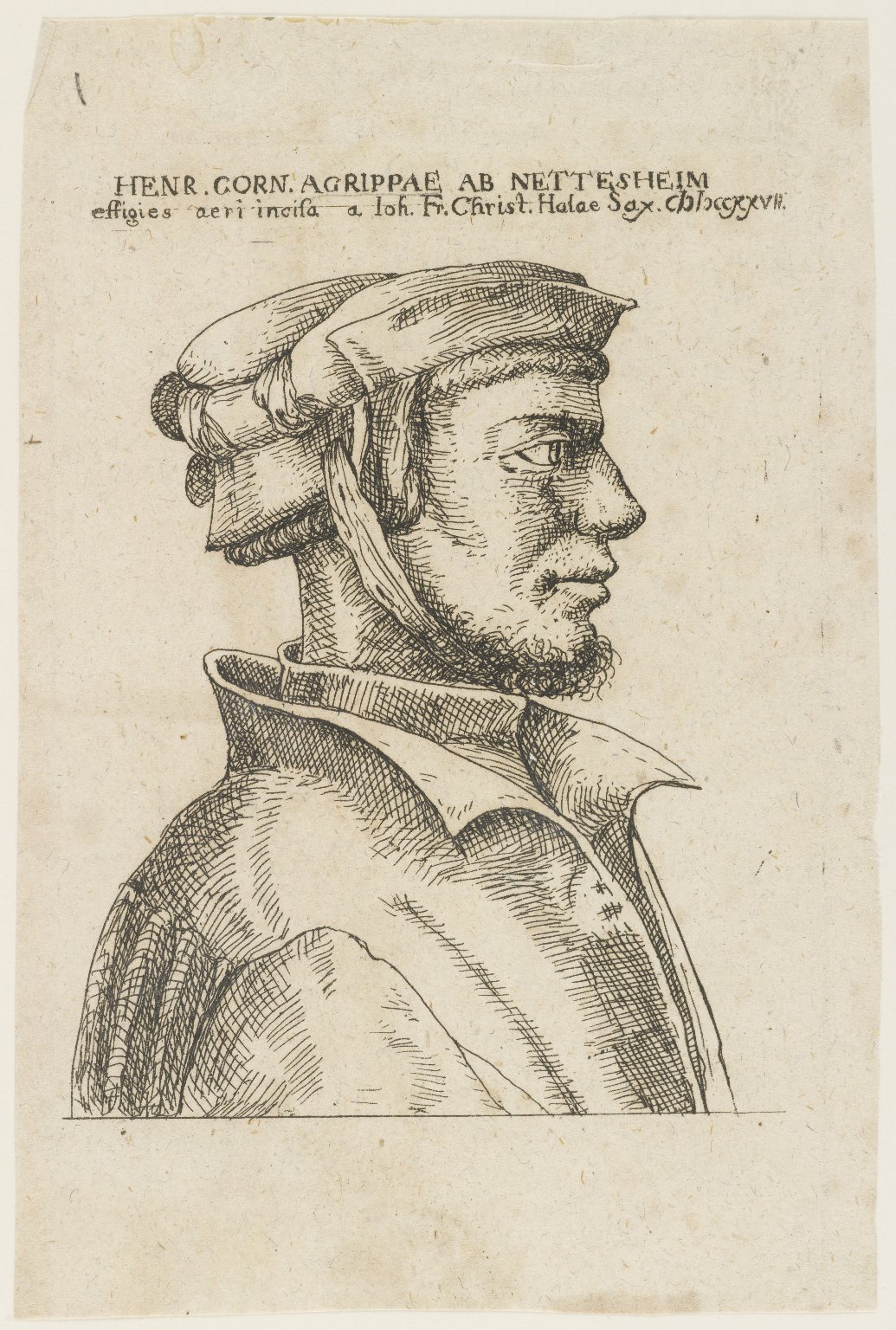
Heinrich Cornelius Agrippa von Nettesheim (14 September 1486 – 18 February 1535) was a German Renaissance writer and polymath best known for his works on magic, the relations between nature and spirit, and the arts commonly described as occult. Trained in law and medicine, and active as a scholar and court intellectual, Agrippa sought to synthesize classical learning, Christian theology and esoteric sources into a systematic account of hidden correspondences and symbolic practice.
Image gallery
5 Images


Life and career
Details of Agrippa's life combine verifiable appointments with accounts that vary in emphasis. He worked in several intellectual and courtly contexts across the Holy Roman Empire and Italy, composing legal, medical and theological material alongside his more famous writings on magic. His mobility and polemical style brought him into contact with patrons, critics and ecclesiastical authorities; some of his ideas provoked suspicion and debate in his lifetime.
Works and central ideas
Agrippa's major intellectual project presents magic as a multilayered art that unites natural, celestial and divine aspects. In his best-known treatise, often cited as the Three Books of Occult Philosophy (De occulta philosophia), he describes correspondences between elements, plants, stones, angels and planets, arguing that knowledge of these affinities allows a practitioner to work in harmony with nature and the higher orders. He drew on Neoplatonism, Hermeticism and Kabbalistic themes while also offering sharp criticisms of the limits of scholastic learning.
Key writings
- De occulta philosophia — a multi-part synthesis of natural magic, celestial influences and symbolic correspondences;
- De incertitudine et vanitate scientiarum (On the Vanity of the Sciences) — a critique of certain learned pretensions and method;
- Shorter treatises on prophecy, ceremonial practice and questions of demonology and angels.
Reception and influence
Agrippa's writings circulated widely in manuscript and print and shaped the vocabulary and methods of later occultists, artists, and intellectuals who explored the interplay of symbol, nature and spiritual causation. His combination of erudition and speculative sympathy made him a reference point for early modern esotericism; readers have treated him variously as a magician, a philosopher, a skeptic and a theological provocateur.
Controversies and legacy
Contemporaries debated whether Agrippa's work promoted superstition or offered a coherent metaphysical vision. He encountered opposition and charges of heterodoxy in some quarters, while other readers admired his learning. In later centuries his books were edited, translated and studied both by occult practitioners and by historians tracing the role of magic and Hermetic thought in the Renaissance. Modern scholarship examines his texts in the context of religion, natural philosophy and the formation of Western esoteric traditions.
Further reading
For introductions and primary material consult editions of his major works and annotated translations. For thematic studies see collections of essays on Renaissance magic and critical biographies that place Agrippa among early modern thinkers who bridged learned and mystical cultures. Online and library resources gather his texts and scholarly discussion: primary-text collections and modern studies are available under entries for primary texts and biographical or critical studies. Related topics include astrology and practical arts, and the long reception history of alchemy in European intellectual life.
Related articles
Author
AlegsaOnline.com Heinrich Cornelius Agrippa Leandro Alegsa
URL: https://en.alegsaonline.com/art/43270