
Hanau shootings (19 February 2020)
Two mass shootings at shisha bars in Hanau, Hesse, Germany on 19 Feb 2020 killed nine people; the suspect later killed his mother and himself. Authorities treated the attacks as xenophobic, right-wing extremist.
Overview
On 19 February 2020 two separate mass shootings targeted shisha bars in Hanau, Hesse, Germany. According to official reports nine people were killed and several others were seriously injured. Soon after the shootings the alleged perpetrator returned home, where he shot and killed his mother and then took his own life (suicide).
Image gallery
4 Images


Events and investigation
Police investigations treated the two attacks as linked incidents carried out in quick succession at public leisure venues. Authorities said the shootings were motivated by hostility toward foreigners and identified elements consistent with a xenophobic, right-wing extremist worldview. The case prompted criminal inquiry, searches of the suspect's residence, and review of online materials related to the attack.
Immediate response
The shootings produced an intense national reaction. Political leaders issued condolences and called for calm. The German Chancellor, Angela Merkel, canceled a planned trip to Halle, Saxony-Anhalt and publicly expressed sympathy with the victims' families. Local authorities increased security at public venues and provided support services to survivors and witnesses.
Impact and significance
Beyond the tragic loss of life, the Hanau attacks revived public debate in Germany about right-wing extremism, racism, and the protection of minority communities. The incident intensified calls for improved prevention, better monitoring of extremist networks, and enhanced measures to protect publicly accessible gathering places—including cafés and bars frequented by immigrant communities.
Key facts
- Date: 19 February 2020.
- Targets: two shisha bars in an urban area.
- Casualties: nine people murdered; additional injured; perpetrator killed his mother and later himself.
- Reported motive: assessed by authorities as xenophobic / right-wing extremist.
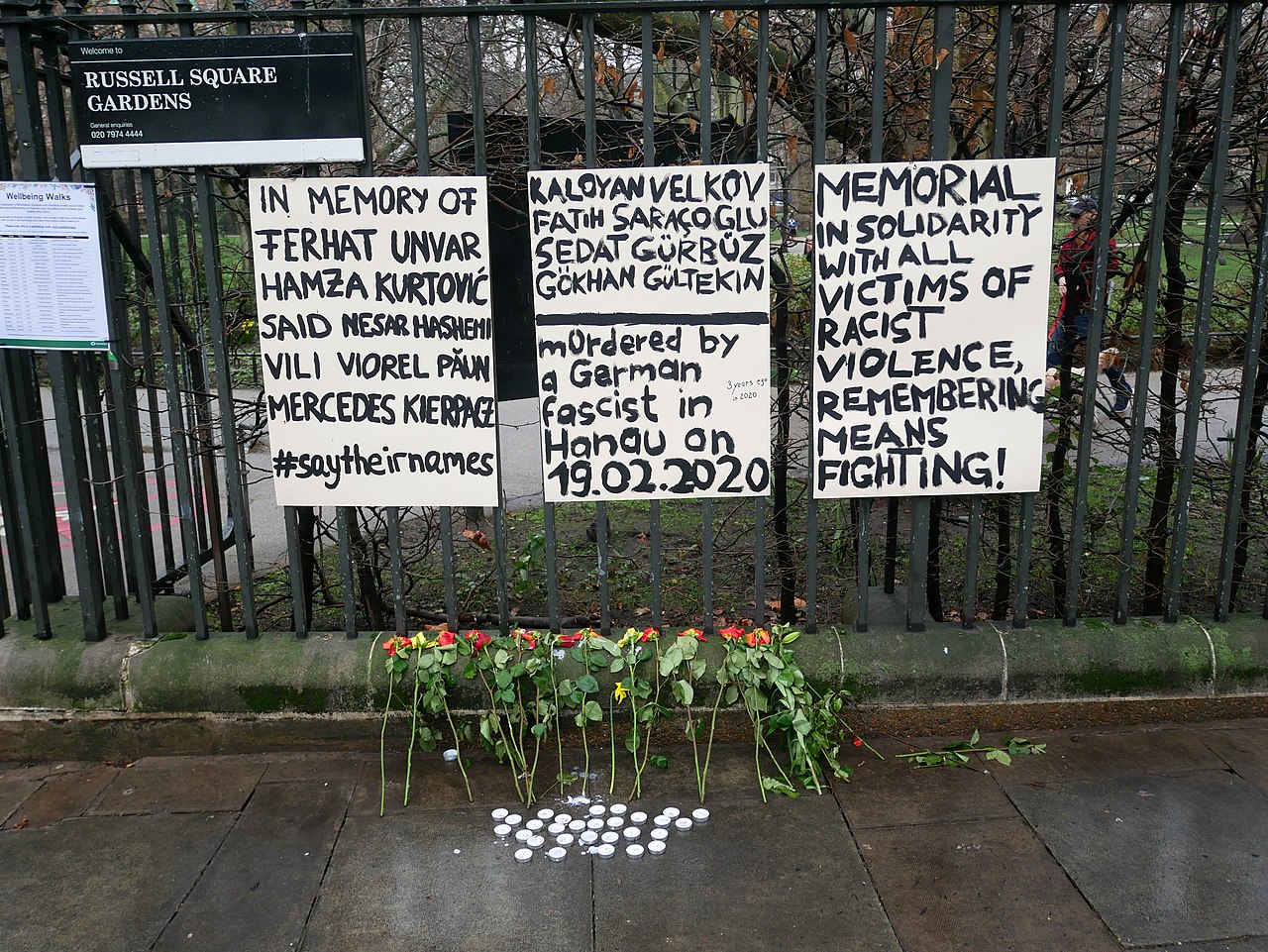
Memorials, community vigils, and political discussions followed the attack, as German society and institutions sought to address the causes and to strengthen protections against ideologically motivated violence. The case remains a reference point in debates on domestic extremism and social cohesion.
Related articles
Author
AlegsaOnline.com Hanau shootings (19 February 2020) Leandro Alegsa
URL: https://en.alegsaonline.com/art/42147