
Half-Life (video game)
Half-Life is a 1998 science-fiction first-person shooter by Valve that combined continuous in-world storytelling, puzzle-solving and action, launching a franchise and influencing FPS design and mod culture.
Half-Life is a 1998 science fiction first-person shooter developed by Valve Software and originally released for personal computers running Microsoft Windows. The game places players in the role of Gordon Freeman, a research scientist caught in the aftermath of a catastrophic experiment at the Black Mesa Research Facility. Rather than relying on non-interactive cutscenes, Half-Life tells its story through scripted events that occur while the player retains control, an approach that helped establish a more cinematic, immersive style of narrative in action games and seeded a long-running franchise, the Half-Life series.
Image gallery
6 Images



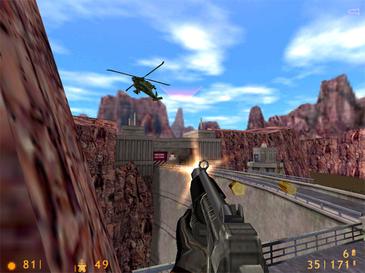

Gameplay
Half-Life combines first-person shooting with environmental puzzles and exploration. Players use a mix of conventional firearms, improvised weapons and environmental hazards to overcome enemies. Encounters often reward careful use of cover, ammunition conservation and problem solving; puzzles range from navigation and power-routing tasks to timed sequences that require observation and dexterity. The game includes limited multiplayer modes in its original releases and later became a fertile platform for community-driven competitive and cooperative modifications.
Plot overview
The plot begins with a routine experiment that produces a "resonance cascade," opening portals to alien environments and allowing hostile creatures to invade the research facility. Throughout the game, the player progresses through laboratories, industrial complexes and ventilation networks while meeting surviving scientists and security personnel, and confronting both extraterrestrial foes and military forces sent to contain the incident. The story culminates in encounters on the alien borderland and with a powerful leader of the invading forces.
Development and technology
Valve built Half-Life on a heavily modified engine derived from earlier technology and integrated new level scripting, animation and artificial intelligence to support uninterrupted, in-engine storytelling. The team emphasized environmental detail and scripted sequences that preserved player agency. Discussions of its technical lineage often reference comparisons to contemporaneous engines such as the Quake family and the extensive reworking that produced the game's distinctive capabilities; see technical retrospectives at engine origins and developer notes at engine modification.
Release and ports
Originally published for Windows platforms, Half-Life was later adapted to other systems. The game saw an official PlayStation 2 port that included additional modes, and several planned console versions were announced and later cancelled or left incomplete. For platform and publishing details consult platform references such as PC editions, operating system materials at Windows resources and console histories at PlayStation and console plans.
Expansions, ports and community modifications
Official expansion packs and spin-offs were produced by Valve and partner studios, while an active community created many modifications that changed or expanded gameplay. Notable commercial expansions and spin-offs grew from this ecosystem, and user-created projects such as large-scale mods and multiplayer conversions demonstrated the game's adaptability. Community histories and mod lists are often catalogued alongside publisher material at modding and competitive histories at multiplayer. Fan projects and conversion efforts remain an important part of the title's continuing legacy; see community repositories at fan mods and competitive mod archives at multiplayer mods.
Reception and influence
Upon release Half-Life received widespread critical acclaim for its pacing, atmosphere and technical innovations. Critics and scholars frequently cite the title when discussing the evolution of narrative techniques in interactive entertainment, particularly its decision to integrate story beats into gameplay rather than interrupting play with cutscenes. The game's design principles influenced later shooters and helped cultivate a robust modding community that produced commercially successful titles and long-lived multiplayer modes.
Legacy
Half-Life has remained a reference point in conversations about immersive level design, interactive storytelling and engine-driven mod communities. Its commercial success established Valve as a major developer and created opportunities for sequels, expansions and community-driven projects that redefined multiplayer and competitive gaming. Further information on publication history and archival material can be found in publisher records and platform documentation at publisher records and platform documentation, while oral histories and interviews with the developers appear in retrospectives and industry sources at developer retrospectives.
For those seeking additional technical detail, historical context or lists of fan projects, consult archival repositories, developer interviews and curated mod databases indexed with references such as platform notes, PlayStation resources and broader industry overviews available through specialized archives at console plans and scholarly discussions of game design at series histories.
Author
AlegsaOnline.com Half-Life (video game) Leandro Alegsa
URL: https://en.alegsaonline.com/art/41875
Sources
- uk.ign.com : "Half-Life: Blue Shift Review"
- decay.half-lifecreations.com : "Half-Life: Decay"