
Hailstone
A hailstone is a solid ball or lump of ice produced in strong thunderstorms. This article explains how hail forms, its structure, typical sizes, hazards, and how scientists measure and report hail events.
Overview: A hailstone is a lump or sphere of ice that forms inside certain convective storms and falls to the ground. Hail differs from ordinary frozen precipitation such as sleet because it is produced by strong updrafts and repeated cycling through parts of a storm cloud. Hail formation requires supercooled water droplets and a vigorous vertical airflow within a cloud, most commonly in a severe storm.
Image gallery
10 Images




Formation and structure
Hailstones grow when small ice particles collide with supercooled water droplets, which freeze on contact. They can be carried upward by updrafts multiple times, accumulating concentric layers and irregular shapes. Typical features include a hard, translucent outer layer and concentric internal layering that records episodes of wet growth (smooth translucent ice) and dry growth (opaque, bubbly ice).
Sizes, classification and frequency
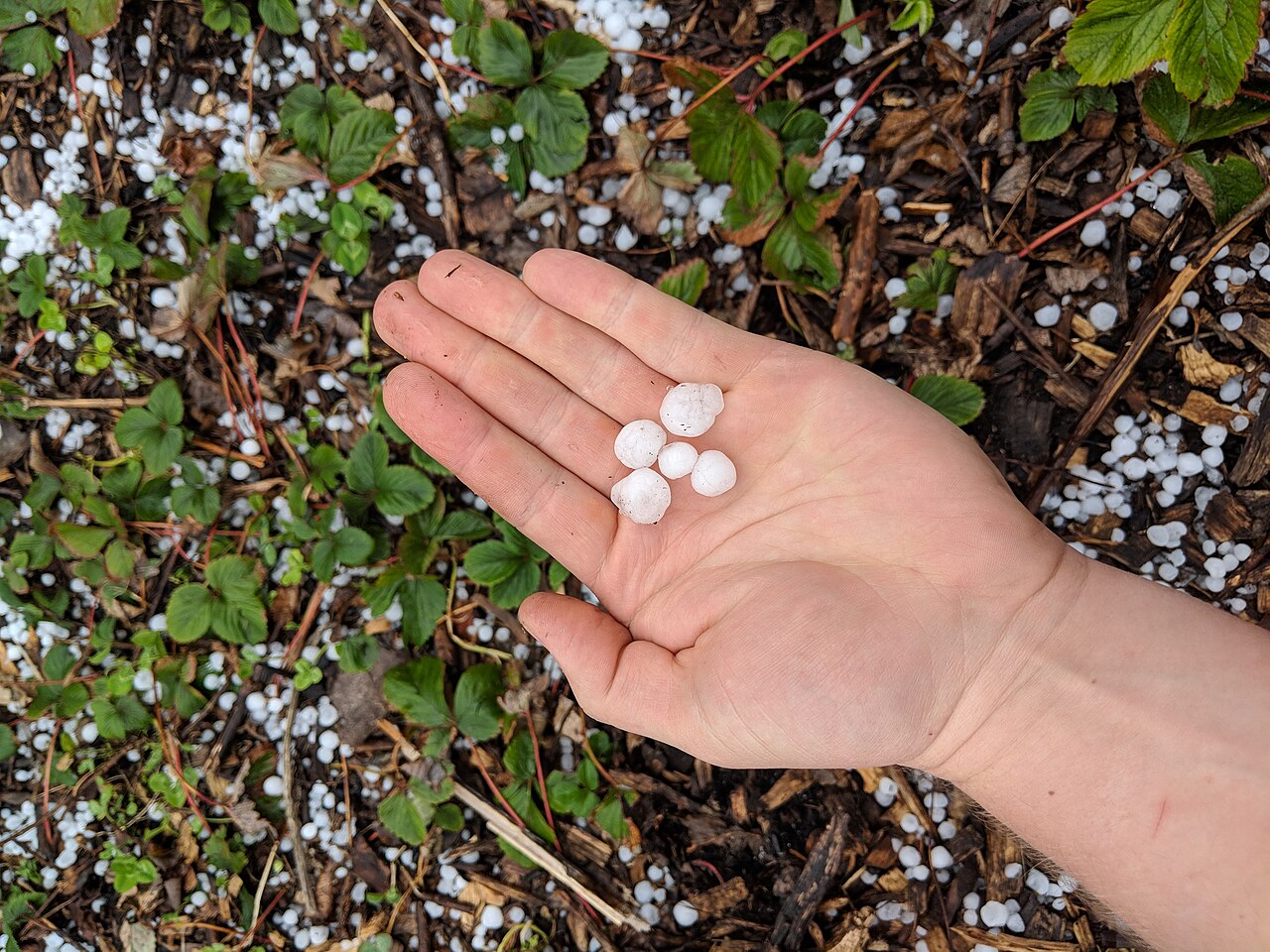
Hail size ranges from small pellets to very large stones. Meteorologists and the public often describe hail by common objects—pea, marble, quarter, golf ball, baseball, softball—to convey damage potential. In the United States, observational data note that about 5,000 hailstorms per year produce hailstones 3/4 of an inch or larger nationwide; such sizes are capable of denting cars and damaging vegetation (3/4 inch comparisons are commonly used).
Impacts and examples
Hail can damage crops, glass, roofs, vehicles and airframes, and cause economic losses in agriculture and property. Large hailstones can injure people and animals caught outdoors. Insurers and emergency managers monitor hail reports to assess damage and issue safety guidance during storms.
Observation and research
Scientists study hail using radar, storm-chasing reports, satellite imagery and ground measurements. Doppler radar helps identify strong updrafts and hail-producing cores, while spotters and automated sensors contribute size and timing data. Research aims to better predict hail occurrence, reduce harm, and improve building and agricultural resilience.
Notable distinctions
- Hail vs. sleet: sleet is smaller and forms in different temperature profiles without repeated lofting.
- Layering: concentric rings inside hailstones indicate multiple growth cycles.
- Frequency varies regionally: some areas have more frequent severe hailstorms due to climatology and terrain.
For further technical details or storm-specific records, consult meteorological resources and local severe weather services via authoritative portals such as ice formation guides and storm reporting pages at storm information or cloud and convection resources.
Related articles
Author
AlegsaOnline.com Hailstone Leandro Alegsa
URL: https://en.alegsaonline.com/art/41784