
Gyachung Kang
Gyachung Kang, 7,952 m high, is a Himalayan peak on the Nepal–China border. It is the tallest mountain under 8,000 m and the 15th highest in the world, first climbed in 1964 by a Japanese team.
Overview
Gyachung Kang rises to 7,952 metres (26,089 ft) in the high Himalaya, occupying a position on the international frontier between Nepal and China. It sits within the broader Himalayan mountain system and is notable for being the highest peak that falls short of 8,000 metres. Because of its height and location among several of the world's giants, Gyachung Kang is often mentioned in lists of major Himalayan summits and is classified as the 15th highest mountain on Earth.
Image gallery
3 Images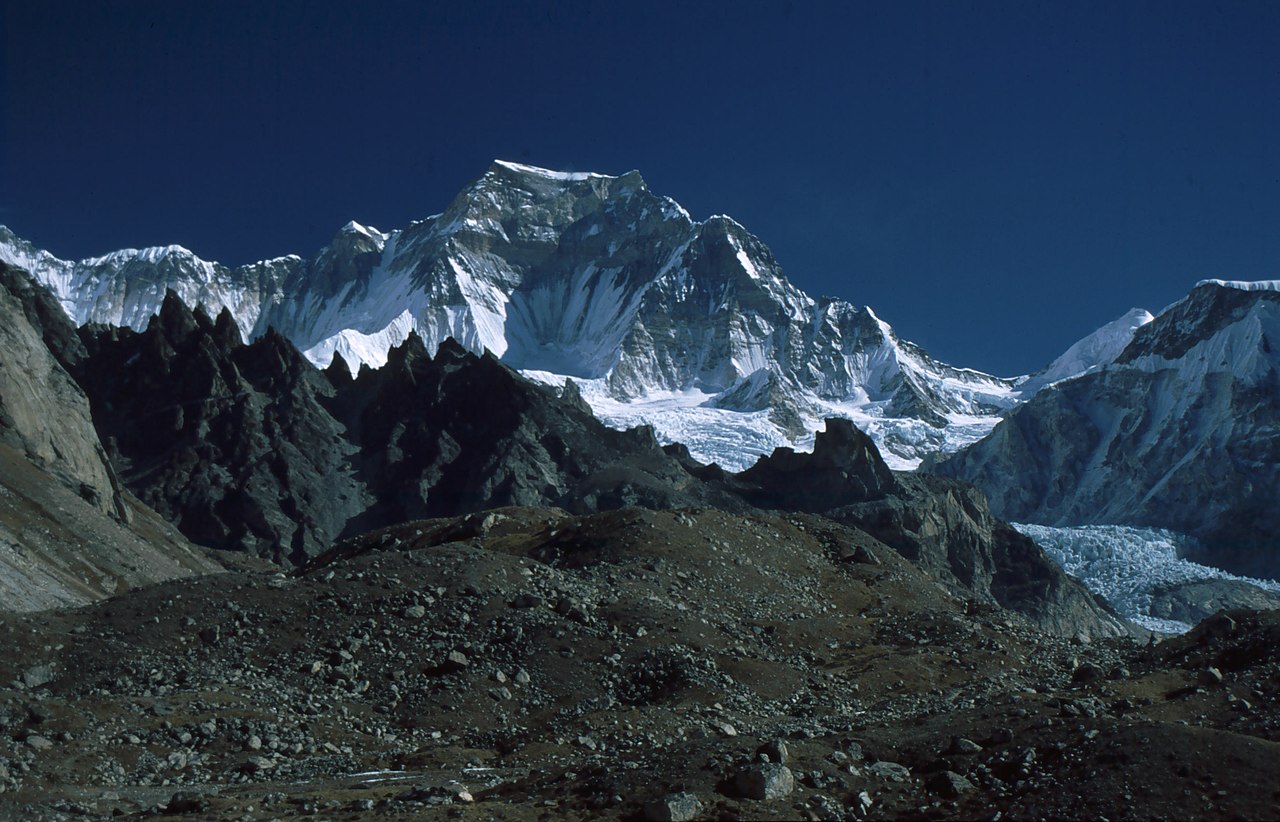


Physical characteristics
The mountain is part of the Mahalangur sector of the range and belongs to a compact cluster of high peaks characterized by steep ridges, icefalls and extensive glaciation. Its main ridges and faces are technical and often ice-covered, giving rise to persistent seracs and crevasses on approach. Although lower than the eight‑thousanders nearby, Gyachung Kang presents sustained high‑altitude difficulty and unpredictable weather typical of the central Himalaya. It is also connected to neighboring massifs by high cols and glacier systems that feed regional river headwaters.
Climbing history
The first recorded ascent was made in 1964 by a Japanese expedition; team members who reached the summit included Yukihiko Kato, Kiyoto Sakaizawa and Sirdar Pasang Putra III. Since that first climb, Gyachung Kang has seen fewer ascents than many peaks of comparable stature, in part because it lies close to better-known eight‑thousanders that attract more attention. Routes range in style from long glacier approaches to mixed snow and ice pitches, and successful ascents generally require experienced high‑altitude techniques and careful acclimatization.
Significance, access and conservation
Gyachung Kang is important locally for its glaciers, which contribute to rivers supplying downstream communities. Access is typically arranged from Nepalese valleys or from the Tibetan side depending on political permissions; permits and liaison with local authorities and guides are common requirements. The mountain draws a small number of expedition teams each season and is subject to the same environmental concerns affecting the high Himalaya, including glacial retreat, waste management and the welfare of mountain communities and support staff.
Notable facts
- Highest peak under 8,000 metres, often highlighted in comparative lists of great mountains.
- Part of the Mahalangur portion of the Himalayan range, close to several of the world's tallest summits.
- First ascent in 1964 by a Japanese team with local Sherpa leadership.
- Ranked among the world's top peaks by elevation at 15th place.
Because it is less frequented than many neighboring summits, Gyachung Kang retains much of its remote character while offering a serious objective for experienced high‑altitude climbers and an important natural feature for regional hydrology and mountain culture.
Related articles
Author
AlegsaOnline.com Gyachung Kang Leandro Alegsa
URL: https://en.alegsaonline.com/art/41589
Sources
- peakbagger.com : "Shishapangma"
- nytimes.com : "Japanese Team Conquers 25,910‐Foot Himalaya Peak"
- commons.wikimedia.org : Gyachung Kang