
Green Line (CTA): Chicago's fully elevated rapid transit line
Overview, route, history, operations, and significance of the Green Line, the Chicago Transit Authority's fully elevated 'L' route between Harlem/Lake and the South Side branches.
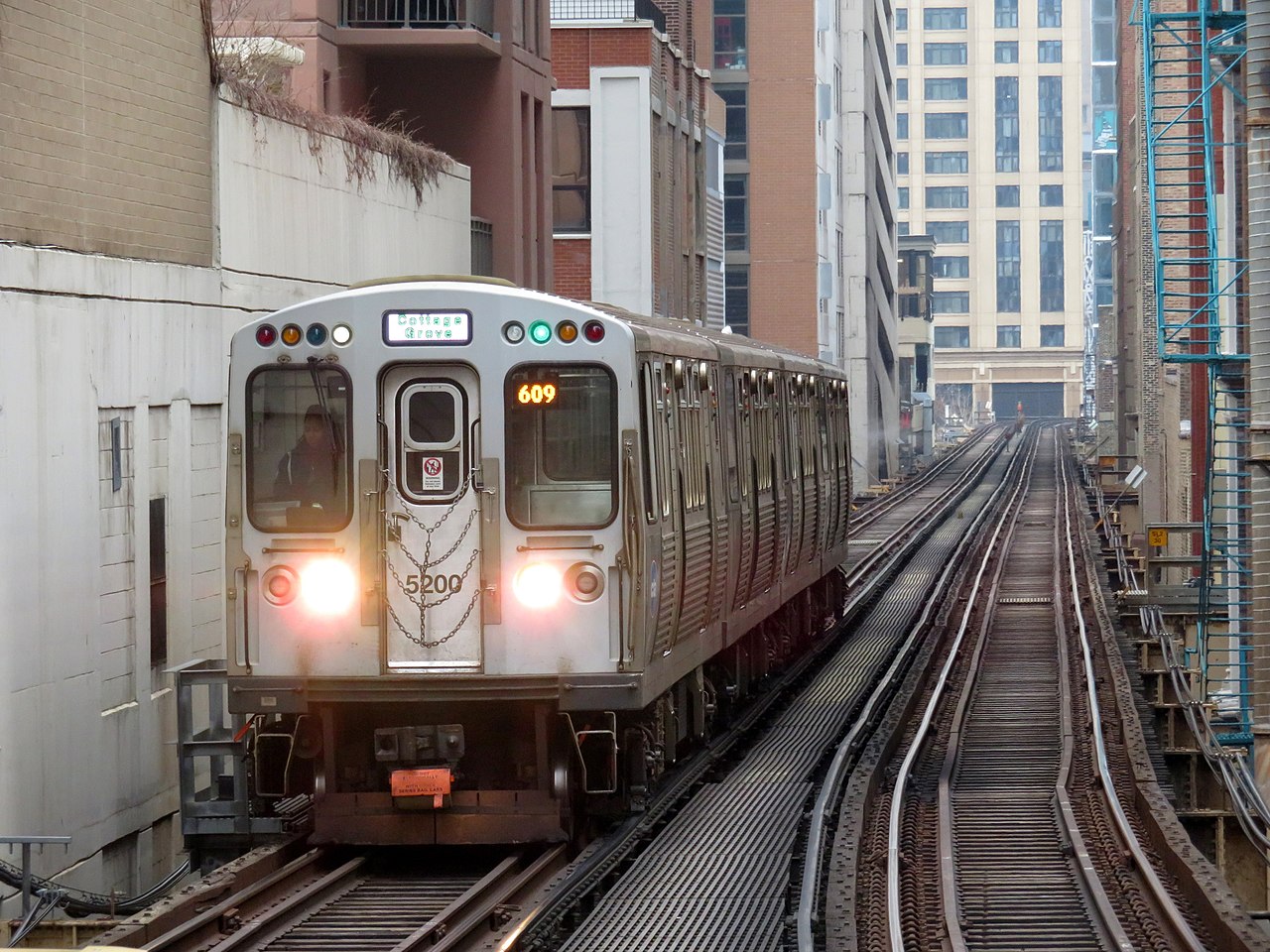
The Green Line is a rapid transit line operated by the Chicago Transit Authority on the city's elevated "L" network. It runs from Harlem/Lake on the West Side to two branches on the South Side, covering roughly 20.7 miles and serving 30 stations. The Green Line is notable for being the only CTA route that is entirely elevated along its main route and for incorporating some of the system's oldest track segments, with origins in the 1890s.
Image gallery
2 Images
Route and characteristics
The line connects suburban Oak Park and Forest Park with downtown Chicago and then continues to southern neighborhoods. Trains travel from Harlem/Lake (in Oak Park) through the Lake Street elevated structure and into the central business district, circling the Loop, then diverging southward to serve the Englewood and Woodlawn corridors. Key termini on the South Side branches include Ashland/63rd (serving Englewood) and Cottage Grove/63rd (near Woodlawn). The line also provides service to or near Forest Park and passes through historic West Side neighborhoods such as the West Side and extensive portions of the South Side.
History and development
The Green Line traces its lineage to several 19th‑century elevated railroads: the Lake Street Elevated and the South Side Elevated among them, which were built to serve growing streetcar and commuter demand in the 1890s. Over the 20th century, these lines were unified under municipal and regional transit authorities and eventually operated by the CTA. In the mid‑1990s the entire Green Line underwent a comprehensive rehabilitation in a closure that lasted approximately two years, during which track, stations, and elevated structures were rebuilt and many stations were upgraded for accessibility. The present color‑based name (Green Line) reflects CTA's modern route naming convention adopted in the late 20th century.
Service patterns and usage
Service typically runs from very early morning until shortly after midnight, with branch variations: most trains operate between Harlem/Lake and Cottage Grove while others terminate at Ashland/63rd. Frequencies vary by time of day; peak weekday periods see more frequent trains to accommodate commuter traffic into the Loop. Ridership has ranged over time; as a reference point, the Green Line carried roughly 70,000 average weekday boardings in the early 2010s, reflecting its role as a major artery connecting residential areas with employment and cultural centers.
Infrastructure, stations and rolling stock
Because the Green Line is fully elevated, its stations and trackwork sit on viaducts and steel structures above streets. Stations include a mix of historic canopies and modernized platforms; many were retrofitted to meet accessibility standards with elevators and ramps during past rehabilitation projects. The CTA operates modern railcars on the line and maintains the elevated structures through periodic repair programs to address corrosion, track wear, and signal upgrades.
Importance, challenges, and notable facts
- Importance: The Green Line links west and south neighborhoods with downtown Chicago, supporting commuting, retail access, and connections to other transit lines and bus routes.
- Challenges: Elevated structures require ongoing maintenance, and neighborhoods along the route have seen changing travel demand and capital needs over time.
- Notable facts: It incorporates the oldest operating segments of Chicago's rapid transit network and is the CTA's only fully elevated line. The system's periodic upgrades have preserved its historical character while improving safety and accessibility.
For route maps, schedules and service advisories consult official resources provided by the transit agency and local planning documents. Additional historical and technical information is available from transit archives and urban transportation studies that document the Green Line's evolution and role in Chicago's public transit system.
rapid transit • CTA • "L" • Forest Park • Oak Park • West Side • Loop • South Side • Englewood • Woodlawn
Related articles
Author
AlegsaOnline.com Green Line (CTA): Chicago's fully elevated rapid transit line Leandro Alegsa
URL: https://en.alegsaonline.com/art/40680
Sources
- world.nycsubway.org : World.nycsubway.org – Chicago Green Line