
Grimsby and Immingham Electric Railway
An early 20th-century electric interurban tramway linking Grimsby with Immingham Dock, built to carry workers and passengers on a mostly reserved right-of-way between town and port.
The Grimsby and Immingham Electric Railway was an interurban tramway serving northeastern Lincolnshire. Built and operated by the Great Central Railway to link Grimsby with the newly created Immingham Dock, it provided an electric passenger service on a largely segregated alignment rather than running through town streets. Its principal role was to transport dockworkers and local travellers between the urban area and the working port.
Image gallery
10 Images


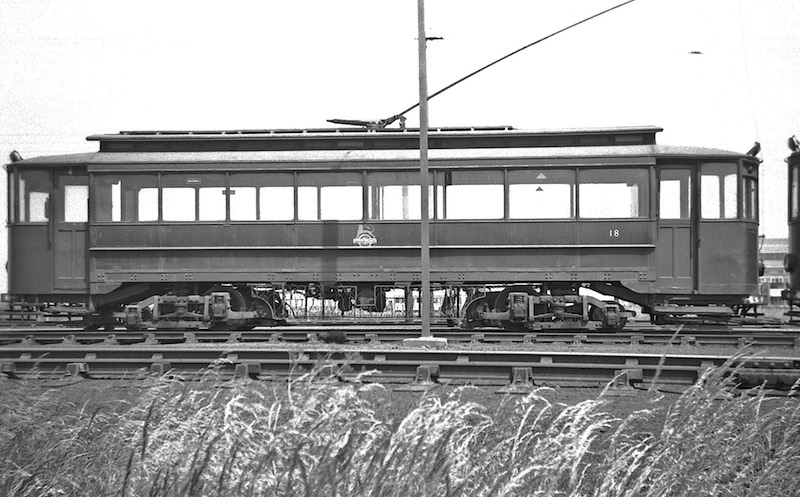


Route and infrastructure
The line ran between Grimsby and Immingham on a mixture of reserved track and short roadside sections. Much of its course followed a private right-of-way parallel to road and rail corridors, with passing loops where the single-track sections allowed trams to meet. Stations and halts were simple, reflecting the commuter and industrial focus of the service rather than intercity comfort.
Vehicles and operation
Services were provided by electric tramcars rather than mainline trains. The vehicles were designed for rapid boarding and alighting to cope with peak flows of shift workers. Timetables concentrated on early morning and late afternoon peaks but also offered all-day local services. Operation and maintenance were managed by the railway company rather than a municipal tram authority, a distinctive feature compared with many urban street tramways.
History and significance
The tramway opened in the early 1910s to serve Immingham Dock soon after its construction and continued in service for several decades. It played an important role in the economic life of the area by providing reliable, electric-powered transport between the town and port. Changes in travel patterns, the rise of motorbuses and private cars, and evolving industrial needs eventually reduced demand for the tramway, and the line was closed in the mid-20th century.
Notable features and legacy
- Interurban character: operated more like a light railway than a street tramway, with a substantial reserved way.
- Railway ownership: built and run by a mainline railway company to serve a specific industrial need.
- Local importance: vital for dock workers and for enabling the development of Immingham as a working port.
Although the physical infrastructure has gone, the Grimsby and Immingham Electric Railway is remembered as an example of early 20th-century electric interurban transport that connected industry and community. For maps, photographs and more detailed histories see contemporary sources and local archives, or follow the dedicated online resources such as Grimsby & Immingham Electric Railway information.
Related articles
Author
AlegsaOnline.com Grimsby and Immingham Electric Railway Leandro Alegsa
URL: https://en.alegsaonline.com/art/40946