
West Side, Chicago
The West Side is one of Chicago's three major sections. This article explains its neighborhoods, history, cultural institutions, economic challenges, and ongoing redevelopment.
The West Side is one of the three principal sections of Chicago, alongside the North Side and the South Side. It lies within Cook County in the state of Illinois and is represented on the city's municipal flag by the central white stripe, a civic reminder visible in the flag's design (municipal flag). The area combines long-established residential neighborhoods, industrial corridors, public parks and commercial districts, and it plays an important role in the larger metropolitan fabric.
Image gallery
10 Images


Neighborhoods and landmarks
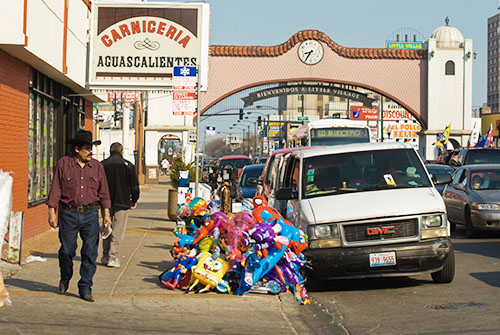
The West Side is not a single neighborhood but a collection of communities with distinct characters. Commonly referenced areas include Near West Side, West Town, Austin, Lawndale, North Lawndale, and Garfield Park. Prominent sites and institutions that anchor the West Side include the Garfield Park Conservatory, the United Center sports arena, medical centers and university campuses that serve residents and visitors.
- Near West Side — close to downtown and home to cultural venues.
- Austin and Lawndale — larger residential districts with deep local history.
- Garfield Park — notable for its conservatory and parkland.
History and development
The West Side grew rapidly with Chicago's industrial expansion in the 19th and early 20th centuries. It became a destination for successive waves of immigrants and internal migrants, including European ethnic groups and, during the Great Migration, large numbers of African Americans from the American South. Those movements shaped local commerce, religious life, and cultural institutions. Over decades, rail lines, factories and markets defined many West Side neighborhoods.
In the mid-20th century and later, structural economic changes, suburbanization and policy decisions altered the area's economy and built environment. Some commercial strips and manufacturing zones declined, while other parts experienced urban renewal projects and community-led revitalization efforts.
Culture, challenges and renewal
The West Side remains culturally rich: historic markets, churches, music scenes, and culinary traditions reflect its layered heritage. At the same time, the area faces challenges common to many older American urban neighborhoods — uneven investment, housing and employment pressures, and public-safety concerns. These problems are often the subject of local and regional planning, nonprofit activity, and municipal programs aimed at improving housing, transit, and economic opportunity.
In recent years the West Side has seen a mixture of redevelopment and grassroots organizing. New housing projects, small-business incubators, hospital and university expansions, and park improvements coexist with efforts to preserve affordable housing and support long-term residents. Transportation links to downtown and the region remain important to the area’s future, as do local civic institutions and community groups working on equitable growth.
For readers seeking more detail about boundaries, demographics, public programs or historic sites, municipal resources and local historical organizations provide maps, archives and planning documents. Each neighborhood on the West Side has its own identity, and the collective story of the West Side reflects both the challenges and the resilience of urban communities in the United States.
Related articles
Author
AlegsaOnline.com West Side, Chicago Leandro Alegsa
URL: https://en.alegsaonline.com/art/107448
Sources
- encyclopedia.chicagohistory.org : "Annexation"
- usflag.org : "Municipal Flag of Chicago"
- articles.chicagotribune.com : "Taking sides on the city's geography"