
Greater Khorasan: Historical Region of Iran and Central Asia
Greater Khorasan is a historical region of northeastern Iran and Central Asia, influential in medieval politics, trade and culture; its borders shifted across modern Iran, Afghanistan, Central Asia and Pakistan.
Overview
Greater Khorasan (from Persian meaning roughly "where the sun arrives") was a large and fluid historical region centered on the northeastern Iranian plateau and adjacent parts of Central Asia. Over many centuries its boundaries shifted, but its cultural core linked Persian-language urban centers, frontier oases and routes of long-distance trade. The name Khorasan was adopted in several languages and administrative systems across medieval Iran and the Islamic world.
Image gallery
8 Images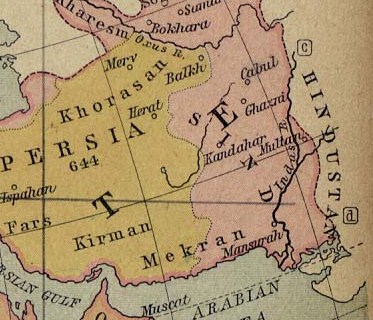



Geography and components
The region traditionally included the northeastern provinces of the Iranian world and extended into what are now parts of Afghanistan, Turkmenistan, Uzbekistan, Pakistan and regions of Central Asia. Its landscape combined fertile river valleys, important caravan towns and stretches of steppe and desert. Principal historic cities often cited in accounts of Khorasan include Nishapur, Merv, Balkh, Herat and Tus.
History and development
As an administrative concept Khorasan appears in late antiquity and became especially prominent under successive Iranian and Islamic dynasties: the Sasanians, early Islamic caliphates, the Samanids and later regional powers. In the medieval period it functioned as a political and cultural hub on the Silk Road, producing notable scholars, poets and religious figures. The Mongol invasions of the 13th century and other conflicts dramatically altered its urban fabric, though the region remained important in subsequent eras.
Culture, languages and economy
Greater Khorasan was multilingual and multiethnic: Persian (and its eastern varieties such as Dari and Tajik), Turkic dialects and other Iranian languages coexisted across the region. It was renowned for manuscript production, Sufi learning, caravan trade and agricultural oases that sustained long-distance commerce. Its cities were centers of literature, theology and science during the medieval Islamic Golden Age.
Modern legacy and distinctions
Today the historical concept of Greater Khorasan differs from modern administrative provinces. In Iran the large province called Khorasan was divided in the early 21st century into smaller provinces, while parts of the old region now lie within several independent states. Scholars distinguish between the older, wider "Greater Khorasan" and later, narrower uses of the name tied to modern borders.
Further reading and resources
Related articles
Author
AlegsaOnline.com Greater Khorasan: Historical Region of Iran and Central Asia Leandro Alegsa
URL: https://en.alegsaonline.com/art/40589
Sources
- books.google.com : "Khurasan", The Encyclopaedia of Islam, page 55
- britannica.com : "Khorasan"