
Grand Trunk Road
A historic arterial route of the Indian subcontinent, the Grand Trunk Road links eastern Bengal to northwestern regions and shaped trade, administration, and travel for centuries.
The Grand Trunk Road is one of the oldest and longest overland routes in the Indian subcontinent. It has functioned for many centuries as a principal east–west corridor across what is today parts of Bangladesh, India and Pakistan. The route played a central role in trade, military movement and cultural exchange between the regions that together are known as South Asia.
Image gallery
10 Images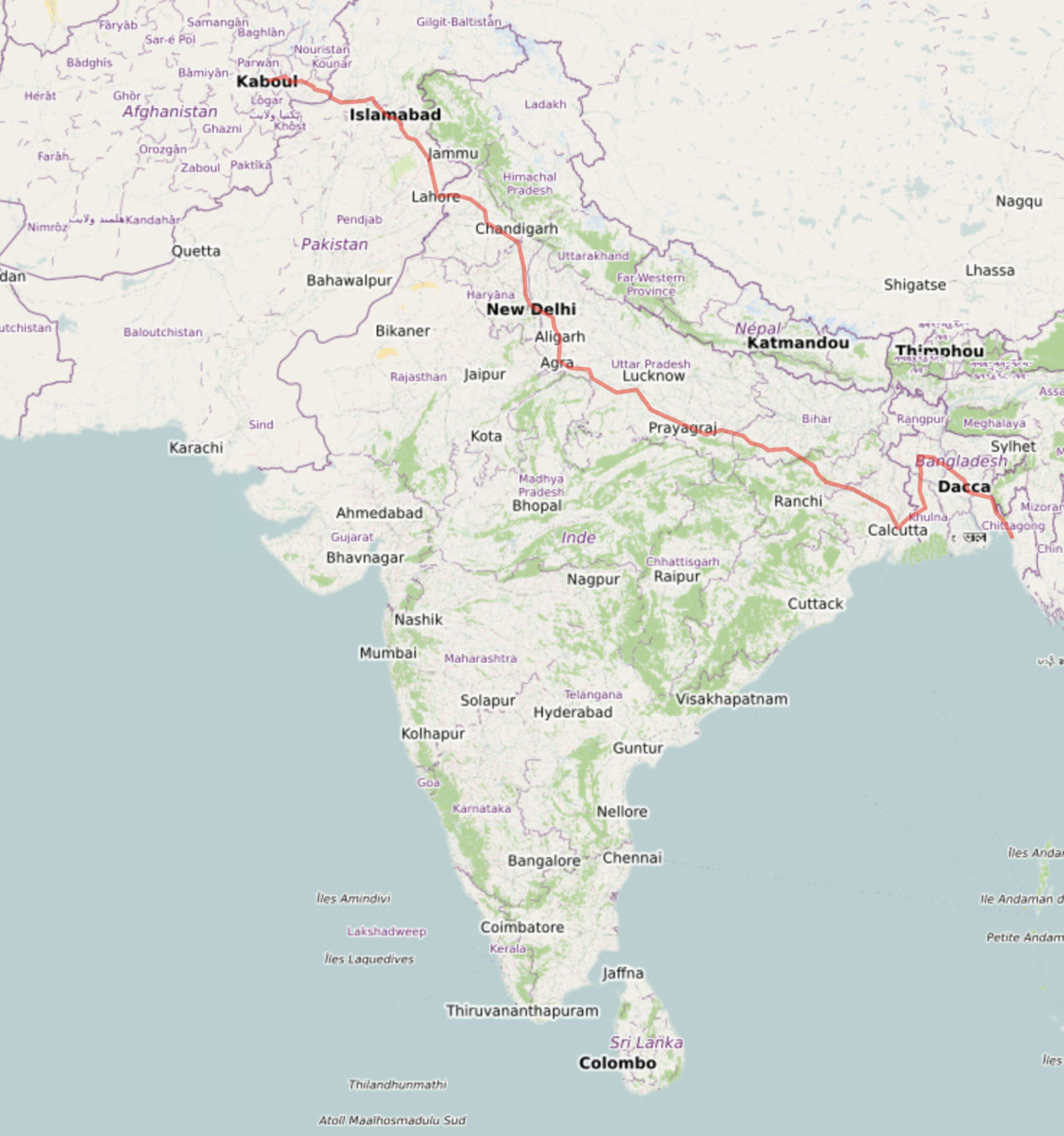




Route and main features
Rather than a single uninterrupted modern highway, the Grand Trunk Road is a historical alignment made up of successive rebuilt and upgraded segments. Its traditional course ran from the fertile plains of Bengal through the northern Gangetic plain and onward toward the northwestern frontiers, reaching cities such as Kolkata (historically Calcutta), Patna, Varanasi, Delhi, Amritsar and on into western Punjab and Peshawar. In later usage the road is often described as one of South Asia’s major roads because of its length and continuity.
Historical development
Parts of the route trace back to ancient trade tracks and imperial roads used by regional kingdoms. The 16th century reformer and ruler credited with a major systematic rebuilding and reorganization of the thoroughfare was Sher Shah Suri; in some traditions the road is thus called "Sadak-e-Sher Shah" after him. European and later British administrators further standardized and updated stretches of the route, giving it the English name Grand Trunk Road during the colonial period. These successive phases combined local, imperial and colonial interventions to produce the continuous arterial way known in modern histories.
Uses and importance
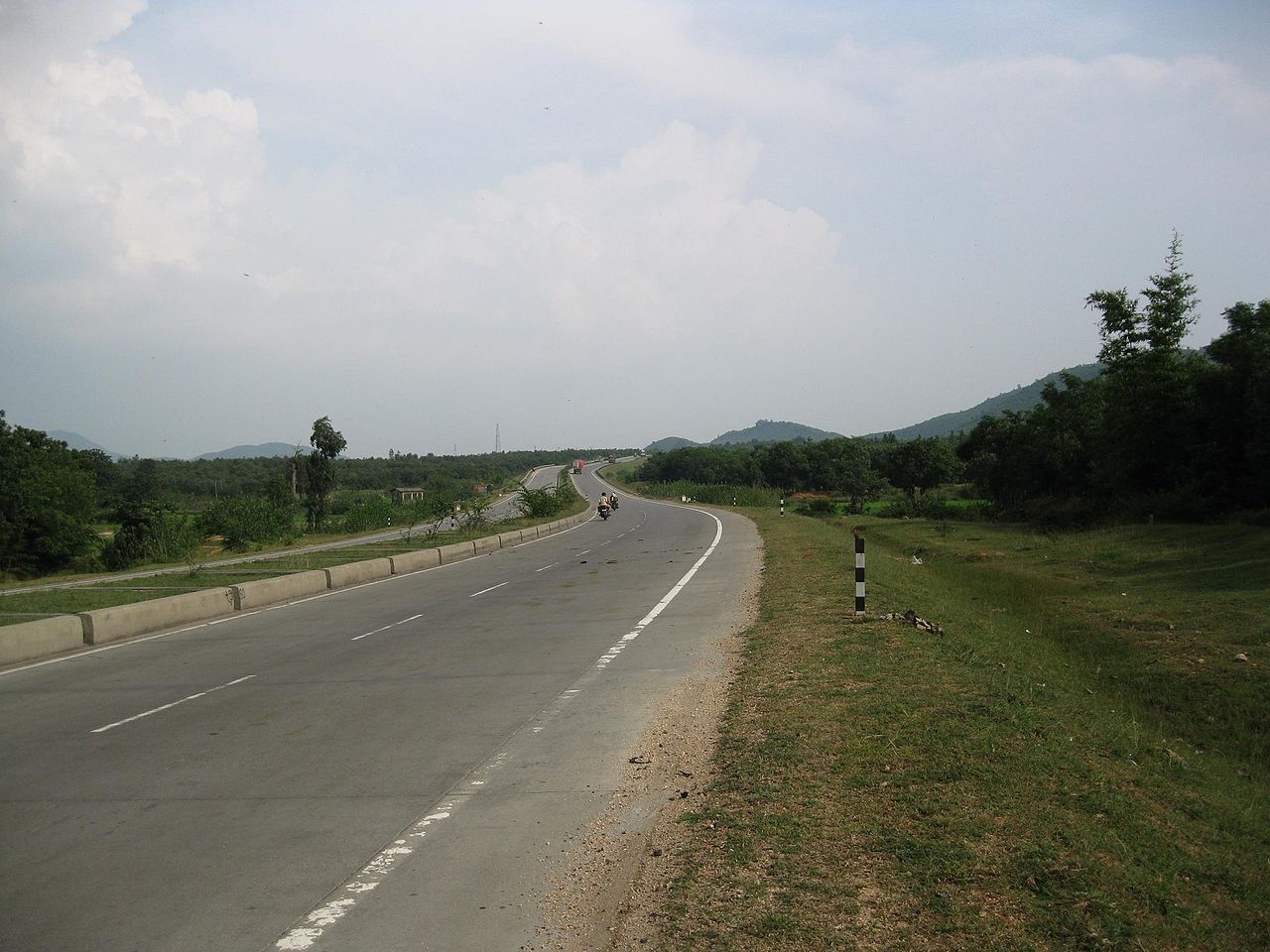
The Grand Trunk Road has been vital for commerce, communication and movement of people. It served merchant caravans and later postal and military services. Even in the 20th and 21st centuries, sections of the old route remain important national highways and are paralleled or incorporated into contemporary road networks in India and Pakistan. Modern upgrades often follow the historic alignment because it links major population centers and crosses naturally advantageous terrain.
Notable facts and distinctions
- The road’s identity is cumulative: it reflects contributions by ancient planners, medieval rulers and colonial engineers.
- It has local names and variants; one well-known historical patron was Sher Shah Suri, whose improvements are frequently cited.
- Descriptions of its exact endpoints vary; older accounts emphasize Bengal in the east (sometimes referenced as Bengal) and northwestern termini in the west.
Today the Grand Trunk Road remains a useful historical concept and a living transport corridor. Its course and legacy continue to shape regional geography, urban development and cultural memory across national borders, illustrating how an ancient arterial road can persist through continual reuse, repair and modernization.
Further reading and resources: see historical surveys, regional transport studies and heritage discussions which examine how the route evolved from ancient tracks into the modern network.
Related links: South Asia overview, road networks, Bengal region, Peshawar, Pakistan, Sher Shah Suri.
Related articles
Author
AlegsaOnline.com Grand Trunk Road Leandro Alegsa
URL: https://en.alegsaonline.com/art/40232