
Gossypium sturtianum (Sturt's Desert Rose)
Gossypium sturtianum, or Sturt's Desert Rose, is a drought‑tolerant Australian shrub with hibiscus‑like flowers. It is the floral emblem of the Northern Territory and has horticultural and cultural significance.
Gossypium sturtianum, commonly known as Sturt's Desert Rose, is a woody shrub native to the arid and semi‑arid regions of inland Australia. Recognised for its showy, hibiscus‑like flowers and tolerance of dry conditions, it is widely appreciated in native plant gardens and is the floral emblem of the Northern Territory (Northern Territory).
Image gallery
3 Images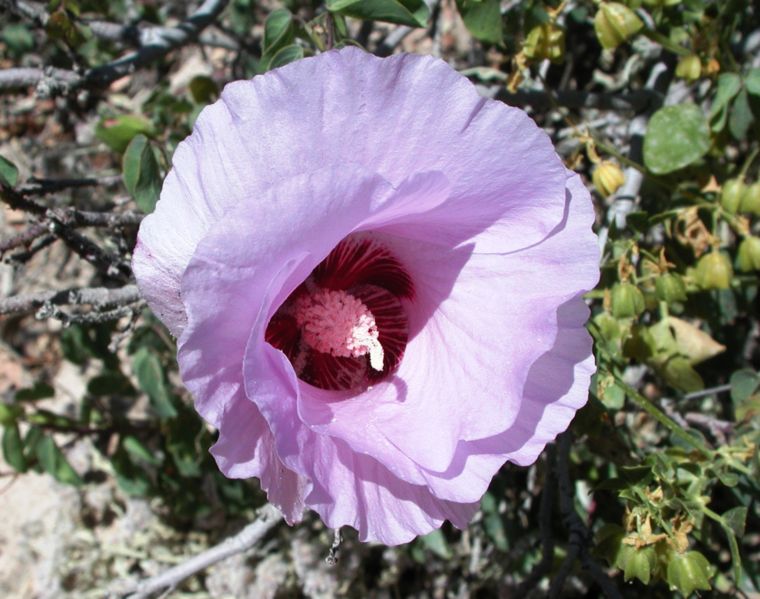

Characteristics
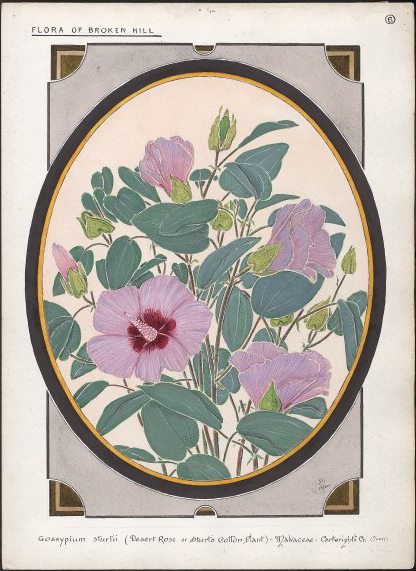
The plant produces single, conspicuous flowers with five broad petals that may range from pale pink to deep mauve, usually with a darker central throat. Leaves are typically lobed or toothed, and the stems can be woody with a compact or more open habit depending on growing conditions. Like other members of the mallow family (Malvaceae), its fruit is a dry capsule containing several seeds. The flowers are often insect‑pollinated and the species shows adaptations to survive periods of drought.
History and naming
The species was named for the explorer Charles Sturt, who collected seeds on inland expeditions in the mid‑19th century. The plant was first recorded on an expedition near the site of Broken Hill in 1844; Sturt brought material back for study by the botanist Robert Brown, and the name commemorates Sturt's role in bringing the species to scientific attention (Charles Sturt).
Habitat and cultivation
In the wild, Gossypium sturtianum is found in well‑drained soils across rocky slopes, creeklines and open scrubland where rainfall is low and evaporation high. It tolerates heat and dry spells better than many ornamental shrubs. Gardeners propagate it from seed or semi‑hardwood cuttings; it prefers full sun, protection from severe frost, and soils that do not remain waterlogged. With appropriate siting it makes an effective specimen shrub or informal hedge in native and drought‑wise plantings.
Uses, symbolism and notable facts
- Symbolic: The flower is the official floral emblem of the Northern Territory and appears in stylised form on the Territory flag and many civic emblems.
- Horticulture: Valued for colourful flowers and low water needs; used in native landscaping and restoration planting.
- Cultural: The species holds significance in regional identity; it is also known to Indigenous peoples of Australia, though local uses and names vary by community.
- Botanical interest: As a member of the cotton genus Gossypium, it illustrates the diversity of the group beyond commercial cotton species and provides an example of adaptation to arid environments.
For further botanical or historical information, consult specialist plant references or regional flora guides; this article provides a general overview of the species and its role in Australian natural and cultural landscapes.
Related articles
Author
AlegsaOnline.com Gossypium sturtianum (Sturt's Desert Rose) Leandro Alegsa
URL: https://en.alegsaonline.com/art/39847
Sources
- anbg.gov.au : "Floral Emblem of Northern Territory"