
Goldfinch (Carduelis): overview, appearance, behavior and distribution
Small, colourful finches (Carduelis) known for red faces and yellow wing bars; seed-eating, social birds breeding across Europe, North Africa and western/central Asia and introduced elsewhere.
The goldfinch is a small, lively songbird belonging to the broad group of finches. In classical treatments it is placed in the genus Carduelis and is one of the small, seed-eating passerines often referred to as passerine birds within the family Fringillidae. Goldfinches are best known for their bright facial and wing patterns, cheerful calls and sociable behaviour.
Image gallery
4 Images
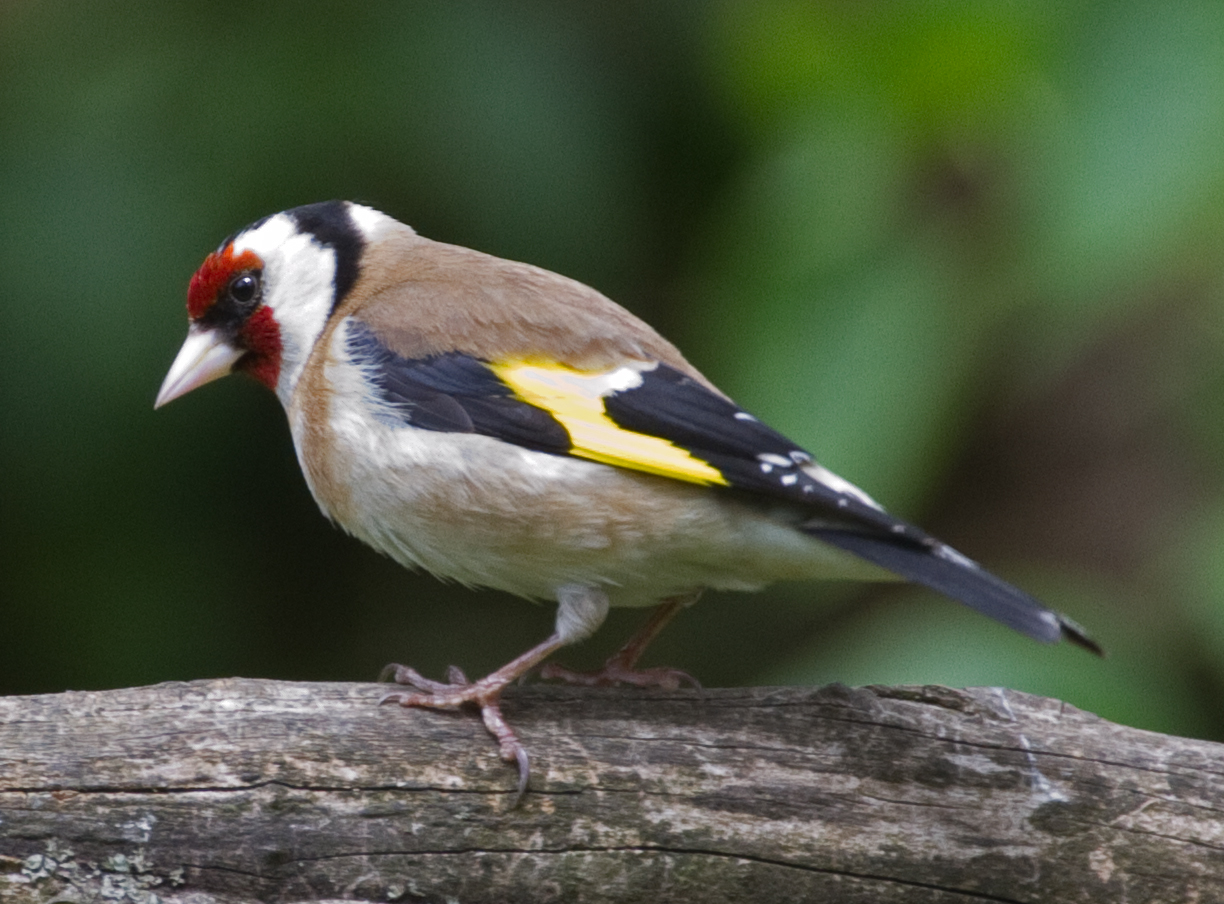


Identification and physical characteristics
Adult goldfinches show a characteristic combination of colours and markings that make them easy to recognise at a distance. Typical features include:
- Face and head: a contrasting red face with black-and-white markings around the head.
- Wings: a striking yellow wing bar set against black flight feathers, obvious in flight.
- Body: warm brown upperparts and white underparts, with some regional variation.
- Juveniles: duller and lack the full red facial mask of adults.
Plumage differences between sexes are slight; males and females are similar, though some observers note subtle differences in the extent of colouration. Molt and wear can alter the intensity of colours through the year.
Distribution and habitat
In its native range the goldfinch breeds across much of Europe, parts of North Africa and into western and central Asia. Within those areas it favours open country with scattered trees—farmland with hedgerows, parks, orchards and rough grassland with seed-bearing plants. Populations in milder western regions tend to be resident, while birds from colder zones migrate south or make local movements to avoid severe weather. The species has also been introduced to other continents and now occurs in some locations in Australasia and parts of South America.
Diet, foraging and behaviour
Goldfinches are primarily granivores, specialising on small seeds. Their preferred diet includes tiny seeds such as those produced by thistles and teasels, and they are adept at extracting seeds from the seed-heads of these plants:
- Small seeds from composite plants form the bulk of the diet.
- Thistles and other similar seed-heads are especially valued for their high energy content.
- During the breeding season adults also feed caterpillars and other small insects to nestlings to supply protein.
Goldfinches often visit garden feeders in winter where nyjer (thistle) seed and fine sunflower seeds are offered. Outside the breeding season they are gregarious and can be seen in loose flocks; winter groups may number dozens of birds that move between feeding and roosting sites.
Breeding and life cycle
Breeding pairs build compact cup nests placed in the outer twigs of tall, leafy trees or in dense hedgerows and sometimes unusual sites like clumps of bamboo. A typical clutch contains four to six eggs, which are incubated for around eleven to fourteen days before hatching. Both parents take part in feeding the young, which fledge after a short nestling period and quickly learn to take seeds and insects. Several broods may be raised in a favourable season.
Human connections and conservation
Goldfinches have long been appreciated for their bright appearance and pleasant, tinkling song. They are commonly depicted in art and have been kept historically as cage birds, though today they are more often enjoyed at garden feeders. Because they rely on seed-rich habitats, changes in agricultural practice and the removal of wild seed plants can affect local numbers. Overall the species remains widespread and adaptable, and in many regions it is considered secure, though local trends vary.
Questions and answers
Q: What is the genus of Goldfinches?
A: Goldfinches belong to the genus Carduelis.
Q: What family do Goldfinches belong to?
A: Goldfinches are small passerine birds of the family Fringillidae.
Q: Where do Goldfinches breed?
A: Goldfinches breed across Europe, North Africa, and western and central Asia, in open, partially wooded lowlands.
Q: Is the Goldfinch a resident bird throughout its range?
A: The Goldfinch is resident in the milder west of its range, but migrates from colder regions. It will also make local movements, even in the west, to escape bad weather.
Q: What food do Goldfinches prefer?
A: Goldfinches' preferred food is small seeds such as those from thistles and teasels, but insects are also taken when feeding young. They also visit bird feeders in winter.
Q: Where do Goldfinches nest?
A: Goldfinches nest in the outer twigs of tall leafy trees or even in bamboo.
Q: What is the number of eggs that Goldfinches lay and how long does it take for them to hatch?
A: Goldfinches lay four to six eggs, which hatch in 11-14 days.
Related articles
Author
AlegsaOnline.com Goldfinch (Carduelis): overview, appearance, behavior and distribution Leandro Alegsa
URL: https://en.alegsaonline.com/art/39529