
Goliath frog (Conraua goliath): the world's largest frog
A comprehensive overview of the goliath frog—its size, appearance, habitat, behavior (including pool-digging), threats and conservation status in west-central Africa.
Overview
The goliath frog (Conraua goliath), sometimes called the giant slippery frog, is the largest living frog species. Adults can reach extraordinary dimensions compared with other anurans, and their unusual life history and dependence on large, fast-flowing rivers make them distinctive among amphibians of Africa.
Image gallery
8 Images



Physical characteristics
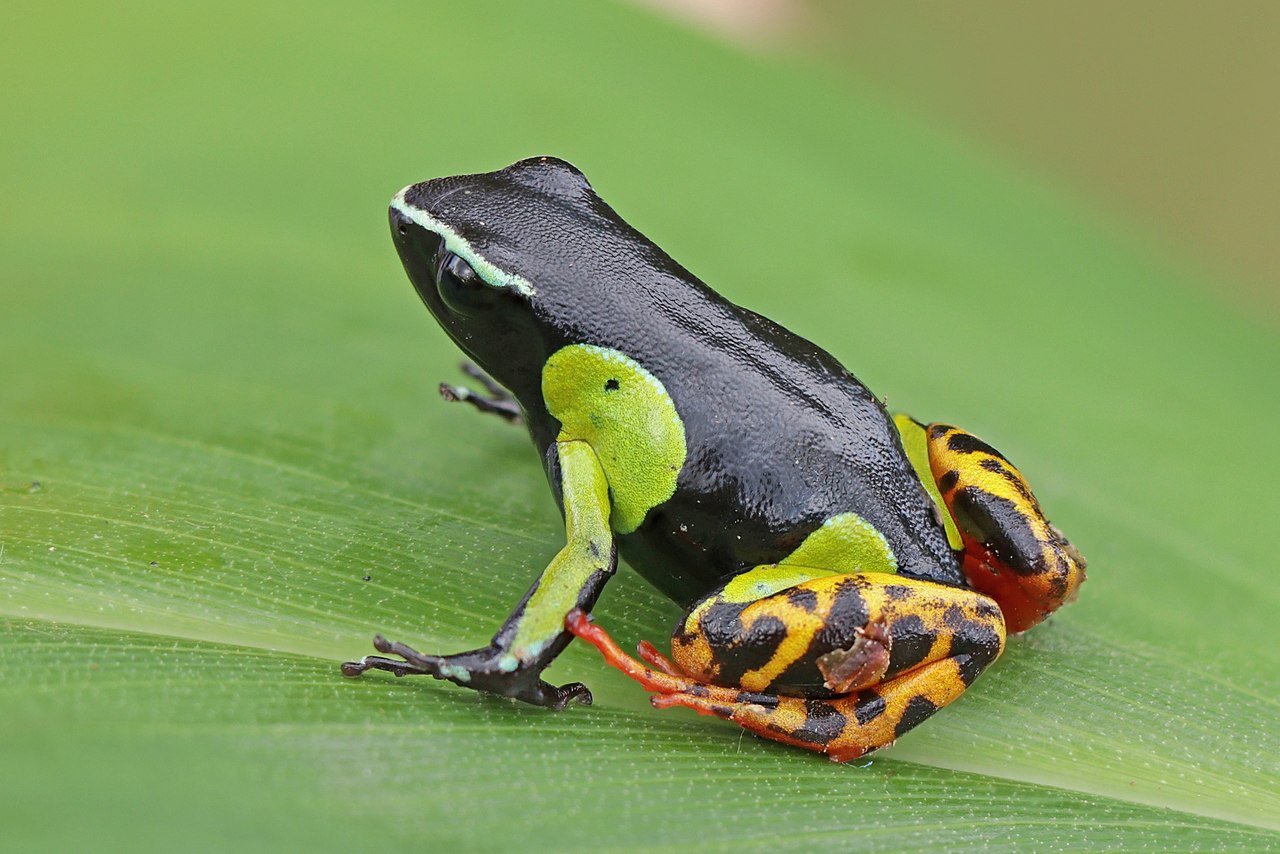
Goliath frogs are heavy-bodied and powerfully built, with strong hind limbs suited to swimming and moving over rocks. Documented maximum measurements for the species reach about 32 centimetres in snout–vent length and weights of over 3 kilograms. Their skin is usually mottled brown or grey, providing camouflage among boulders and submerged wood.
- Size: largest known frog by mass and length among living species.
- Build: robust body, muscular legs enabling forceful jumps and movement in streams.
- Skin and coloration: cryptic tones that blend with rocky riverine habitats.
Habitat and distribution
Goliath frogs are associated with large, clean, fast-flowing rivers and waterfalls in parts of west-central Africa. Their recorded range is limited and fragmented; they are most often found in forested river systems where rocks and strong currents provide the conditions they require for feeding and breeding. Because they rely on clear, well-oxygenated water and intact riverine vegetation, changes in land use and water quality have a direct effect on populations.
Behaviour and reproduction
These frogs are primarily aquatic and spend much of their time near or in water. They are carnivorous and feed on a variety of aquatic and terrestrial prey, including invertebrates and small vertebrates. Observations of reproductive behaviour revealed an unusual form of nest construction: adult frogs, likely males, excavate shallow pools or modify depressions in riverbeds to serve as nurseries for eggs and tadpoles.
Scientists have reported that frogs move sand, plant material and stones to shape and raise the walls of these pools. Tadpoles are sometimes found in mixed-size cohorts in the same pool, suggesting repeated use of the same site for successive clutches. Adults may guard these nursery pools at night, apparently deterring larger predators that would otherwise consume eggs or tadpoles.
Conservation and threats
Goliath frogs face a range of threats tied to their dependence on intact river systems. Major pressures include habitat loss from logging and agricultural expansion, water pollution and sedimentation, and direct exploitation by people for food and local trade. Small, fragmented populations and slow habitat recovery make the species vulnerable to decline.
- Threats: habitat destruction, pollution, hunting for bushmeat and collection for trade.
- Conservation: protection of riverine habitat, regulation of hunting and trade, and ex situ measures such as captive care and breeding where implemented.
Notable facts
Beyond its size, the goliath frog is notable for the recent discovery of its pool-digging behaviour, which illustrates a form of parental investment uncommon in many frogs. This engineering of nursery sites likely enhances survival of offspring and may be linked to selection for larger size, since larger individuals can move substantial stones and better defend sites. As an iconic species of Africa's riverine forests, the goliath frog highlights the importance of conserving freshwater ecosystems and the complex behaviors they support.
Related articles
Author
AlegsaOnline.com Goliath frog (Conraua goliath): the world's largest frog Leandro Alegsa
URL: https://en.alegsaonline.com/art/39552
Sources
- iucnredlist.org : "Conraua goliath"